South Indian cinema entered 2026 riding the momentum of a decade that had redrawn the map of Indian filmmaking, a period in which Telugu, Tamil and Kannada productions had proved they could cross language barrier, command national audiences and generate numbers that Bollywood could no longer ignore. What the first six months of 2026 demonstrated, however, was that the bigger the ambition, the bigger the target. Controversy followed scale with a consistency that went beyond coincidence, touching the year’s most anticipated productions across all three industries in ways that no amount of advance booking could have prepared anyone for.
Telugu cinema opened 2026 at full commercial volume. The Sankranthi season delivered two major star productions, and while Chiranjeevi’s Mana Shankara Vara Prasad Garu emerged as a hit, Prabhas’s The Raja Saab collapsed almost immediately under the weight of its own ambition. Among the criticisms directed at the film was the treatment of its female characters, who remained peripheral to a story that revolved entirely around the male protagonist’s arc.

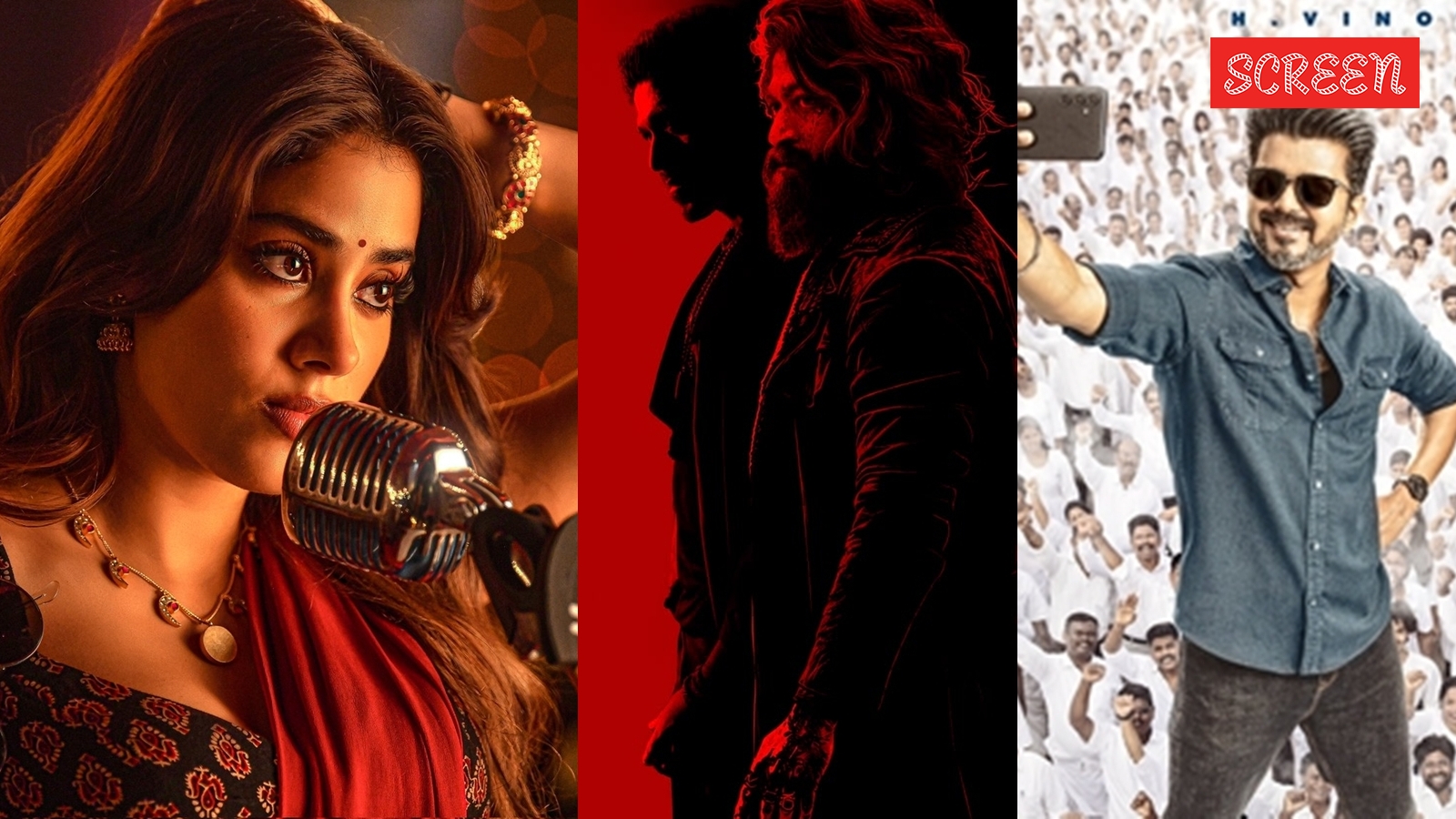
However, the year’s biggest controversy in this space, however, came with Ram Charan’s Peddi in June. Directed by Buchi Babu Sana, the film had been positioned as a serious, character-driven production and arrived with genuine commercial momentum. The backlash began during its opening weekend, given the framing of Janhvi Kapoor’s character in the film leaned heavily on visual aestheticisation, establishing her appearance before her identity. A separate scene, involving a physical interaction that was non-consensual and that the film later contextualised in a way some felt romanticised rather than addressed the behaviour, drew sustained criticism about consent and agency.
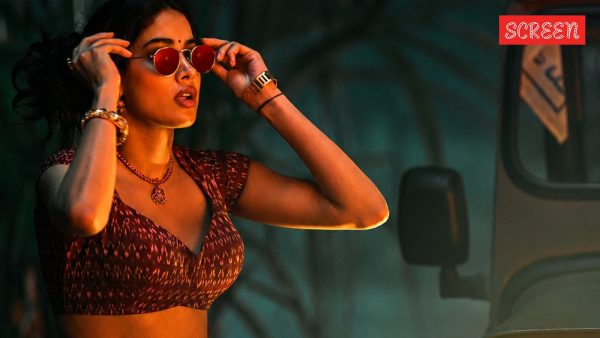
Director Buchi Babu Sana responded publicly on the film’s opening Saturday, acknowledging the feedback and agreeing to modify scenes, a response that was received with scepticism given that the film had been through months of post-production before any of these concerns had apparently been raised internally. The criticism that followed was not simply about one scene but about something more structural, the sense that in a film otherwise invested in period detail and emotional credibility, the female lead had been written and framed with significantly less care than everything around her.
Also Read: Super Subbu review: Rural sex-ed comedy starts strong, but fails to give a satisfying finish
Against this backdrop, the success of Samantha Ruth Prabhu’s Maa Inti Bangaaram sat as the first half’s most pointed counter argument. The film, made on a fraction of the budgets of the productions that had stumbled around it, built its entire story around a female protagonist with a history, an agency and something at stake beyond her relationship with a male lead. It broke a sixteen year box office record for solo female-led Telugu films, generated none of the controversy that had attached itself to the year’s bigger productions
Kannada Cinema: From Song to Teaser
Kannada cinema’s most visible controversy of the first half arrived before its most anticipated film had even reached theatres. KD: The Devil, directed by Prem and starring Dhruva Sarja, released a promotional song whose lyrics the Karnataka Film Chamber of Commerce described as vulgar and demeaning to women. The song was taken down from social media platforms, the production team was summoned to a meeting convened by the chamber’s president Jayamala, and the makers issued a formal apology, promising to revise the lyrics before the film’s release.
Story continues below this ad
The Kannada lyrics had been written by the film’s own director, and the performer in the song, Nora Fatehi, later said she had shot the Kannada version three years earlier and had relied on the filmmakers’ explanation of the lyrics at the time, as she does not understand the language.
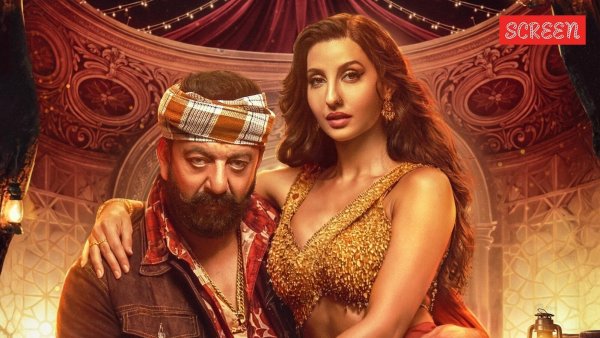 The song Sarse Ninna Seraga Sarse was uploaded on YouTube on March 14.
The outrage around the song was not simply about its explicit content. It was also about what the choice represented creatively, how quickly female spectacle was still being used as a shortcut to provocation and mass appeal in a production that had been in development for four years and was being positioned as a serious pan-India spectacle. The controversy placed the song within a longer pattern in the director’s own filmography, in which female characters had consistently been introduced through aestheticisation rather than characterisation, with performers from outside the Kannada industry frequently chosen to embody a narrow, marketable idea of femininity.
Yash’s Toxic, ahead of its August 26 release, generated its own controversy through the specific failure of its promotional campaign. After months of material focused almost entirely on Yash while the film’s five prominent female leads, Nayanthara, Kiara Advani, Huma Qureshi, Tara Sutaria and Rukmini Vasanth, were largely absent from the public conversation, the makers released a new promotional teaser on Wednesday explicitly titled Ladies and Ladies.
The response was immediate and pointed. Yash himself had more screen time in the women’s teaser than any of the five actors it was meant to showcase. No female cast member spoke a line of dialogue. The irony was noted publicly and persistently. Several viewers also questioned whether director Geetu Mohandas, known for her thoughtful, female-centred earlier work, retained full creative control over a production of this scale, or whether the promotional logic was being driven by forces that had less interest in the film’s female characters than its cast list suggested. This was not the first time for Toxic’s teaser to gain such controversy, with the first teaser released on Yash’s birthday also generating buzz on the portrayal of women.
Story continues below this ad
Tamil Cinema: Absence and Oversight
Tamil cinema’s most significant story involving the portrayal of women was not a controversy about a specific scene or song but a months-long institutional failure that left one of the industry’s most prominent productions inaccessible to audiences while also making it financially vulnerable in ways that had nothing to do with its creative content. Jana Nayagan, Vijay’s final film before entering politics full time, was pulled from its Pongal release after a CBFC dispute that stretched for months, and then hit by a piracy leak in April that circulated the entire film online before a single official screening had taken place.
What Tamil cinema did demonstrate more clearly in this period was a contrast between its biggest productions and its smaller ones. A string of modestly budgeted Tamil films found genuine commercial success in the first half of 2026, built on content and character rather than star power. Radikaa Sarathkumar’s Thaai Kizhavi, built around an older, powerful, morally complex female protagonist, became one of the year’s surprise blockbusters, collecting far beyond its budget on the strength of a story that treated its central woman as a complete human being rather than a narrative function.
Also Read: Vijay’s Jana Nayagan eyes late July release, CBFC revisions underway
The bigger picture
Taken together, the first half of 2026 across these three industries presents a picture that is less about any individual film’s failures and more about a structural gap between where these industries are commercially and where they are creatively when it comes to writing, framing and casting women. The pan-India model, which has driven the ambition and the budgets of South Indian cinema’s biggest productions over the past decade, has tended to flatten female characters even as it has expanded everything else, the action, the visual scale, the runtime. The bigger the film, the more expensive the production, the more this year suggested that female characters were being written smaller, reduced to functions in a male character’s story rather than participants in their own.
Story continues below this ad
The audience, however, appears to have noticed. The productions that failed most visibly in the first half of 2026 were the ones most wedded to that older model. The ones that worked tended to be the ones where the story had an honest reason for the women in it to be there. That is not a revolutionary observation about commercial cinema. But in South Indian cinema’s current moment, with its pan-India ambitions and its enormous production budgets, it appears to be one that still needs making.