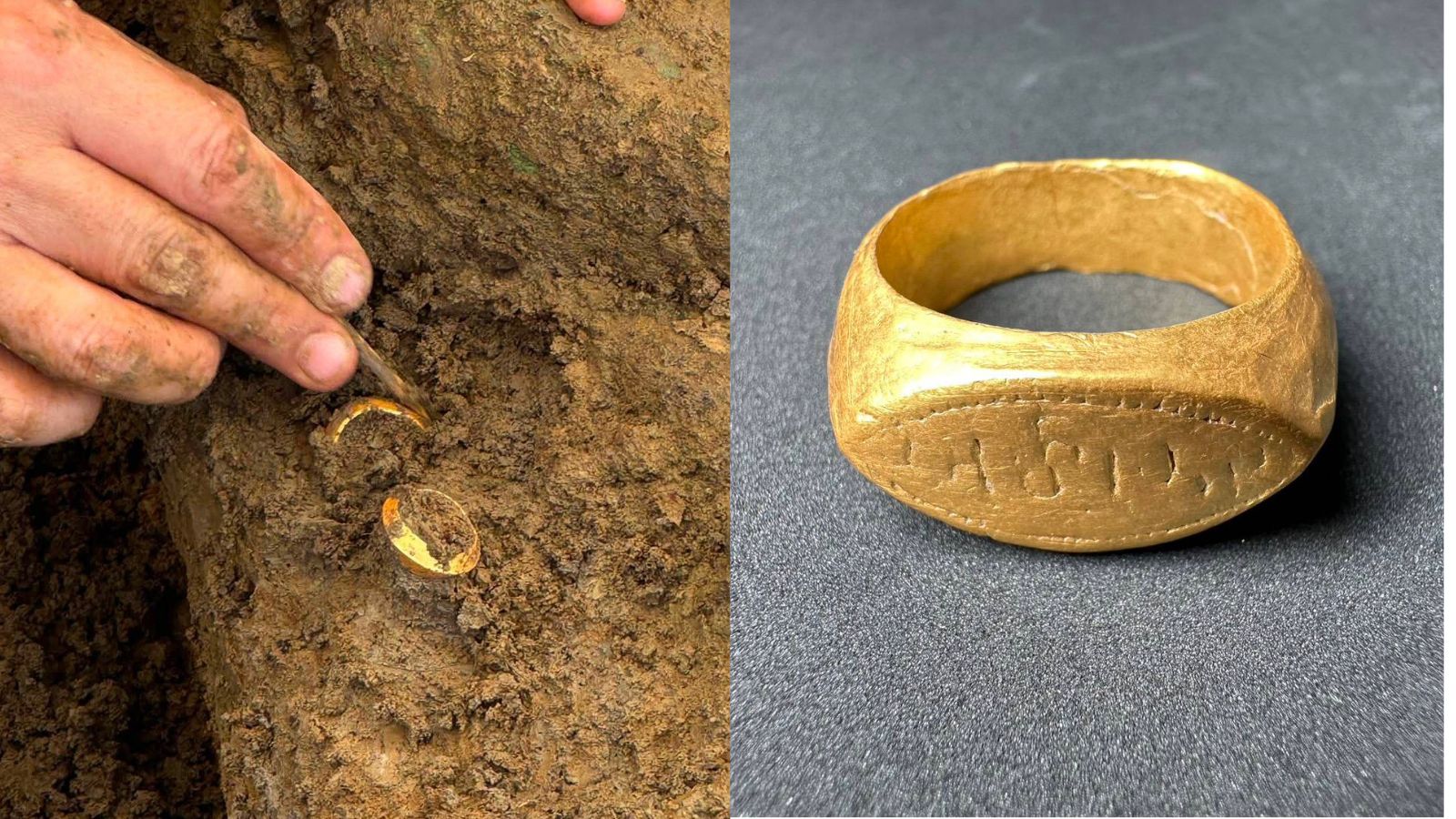
 This photo released by The Fine Arts Department, shows a gold ring at the Don Yai Thong archeological site in Phetchaburi province, Thailand. (Photo: AP)
 A pair of 2,000-year-old gold rings discovered in Thailand has offered fresh evidence of ancient India’s trade and cultural links with Southeast Asia. One of the rings bears an inscription in the ancient Brahmi script, leading archaeologists to believe it may have belonged to an Indian merchant nearly two millennia ago, according to Thailand’s Fine Arts Department.
Brahmi is among the oldest writing systems of the Indian subcontinent and later evolved into many modern South Asian scripts.

One of the rings, found on Thursday, bears an engraving in characters believed to be Brahmi script, an ancient Indian writing system. Initial assessments by experts suggest the inscription reads “pusarakhitasa,” translating to “the one protected by Pushya,” a reference to one of the most auspicious signs in Indian astrology. The second ring, recovered from the same skeleton, is a plain gold band with no markings.
Did the rings belong to an Indian merchant?
Based on the inscription and craftsmanship, experts believe the owner may have been a merchant belonging to the Vaishyas, an ancient Indian caste historically associated with trade and commerce, pointing to early trade contact between India and Southeast Asia.
Indian merchants had established maritime trade routes with Southeast Asia centuries before the Common Era, exchanging spices, beads, textiles, metals and religious ideas.
Story continues below this ad
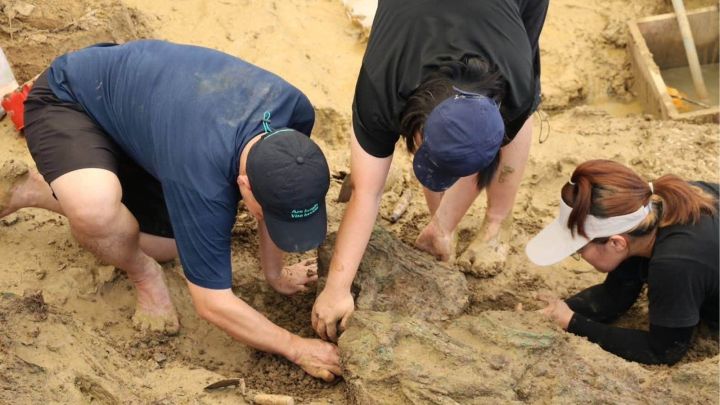
The Don Yai Thong site sits roughly 130 kilometres (80 miles) southwest of Bangkok. It was first identified earlier this year after residents came across fragments of ancient bronze drums in a rice field, prompting officials to launch a full excavation.
How old is the site?
The site has been dated to Thailand’s late prehistoric period, also known as the Iron Age, spanning approximately 1,500 to 2,500 years ago.
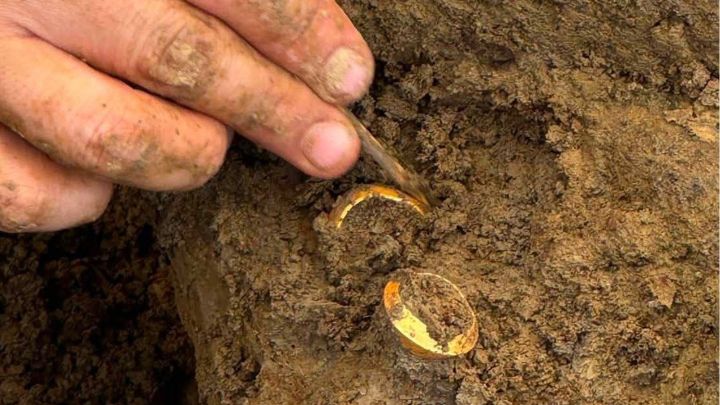
Since excavation work began in February, archaeologists have recovered eight human skeletons, along with bronze and gold jewellery, pottery, and other artifacts. Officials say the nature of these finds points to ceremonial burials reserved for wealthy individuals or members of the upper class.
The excavation is expected to be completed within another month. Once concluded, the Fine Arts Department plans to put the recovered artifacts on public display.
(With inputs from AP)