The blasts killed 187 people and injured 817. Last year, the Bombay High Court acquitted all 12 men convicted by a special court in the case, holding that the prosecution had failed to prove its case beyond a reasonable doubt. **The men, five of whom had been sentenced to death and seven to life imprisonment in 2015, had spent nearly two decades in prison by the time they were freed.** The Maharashtra government has since challenged the acquittal before the Supreme Court.

For many survivors, the acquittal reopened wounds they had spent years trying to heal. Alongside the uncertainty over who was responsible, **several** say they continue to receive little long-term support despite living with permanent disabilities.
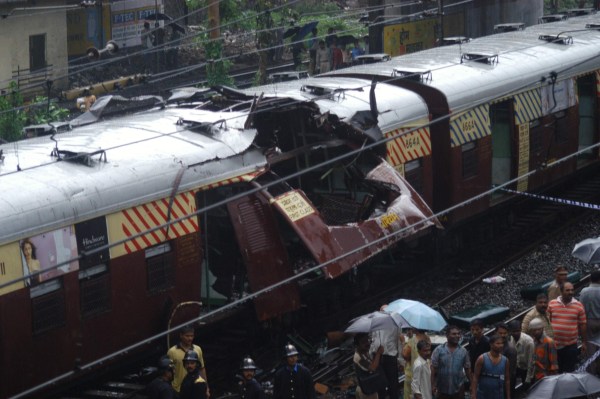 For many survivors, the acquittal reopened wounds they had spent years trying to heal. Alongside the uncertainty over who was responsible, **several** say they continue to receive little long-term support despite living with permanent disabilities. (Archive photo)
‘I don’t let the wheelchair define me’
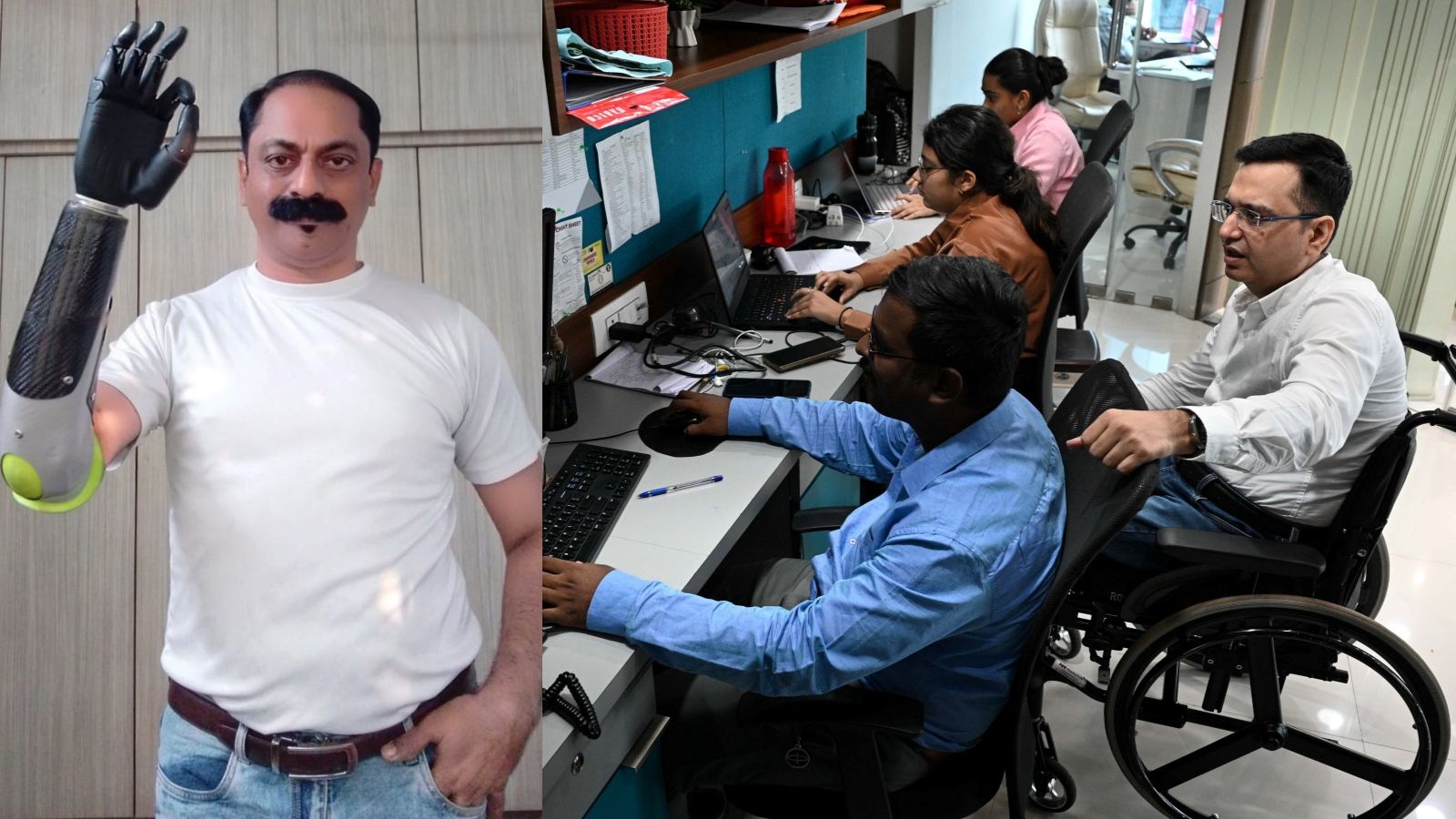
For Chirag Arvind Chauhan, 40, a chartered accountant, lawyer and founder of CA Chauhan & Co in Malad, life has been divided into two distinct halves.
“It has been 20 years. I have lived 20 years of a normal life and 20 years in a wheelchair, so it feels like I have lived life in two equal halves,” Chauhan said.
In 2006, then 20-year-old Chauhan was pursuing chartered accountancy and doing his articleship at a firm in the Fort area. On the evening of July 11, he was returning home when the explosion changed his life. The blast left him with a spinal cord injury that paralysed nearly 85% of his body below the chest.
He remained hospitalised for nearly two-and-a-half months before beginning physiotherapy. The recovery was slow, and it took almost two years before he could sit comfortably for long hours. “Initially, even sitting upright would make me feel faint. Slowly, my body adapted,” he recalled.
Story continues below this ad
Rather than dwell on what he had lost, Chauhan said he consciously chose to rebuild. “At that point, the biggest challenge was deciding whether I wanted to keep looking back or move forward. I chose to look forward,” he said.
He credits his mother, three elder sisters, friends and colleagues for helping him restart his life. His articleship firm supported him financially and arranged a laptop so he could continue working from home. He later completed his chartered accountancy, founded his own practice in 2012 after a failed start-up venture, completed an LLB, learnt to drive a hand-controlled car, and has now driven over 1.5 lakh kilometres across India.
Today, he follows a disciplined routine: waking up at 6 am, going to the gym and working full-time at his office. “I don’t let the wheelchair define me,” he said.
Yet, despite moving on personally, Chauhan says the question of justice continues to trouble survivors.
Story continues below this ad
He said, “When the acquittal came last year, we were all upset because justice had not been delivered. We still don’t know who actually carried out the blasts. The authorities say one thing, while those who were accused say they are also victims. So, who do we believe? Maybe the real accused are still roaming free.”
He demanded that the actual culprits be punished as per the law of the land. “The loss has already happened… It has taken two decades just to reach a point where we still cannot answer the most basic question: who carried out the blasts?”
Chauhan says he continues speaking publicly every year about the issue because it should not be forgotten.
“I may have moved on with my life, but many other victims and their families still carry pain and resentment because justice has not been delivered. If everyone remains silent, everything will simply be taken for granted. We cannot allow that to happen.”
Story continues below this ad
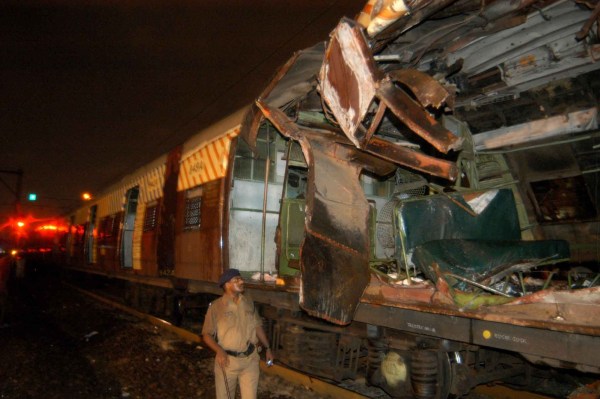 The blasts killed 187 people and injured 817. Last year, the Bombay High Court acquitted all 12 men convicted by a special court in the case, holding that the prosecution had failed to prove its case beyond a reasonable doubt. (Archive photo)
‘Need long-term support, not one-time help’
Mahendra Vilas Pitale, 53, now an office superintendent with the Western Railway, lost a hand in the blast and now uses a prosthetic limb.
A resident of Mira Road, Pitale used to work in sculpture carving and painting. Losing a hand ended that career permanently.
“Every year when July 11 comes around, all those memories return. Last year, when the High Court acquitted all the accused, we were in shock. We had waited for 19 years, believing that those responsible would finally be punished. Instead, everyone was released. We still don’t know whether the real perpetrators were ever caught. We did not get justice, and that is the hardest part,” he said.
With the state government now taking the matter to the Supreme Court, he said survivors are waiting to see how the case progresses.
Story continues below this ad
After the blast, Pitale received a letter asking him to apply for a government job on compassionate grounds. He applied in 2008 but was appointed by Western Railway only in 2015, he said, after former MP Kirit Somaiya intervened and met then Railway Minister Suresh Prabhu.
His biggest struggle today is rehabilitation. “A good prosthetic hand costs around Rs 10 lakh. The government has never provided financial assistance for it.”
While he received compensation and insurance after the blast, none of it covered prosthetic limbs, which require replacement every four to five years.
“The prosthetic hand I am currently using was provided temporarily by a company. It is essentially on loan and can be taken back,” he said.
Story continues below this ad
Over two decades, he has used eight prosthetic hands, starting with basic artificial limbs costing around Rs 3,600, then mechanical hands costing Rs 40,000-50,000, before exploring advanced prosthetics that remain financially out of reach.
“I don’t want to depend on NGOs or trusts every time I need a new prosthetic. People with amputations need long-term support, not one-time assistance. Every four or five years, we have to replace these limbs. That costs lakhs of rupees. What has the government done for people like us?” he asked.
He said that, along with the quest for justice, the government must also pay attention to the requirements for the lifelong rehabilitation of survivors.
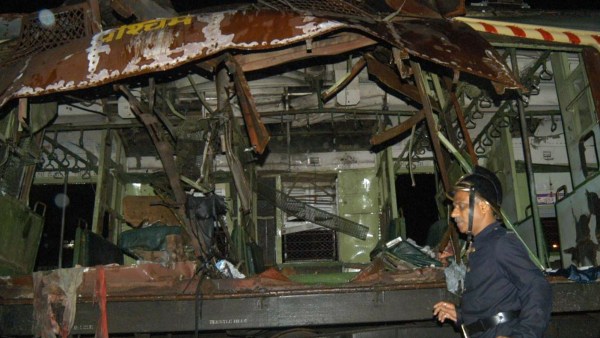 An officer linked to the probe said while the High Court had acquitted the accused, the Special MCOCA Court had found them guilty. “It is up to the Supreme Court to take a decision,” the officer said. (Archive photo)
‘None of us travel by train anymore’
For 46-year-old Bindiya Rane from Kandivali, the anniversary is no longer just about her father’s survival, but about preserving his memory. Her father, Balam Rane, survived the blasts and lived till 2022, when he died of a heart attack.
Story continues below this ad
“My father was 47 years old when the blasts took place. He was returning home from work. I was around 26 years old and had just started working,” she recalled.
The blast severely damaged his eardrums, leaving him with permanent hearing loss. He wore hearing aids for the rest of his life. His right arm was also injured, limiting his ability to lift objects. Even years later, rainwater or loud noises caused him pain.
“When the explosion happened, my father lost consciousness. He remembered nothing until he regained consciousness later. The only thing he recalled was waking up and walking over dead bodies,” she said.
It was only later that doctors discovered he had also suffered a heart attack during the blast. Because he did not initially appear critically injured, the family said he received only basic treatment. Later complications had to be treated privately at their own expense.
Story continues below this ad
“He could not work for some time. Since he was the only earning member of the family, it created serious financial difficulties. Although he eventually returned to work, he took a local job because he could no longer commute by train. I don’t think he ever travelled alone by train after that incident. If he had to go anywhere, he would either travel with one of us or by road. The fear never really left him. None of us travel by train anymore,” she said.
The emotional impact extended beyond him. “Right after the explosions, we had no idea where he was. We couldn’t reach him or find him. That period of uncertainty was terrifying. Even today, whenever somebody talks about the blasts, it feels like a nightmare because all those memories come back,” Bindiya said.
She now cares for her mother and younger sister with special needs, who live in Vasai.
For their family, July 11 became more than an anniversary. She said, “My father had two birthdays. One was his actual birthday, and the other was July 11, the day he survived the blasts. We celebrated both because we considered July 11 to be his second birth.”
However, like many of the survivors’ and victims’ family members, she feels it is essential for those responsible for the blasts to be brought to justice.
“I still feel there should have been a proper investigation, and accountability is important. At the same time, I also wonder how we can ensure that something like this never happens again,” she said.