This post may contain affiliate links. Read my full disclosure policy.
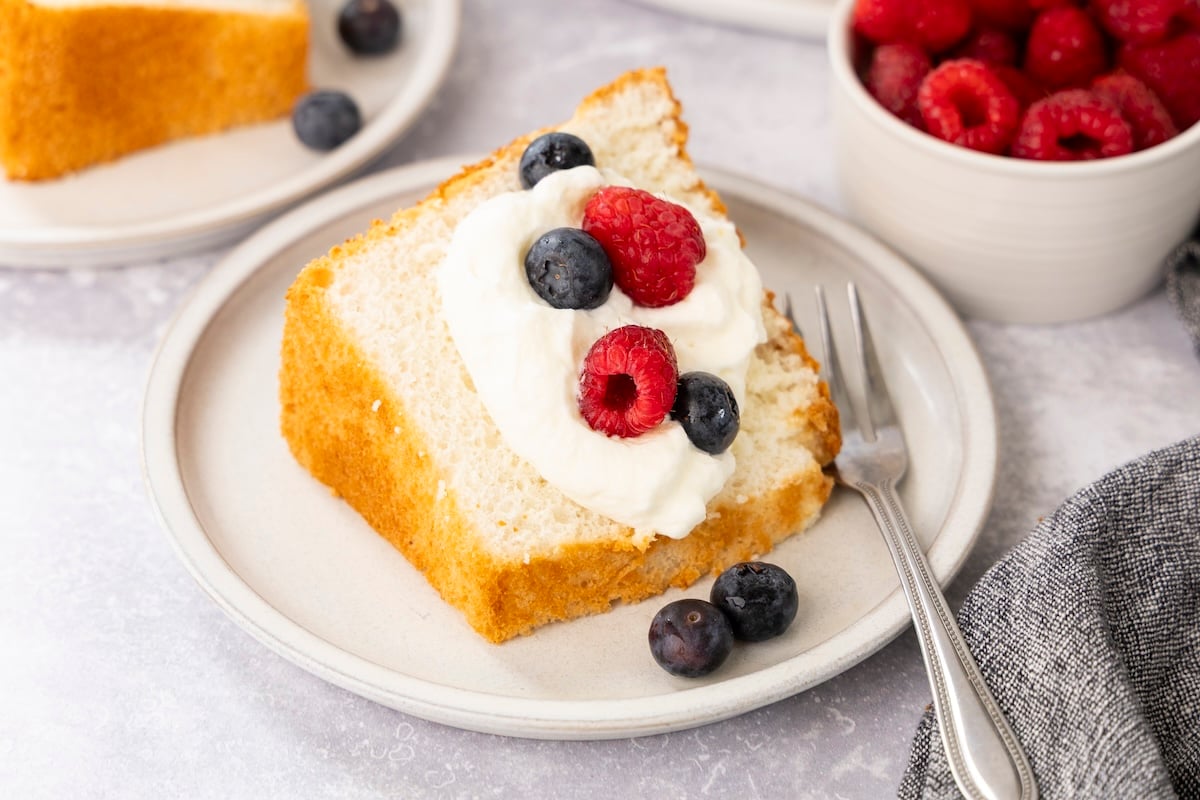
A classic for good reason, angel food cake is light, airy, and endlessly versatile. Dress it up with fresh fruit and whipped cream or enjoy it just as it is.
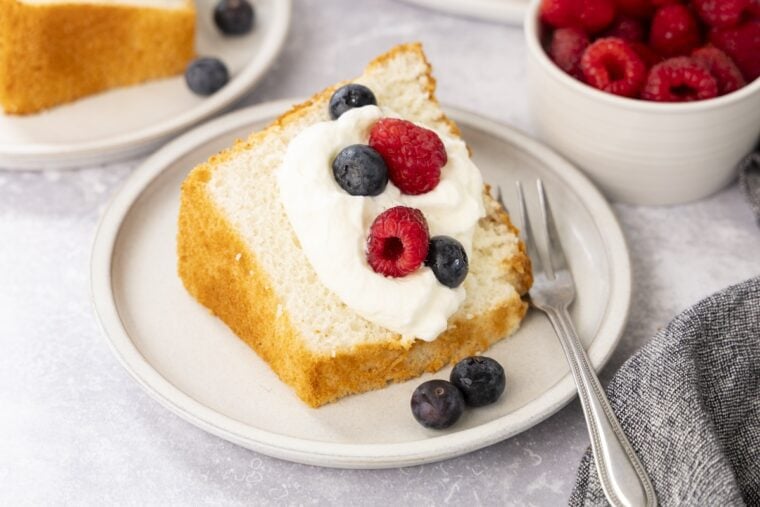
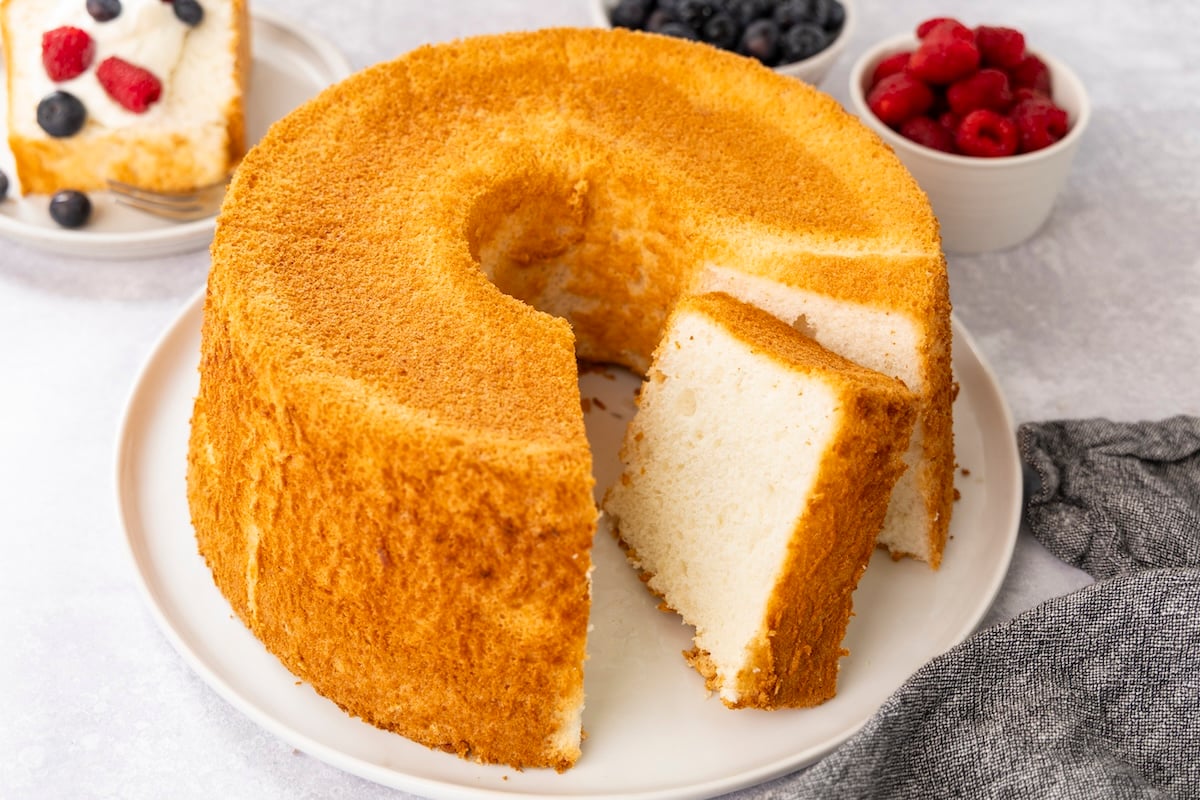
If you’ve only ever had store-bought angel food cake, you’re in for a treat. Homemade angel food cake is in a league of its own. It’s tall, feather-light, and incredibly fluffy, with a delicate vanilla-almond flavor and a lightly crisp, golden crust. It has a reputation for being tricky, but it’s actually quite straightforward once you know a few simple techniques.
This recipe walks you through each step, from whipping the egg whites to folding in the flour, so you can make a beautiful angel food cake from scratch with confidence. Serve it with fresh berries and whipped cream, lemon curd, or simply a dusting of confectioners’ sugar.
Why Is It Called Angel Food Cake?
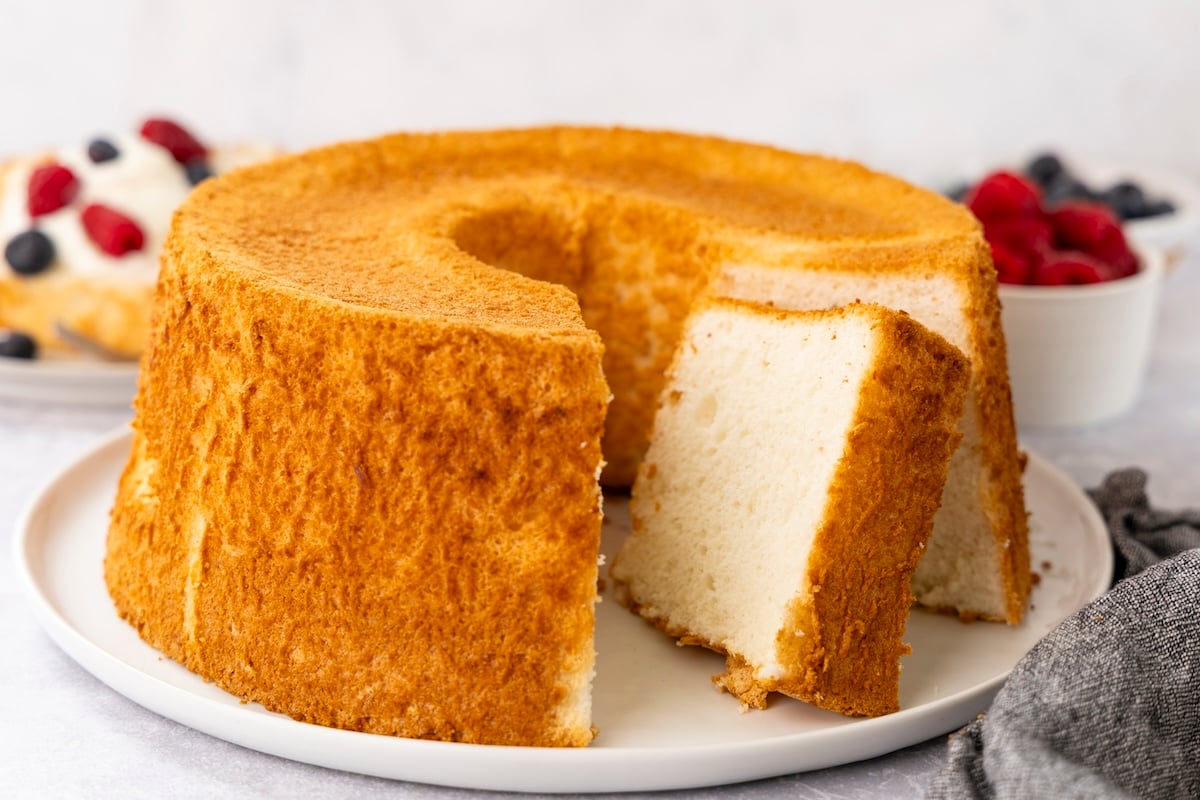
Angel food cake has been an American favorite since the late 1800s. It became popular around the time the hand-cranked eggbeater was invented, making it much easier to whip the dozen or more egg whites needed to create its signature lofty texture. Its name comes from its incredibly light, airy texture, which was said to be “fit for angels,”especially compared to the rich butter cakes of the day.
What You’ll Need To Make Angel Food Cake
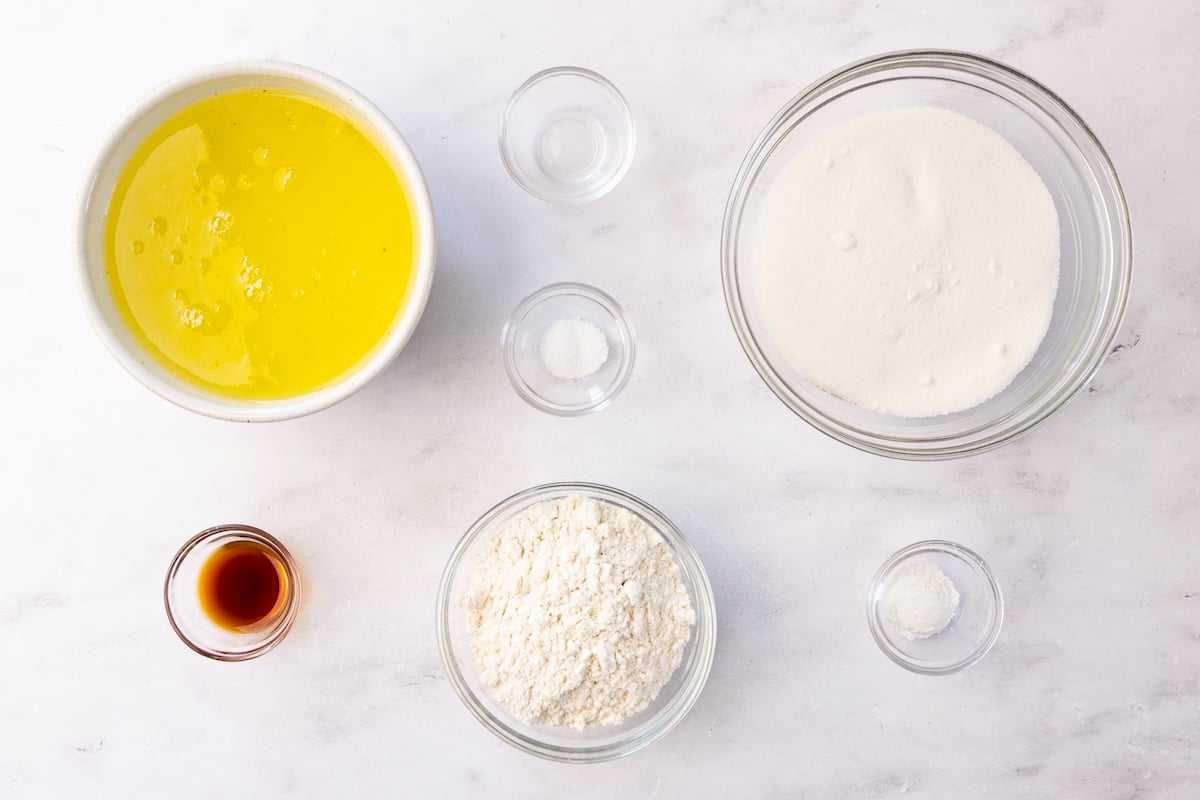
To make angel food cake, you’ll need cake flour, sugar, egg whites, cream of tartar, salt, vanilla extract, and almond extract.
Step-By-Step Instructions
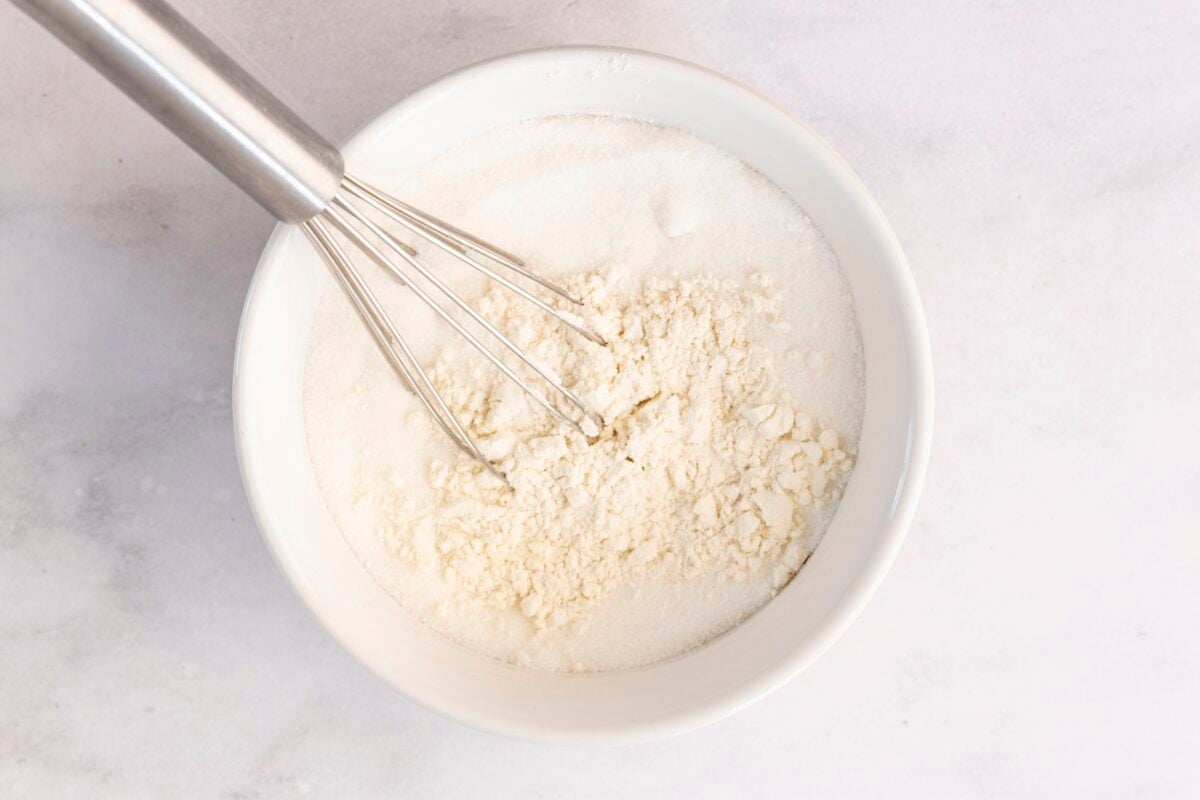
Step 1: Combine the dry ingredients. In a small bowl, whisk together the flour and ¾ cup of the sugar until evenly combined.
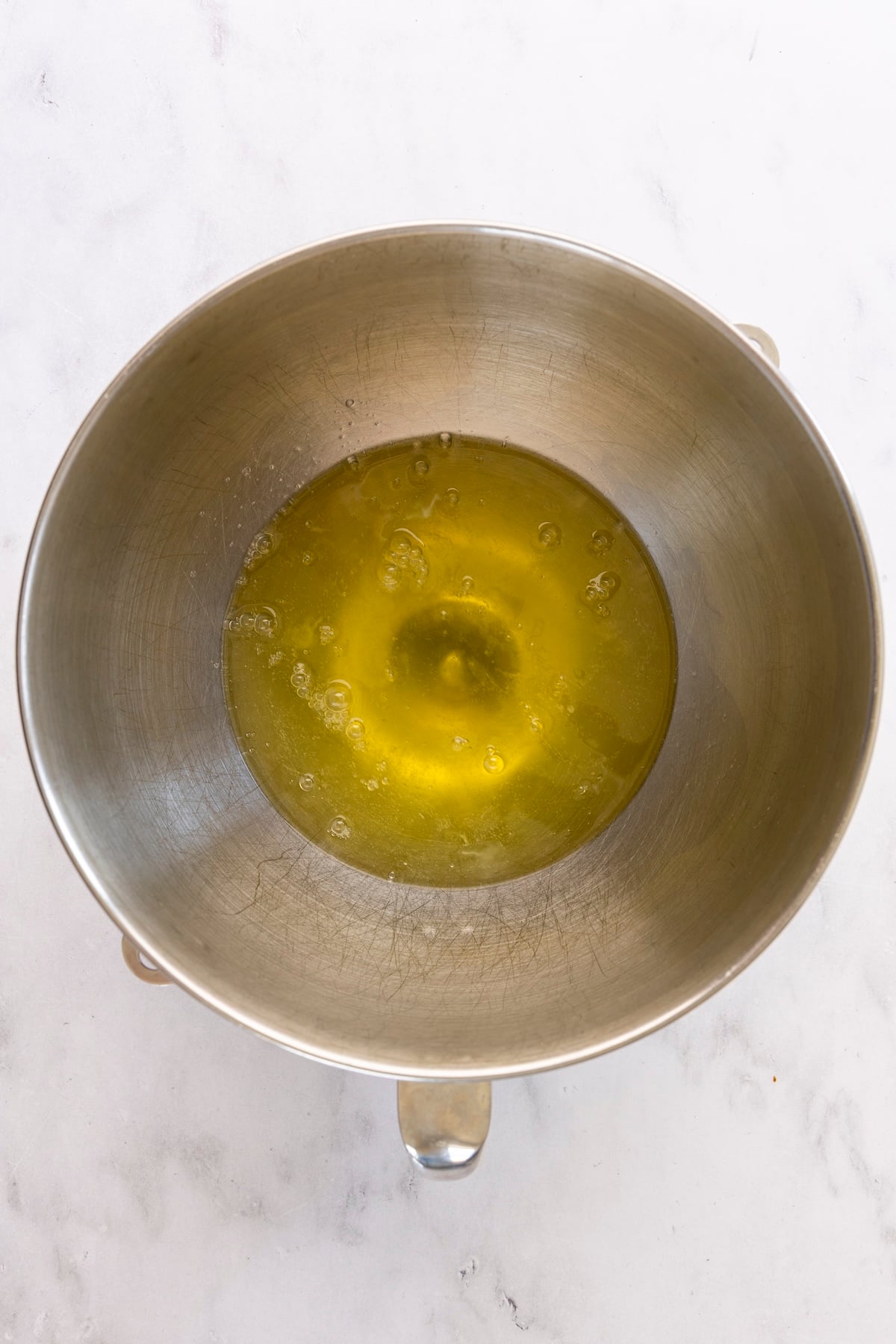
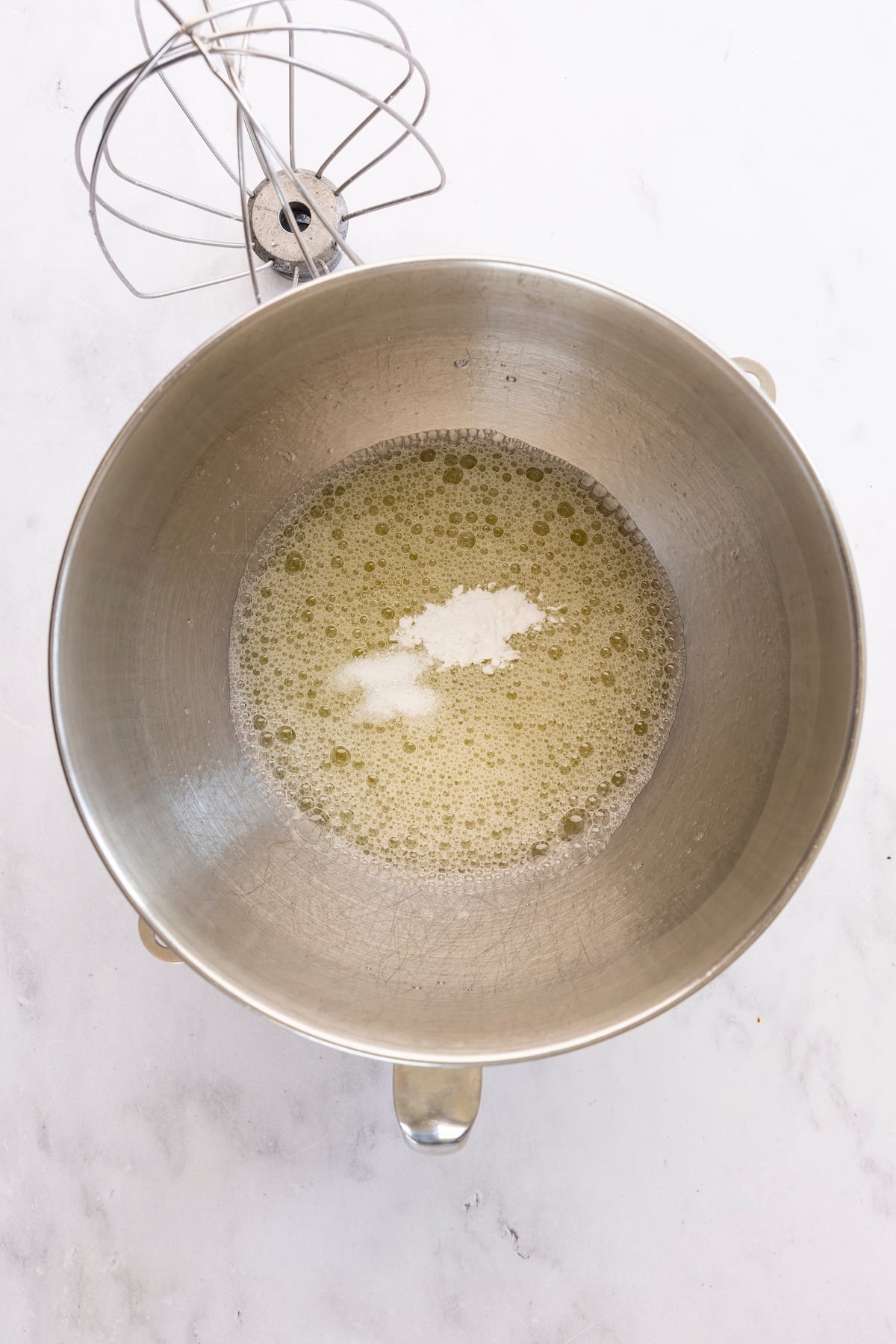
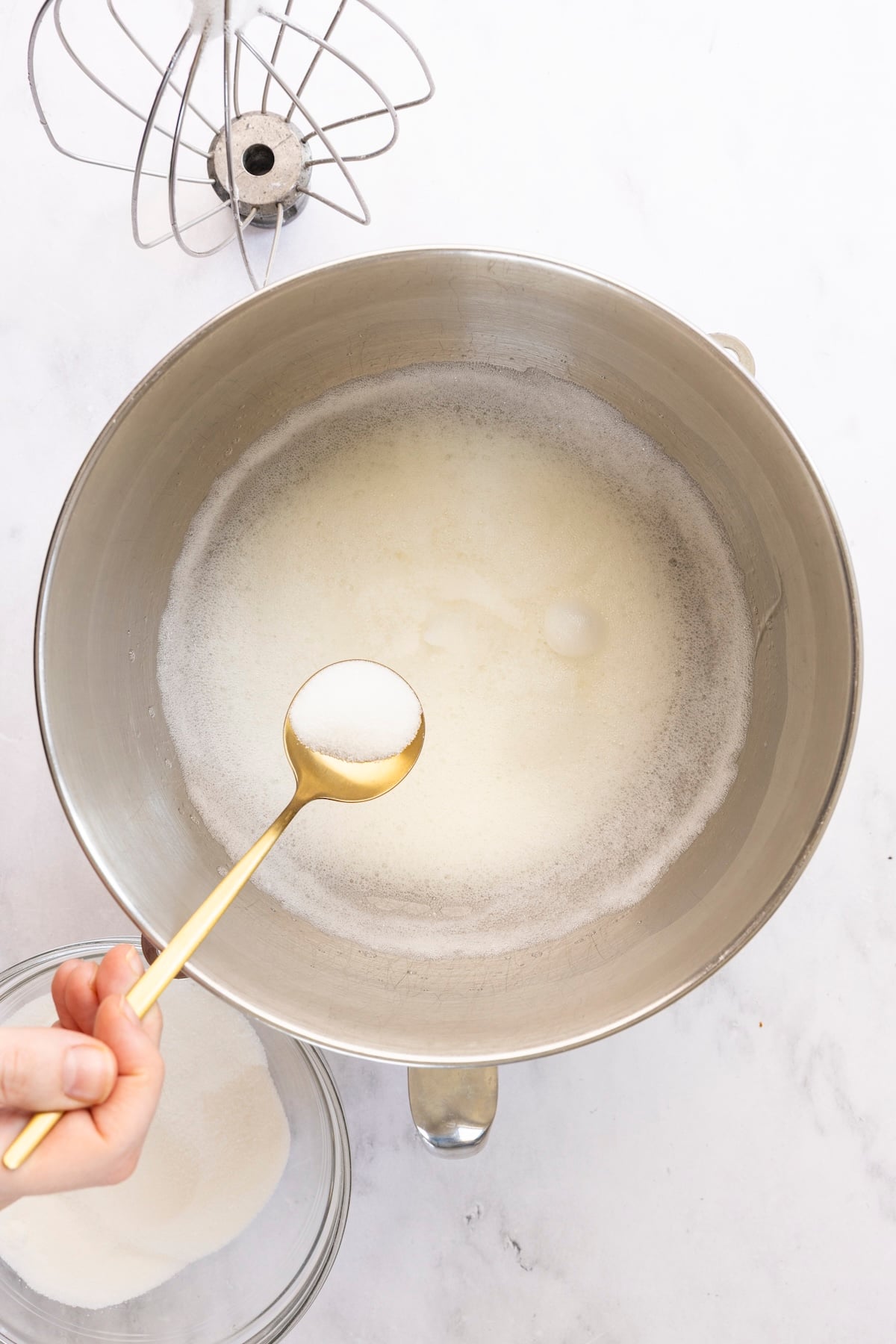
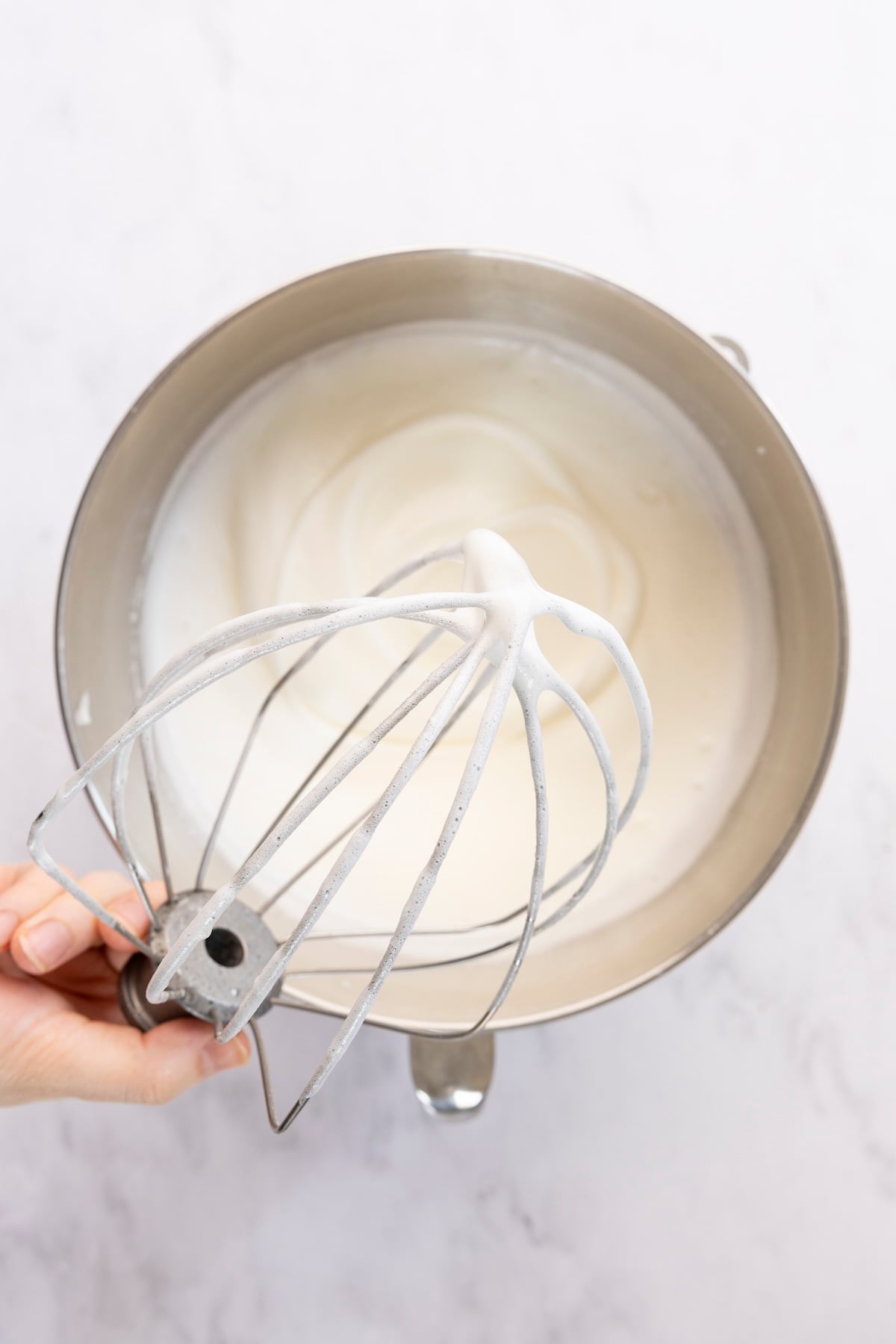
Step 2: Whip the egg whites. In a stand mixer fitted with the whisk attachment, beat the egg whites on medium-low speed until foamy, about 1 minute. Add the cream of tartar and salt, then beat on medium speed until opaque and billowy, about 2 minutes. With the mixer running, gradually add the remaining ¾ cup sugar, 1 tablespoon at a time, over about 1 minute. Continue beating until the whites are smooth, glossy, and hold soft peaks that curl gently at the tips, 2 to 3 minutes more.
Pro Tip: Stop beating as soon as the whites look glossy and hold a gentle curl. If you overbeat, the mixture will lose its shine, look dry, clumpy, or curdled, and it won’t rise properly in the oven.
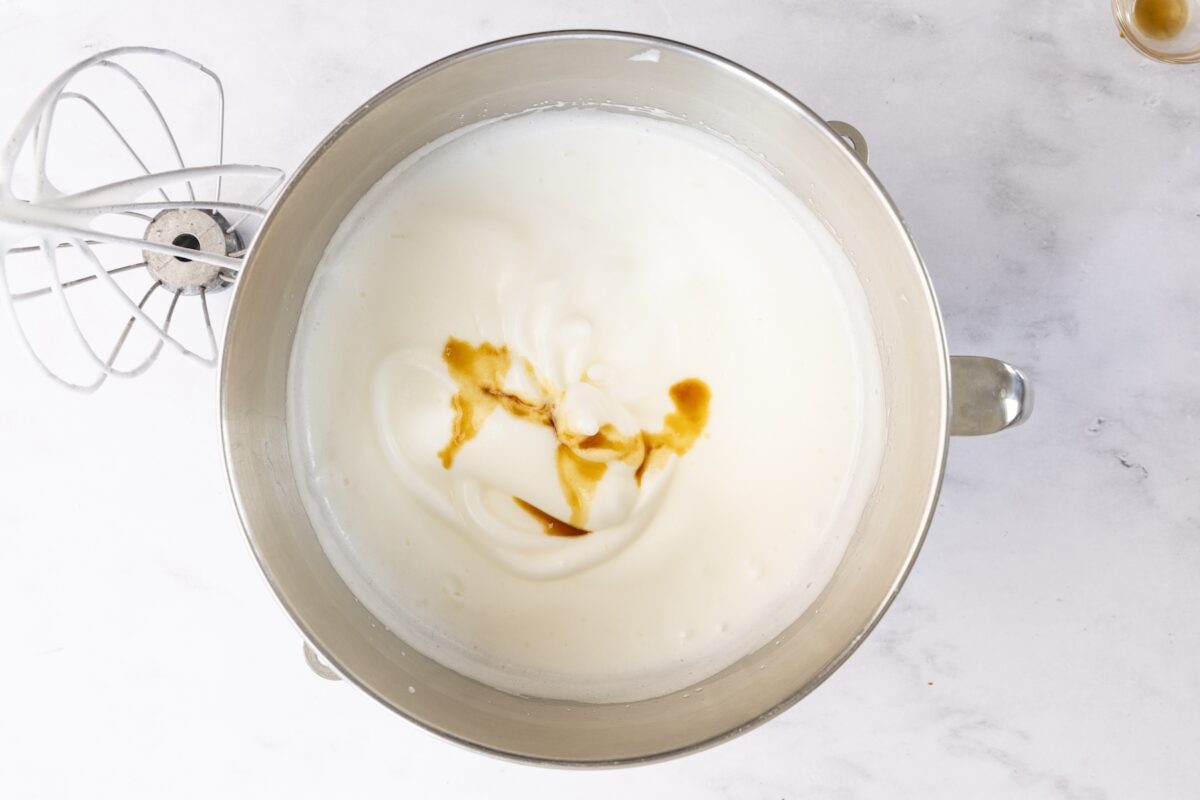
Step 3: Add the extracts. Pour the vanilla and almond extracts into the bowl and beat for about 10 seconds just until the flavors are blended.
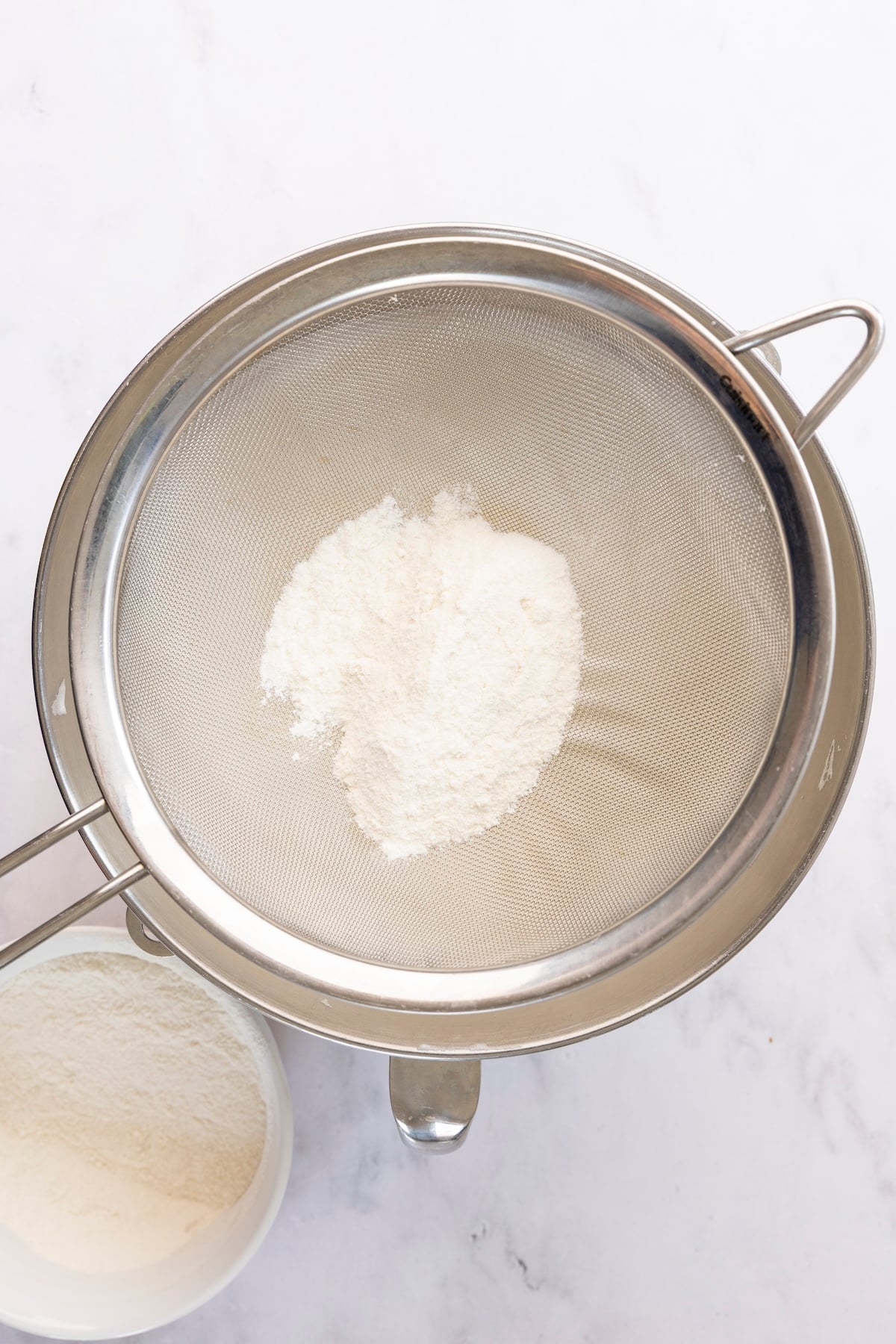
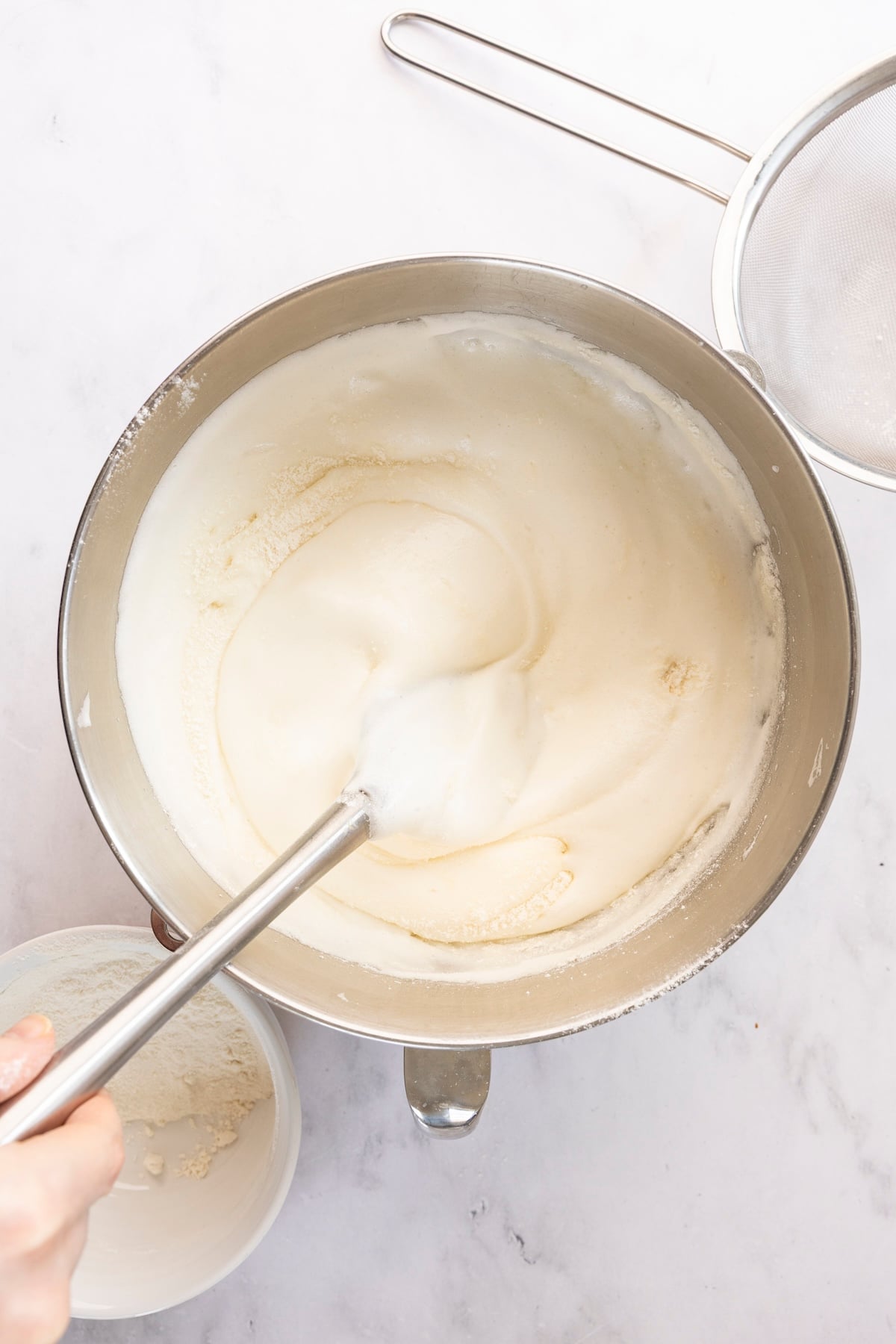
Step 4: Fold in the dry ingredients. Position a sifter over the bowl and sift the flour-sugar mixture onto the egg whites a few tablespoons at a time, using a large rubber spatula to gently fold the dry ingredients in with broad, light strokes to keep from deflating the batter.
Pro Tip: Take your time folding to avoid deflating the whites. If any of the flour-sugar mixture accidentally drifts or spills onto the counter while you are sifting, simply sweep it up and sift it back over the batter.
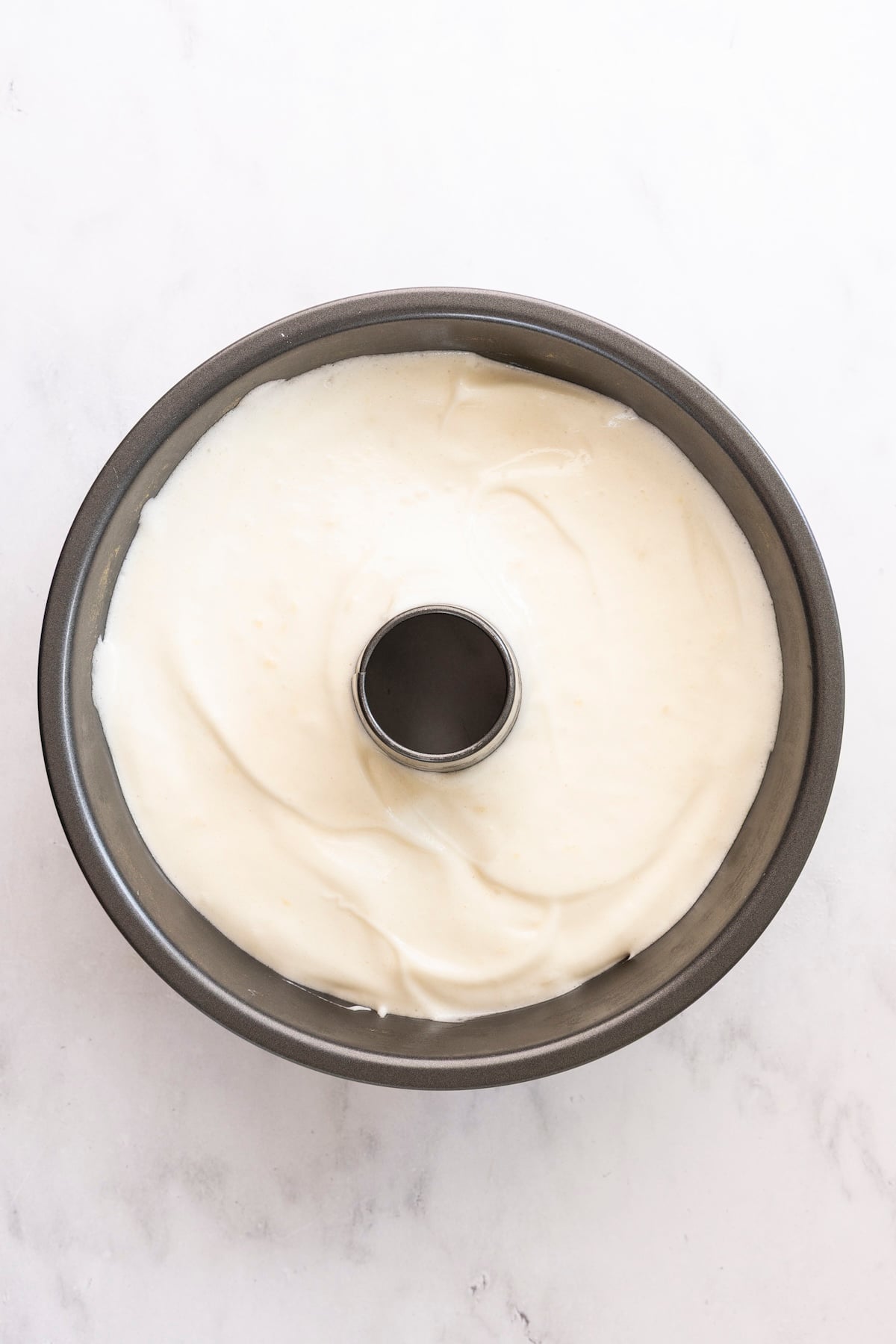
Step 5: Bake the cake. Scrape the batter into the prepared tube pan, smooth the surface, and wipe away any drips along the inside rim. Tap the pan firmly 2 to 3 times on the counter before baking for 45 to 55 minutes in a 325°F oven until the top is golden and a toothpick comes out clean.
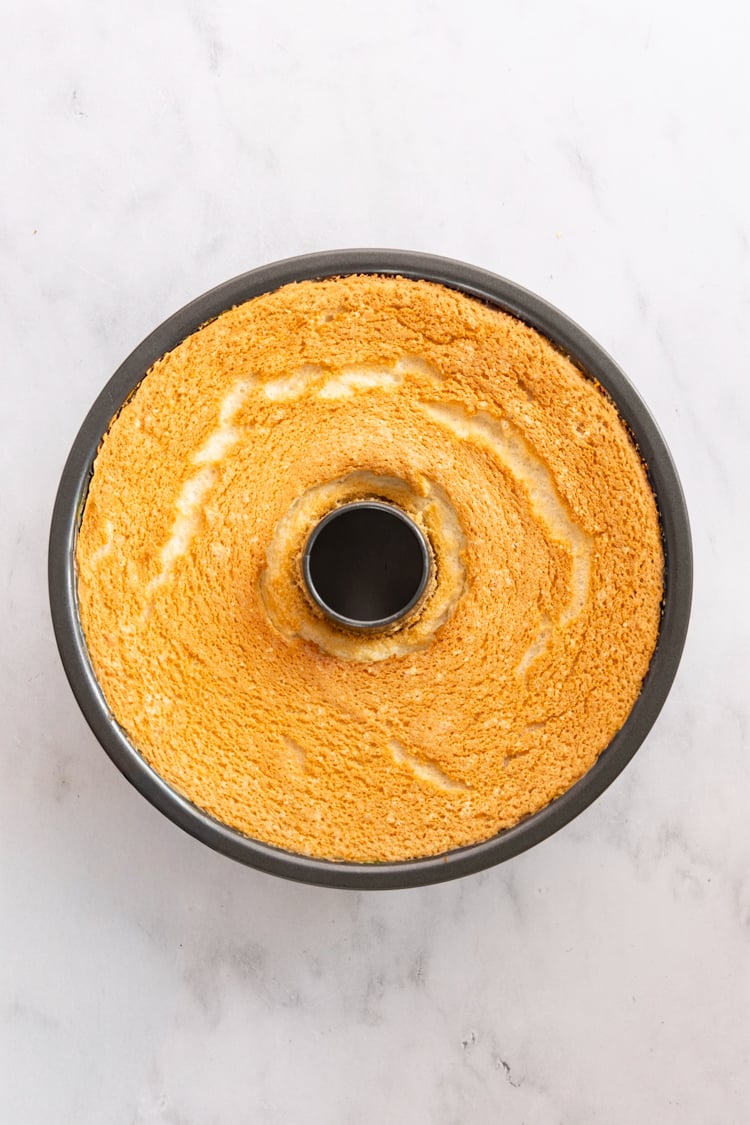
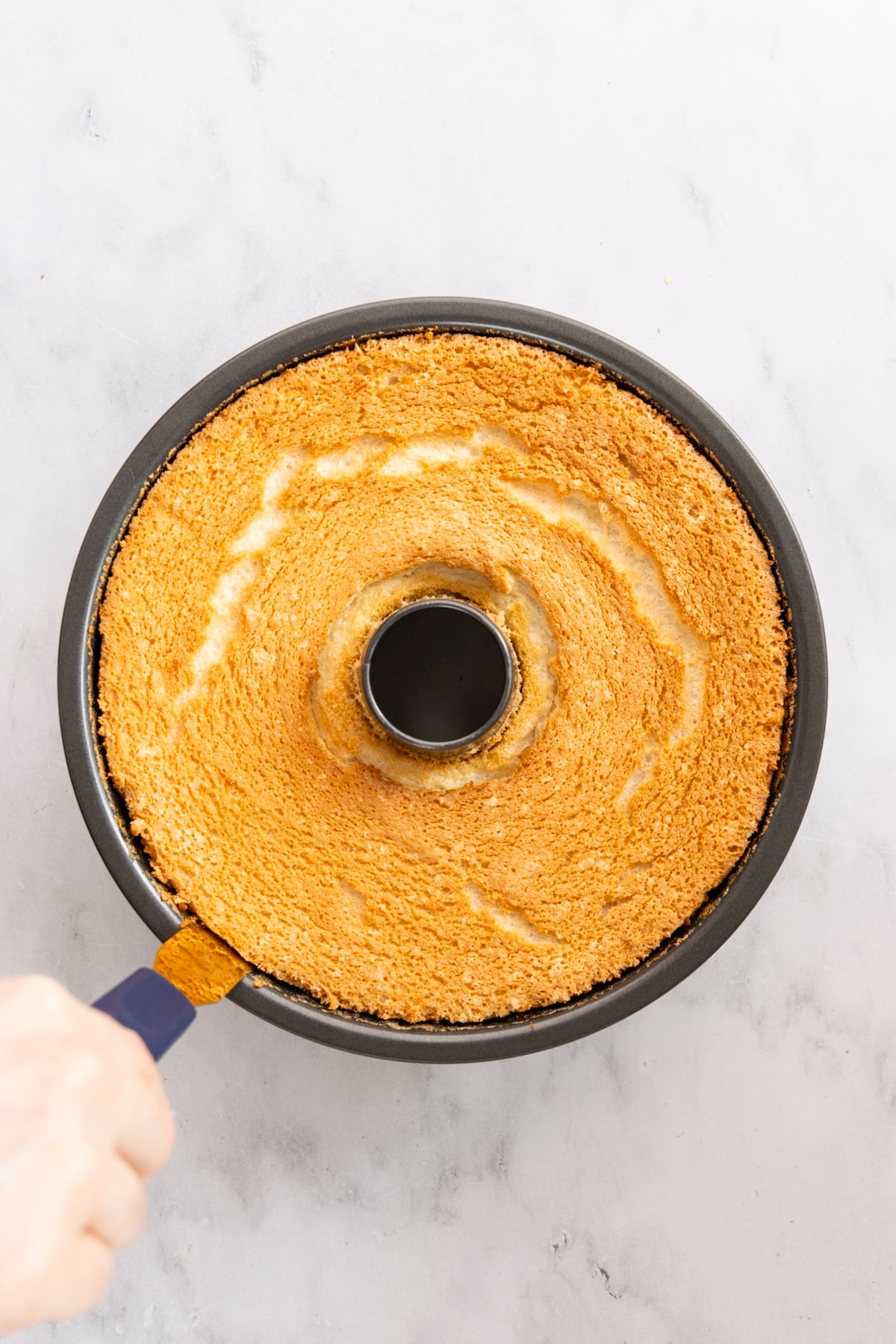
Step 6: Invert, cool, and unmold. Immediately turn the pan upside-down onto the tub pan’s built-in feet (if it has them) or balance the center tube over the neck of a bottle to cool for 2 to 3 hours; once fully cooled, flip right-side-up, run a thin knife around the outer rim and center tube to loosen the cake. Transfer the cake to a serving platter, bottom side up.
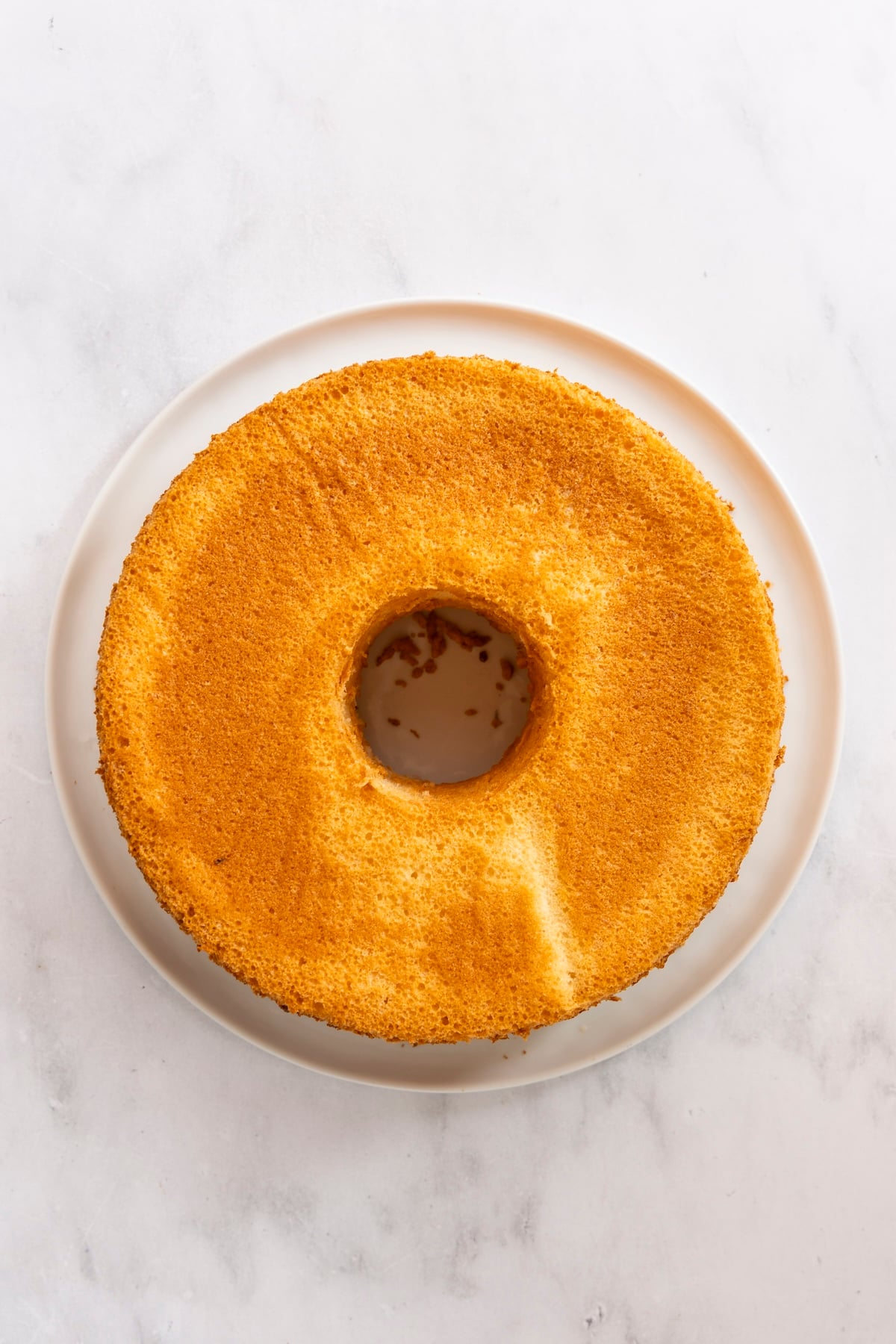
Step 7: Serve. Slice with a serrated knife, using a gentle sawing motion. The cake is best enjoyed fresh on the day it’s made.
More Simple Cake Recipes You’ll Love
Angel Food Cake
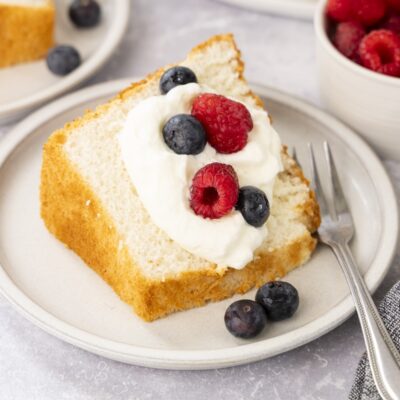
Angel food cake with a delicate golden crust and a soft, light-as-air center.
Ingredients
- 1 cup cake flour (see note)
- 1½ cups sugar, divided
- 12 large egg whites
- 1 teaspoon cream of tartar
- ½ teaspoon salt
- 1½ teaspoons vanilla extract
- ½ teaspoon almond extract
Instructions
-
Preheat the oven to 325°F (165°C) and set an oven rack in the lower-middle position. Have ready an ungreased 9-in (23-cm) tube pan with a 16-cup capacity, preferably one with a removable bottom. (Angel food cake needs to cling to the sides of the pan as it rises, so don’t grease it.) If your pan doesn’t have a removable bottom, line the bottom with parchment paper (do not grease it).
-
In a small bowl, whisk together the flour and ¾ cup (150 g) of the sugar until evenly combined.
-
In the bowl of a stand mixer fitted with the whisk attachment (or in a large bowl if using a handheld mixer), beat the egg whites on medium-low speed (4) until broken up and foamy, about 1 minute. Add the cream of tartar and salt, then increase the speed to medium (6) and continue beating until the whites become opaque and form very soft, billowy mounds, about 2 minutes more.
-
With the mixer still running on medium speed, gradually add the remaining ¾ cup (150 g) sugar, about 1 tablespoon at a time, taking about 1 minute total to add all the sugar. Once all the sugar is added, continue beating until the whites are glossy and hold soft peaks, 2 to 3 minutes. When you lift the whisk out of the bowl, the peaks should gently curl over at the tip, and the mixture should look smooth and satiny, not dry or grainy. Be careful not to overbeat—the whites should still look soft and creamy, not stiff or clumpy.
-
Add the vanilla and almond extracts and beat just until blended, about 10 seconds.
-
Place a sifter or fine sieve over the bowl. Sift the flour mixture over the egg whites a few tablespoons at a time, gently folding after each addition with a large rubber spatula. Use broad, light strokes, sweeping down to the bottom of the bowl and lifting the batter up and over itself. Take your time here—the goal is to incorporate the flour without deflating the whites. If any flour mixture falls onto the counter, simply sift it back over the batter.
-
Once all the flour mixture is incorporated, gently scrape the batter into the prepared pan and smooth the top. Run a paper towel or your finger lightly around the top inside edge of the pan to wipe away any smears or drips of batter. Give the pan two or three gentle taps on the counter to release any large air bubbles.
-
Bake for 45 to 55 minutes, until the cake is golden and springs back when lightly pressed in the center. A toothpick inserted into the cake should come out clean.
-
Immediately invert the pan to cool completely. If your tube pan has little feet, invert it onto them. Otherwise, carefully invert the pan over the neck of a bottle or funnel so air can circulate underneath. Let the cake cool completely, 2 to 3 hours.
-
To unmold, turn the cake right-side-up and run a thin knife around both the outer edge of the cake and the center tube to loosen it from the pan, taking care not to separate too much of the crust from the cake. Remove the outer ring, then run the knife under the cake to release the bottom, or peel off the parchment paper if using.
-
Transfer the cake to a serving platter, bottom side up. Using a serrated knife, slice with a gentle sawing motion. Angel food cake is best served the day it’s made.
Notes
- For best results, use bleached cake flour, which gives angel food cake its signature light, airy texture. Popular supermarket brands like Swans Down and Softasilk are ideal. Unbleached cake flour, such as King Arthur, will work, but the cake may not rise quite as high or bake up as tender.
- Fresh egg whites are best for angel food cake. Carton egg whites don’t whip as well due to pasteurization, so the cake may not rise as high or have the same light, airy texture.
Nutrition Information
Per serving (12 servings)Calories: 157kcalCarbohydrates: 34gProtein: 5gSodium: 153mgSugar: 25g
This website is written and produced for informational purposes only. I am not a certified nutritionist and the nutritional data on this site has not been evaluated or approved by a nutritionist or the Food and Drug Administration. Nutritional information is offered as a courtesy and should not be construed as a guarantee. The data is calculated through an online nutritional calculator, Edamam.com. Although I do my best to provide accurate nutritional information, these figures should be considered estimates only. Varying factors such as product types or brands purchased, natural fluctuations in fresh produce, and the way ingredients are processed change the effective nutritional information in any given recipe. Furthermore, different online calculators provide different results depending on their own nutrition fact sources and algorithms. To obtain the most accurate nutritional information in a given recipe, you should calculate the nutritional information with the actual ingredients used in your recipe, using your preferred nutrition calculator.