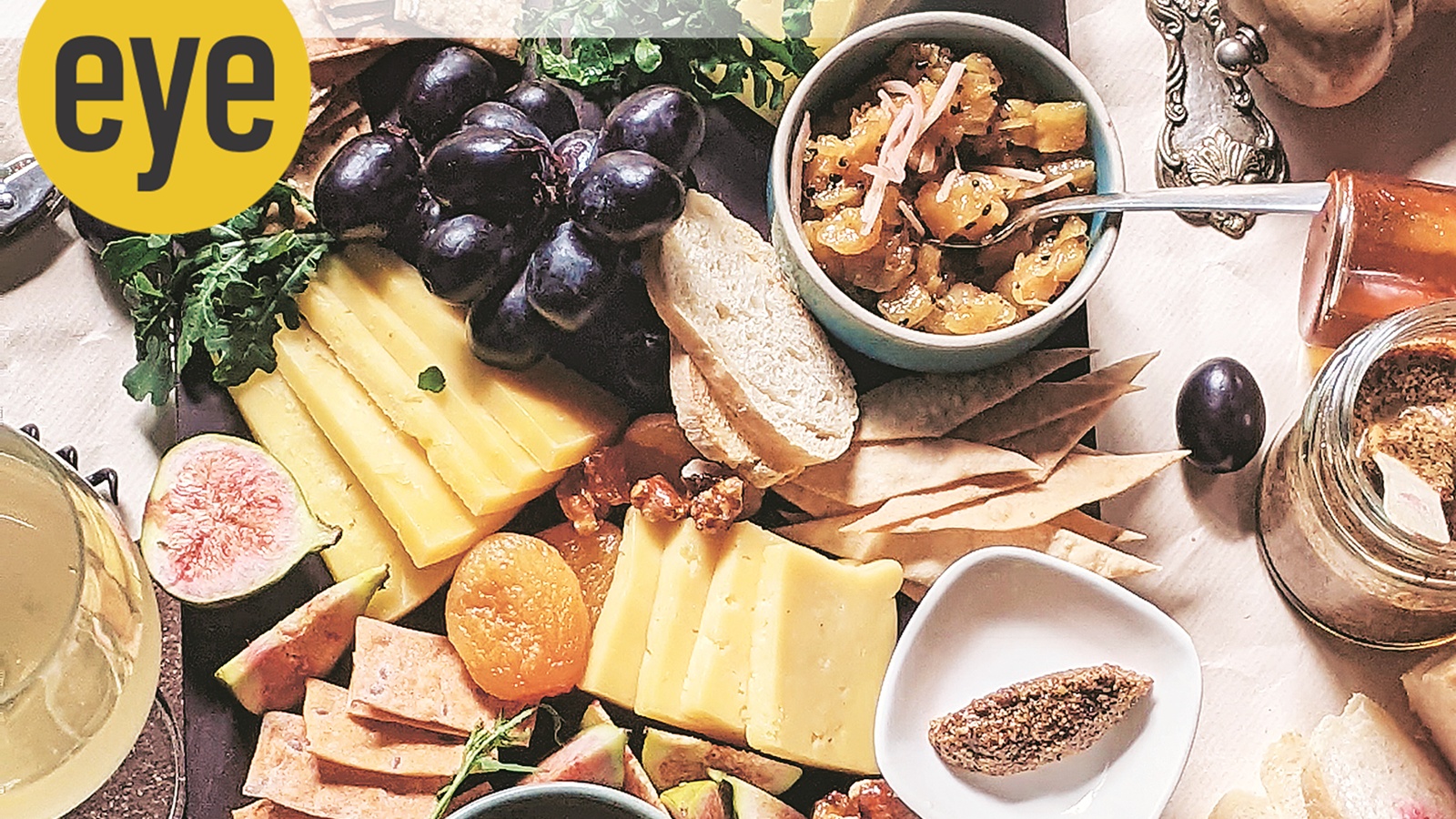
In her bedroom in Mulund, a young woman turned a fridge into a cheese cave. She tweaked the thermostat until it held steady at 13 degrees Celsius, dropped a hygrometer inside to track humidity and started ageing wheels of cheese. At one point, she had 25 varieties in there and the room smelled unmistakably of mould. She was still commuting to a corporate job on weekdays. On weekends, she made cheese.
Mausam Narang is one of a handful of people who has ventured into making homegrown cheese. Then there’s a postdoctoral researcher who had left Canada; a Food Studies dropout from New York University; a restaurateur frustrated by imported cheese and lack of cold-chain supply; an Indo-French couple who moved to the Himalayas on instinct and now make Western-style artisanal cheese, from Indian milk.

Up until a decade ago, cheese in most Indian homes meant a cheese slice or a cheese cube. Today, there is a small but fast-growing constellation of makers — Eleftheria and The Cheese Collective in Mumbai; Begum Victoria in Bengaluru; Amiksa in the hills above Shimla and half a dozen others — producing brie, burrata, gouda, feta and smoked cheddar.
Why cheese and why not
To understand why artisanal cheese is having a moment now, it helps to understand why it barely existed before. Though India is a milk civilisation, the specific alchemy of European cheesemaking — curdling milk with rennet, salting it, ageing it in caves — never took root here.
Cheesemaker and consultant Aditya Raghavan traces this to something concrete: traditional rennet, sourced from the stomach of an unweaned calf, became unavailable in India after the slaughter of young animals was prohibited on cultural and religious grounds. The import of rennet was also banned in 1984.
There is a parallel taboo around curdling milk deliberately. Chhena, the base for rasgulla and sandesh, was historically seen in many Hindu households as spoiled milk, something faintly inauspicious.
Mansi Jasani, known professionally as Cheesewali, founder of The Cheese Collective, talks of the climatic argument that cheese, at its core, is a technology for surviving winter. “European farmers dealt with a seasonal glut of summer milk and no refrigeration, so they spoiled it deliberately, adding salt and bacteria to buy themselves time. A French basement sits at a cool, stable 12 degrees Celsius — perfect for ageing wine or cheese. India never had that problem or that infrastructure,” she says, because milk was always consumed fresh or turned into paneer, ghee or dahi — products meant to be used, not stored. What was needed then was lab-produced vegetarian rennet (now widely available), reliable cold chain and, most of all, a willing audience who had tasted the real thing abroad and wanted it at home.
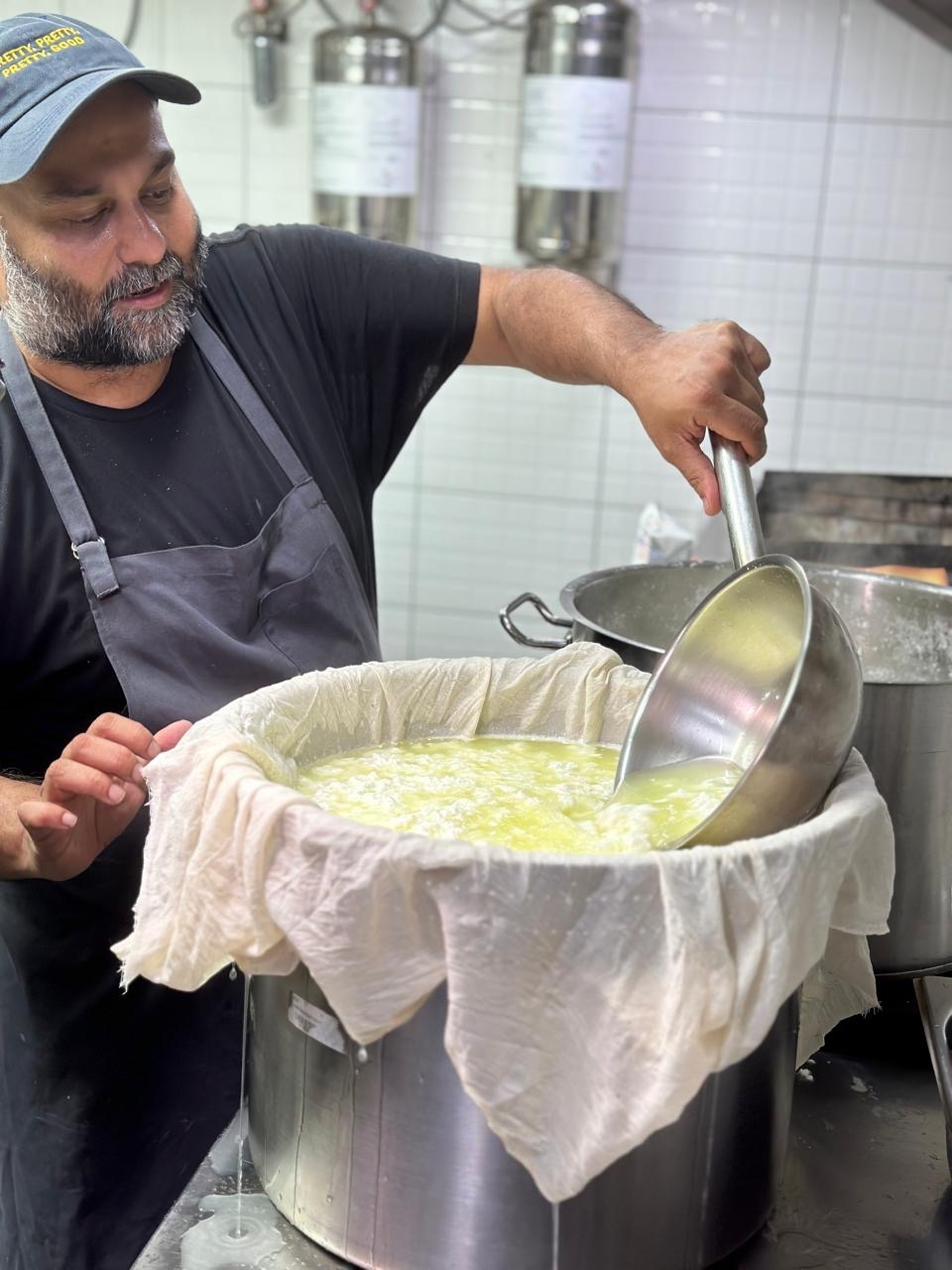 Aditya Raghavan
The first wave
But, before any of the current makers existed, there were older outposts. In Kalimpong, in northern Bengal, a semi-hard, Gouda-style cheese was reportedly introduced by Swiss missionaries who founded the Swiss Welfare Dairy there in the 1950s; production ceased in the 1990s. In the south, Auroville’s cheese programme and La Ferme Cheese have been there for almost four decades.
And in the west, there was Sohrab Chinoy, founder of ABC Farms in Pune. He started his first cheese factory in 1976 with just Rs 25,000, repurposing two 200-litre drums and second-hand refrigerators. As business grew, in the 1980s, internationally trained Indian chefs began seeking authentic gouda, cheddar, bel paese and blue cheese. The breakthrough came when Indian Airlines started sourcing ABC Farms’s cheese for sandwiches, later serving its cheese boards to first-class international passengers. “In the late 1980s, we started a cheese festival where we would lay out a huge cheese board and encourage people to try them before they made a purchase,” says Chinoy’s daughter Diana Sadri (née Chinoy), second-generation cheesemaker and Director of ABC Farms. Today, their products are available in Mumbai, Goa, Mahabaleshwar, Panchgani and Pune, with over 40 varieties, from aged cheddar to delicate French-style ripened cheese.
The Seekers
For artisanal cheese as an industry, the inflection point came between 2012 and 2015, concentrated largely in Mumbai. Cheese enthusiasts started bringing out their dairy thermometers and swishing the cream line to separate the milk and the whey.
Jasani, having interned as a cheesemonger at Murray’s Cheese in New York, returned to Mumbai wanting to do more. Around the same time, Raghavan was making goat cheese on weekends in Alberta, working from a book, before a stint on a Canadian sheep farm convinced him to come home and do it properly. Narang, who would go on to found Eleftheria, was experimenting with fresh mozzarella and burrata in her mother’s Mumbai kitchen, working her way up from four litres of milk to 80. Prateeksh Mehra, co-founder of Spotted Cow Fromagerie, was focusing on brie and camembert. Whenever any of them travelled, they would bring back cheese for the others. It was a small, informal, mutually reinforcing circle, with a shared obsession that spawned in the same city at the same time.
Now, however, the geography has widened. In Bengaluru, chef Manu Chandra and Shruti Golchha’s Begum Victoria is bringing a bit of Europe onto southern plates. When they began in 2018, good cheese simply wasn’t reaching intact. Import processes were slow and batches would spoil at port before they ever reached a kitchen. “We started procuring milk from domestic breeds. Many of those cows graze near the Tamil Nadu border, eat flowers and berries and whatever is growing, which adds character to the cheese,” says Chandra. “For a high-fat cheese like a double cream brie, we have to buy cream separately to bolster the quantity,” he adds. Today, Begum Victoria’s brie is served on the menus of Chandra’s own restaurant Lupa and Hunger Inc’s The Bombay Canteen, winning a clientele that keeps coming back. (Their 200 gm brie cheese is priced at Rs 550).
In the hills above Shimla, it was a different search for cheese. Debarati and her French husband François Laederich — who is trained in cheesemaking — went looking for a home in Himachal Pradesh on a scooty, kids wedged between them, journeying purely by instinct. This was 2019. They found a shuttered building in Mashobra. At that time, they didn’t know of the terrain’s commercial potential. The mountains came first, the cheese followed, because in France, she says, cheesemaking has always been linked to mountain life. Amiksa, their brand, which means cheese curds in Sanskrit is now found in Chandigarh, Delhi, Mumbai, Kolkata and Spiti. Their feeding partner restaurants include Olive, ITC and the Oberoi in Delhi.
Threading through some of these ventures is one name: Raghavan, who has consulted close to nine cheesemaking setups across the country, from a raw-milk dairy farm on Chennai’s OMR to a two-season stint at 14,000 ft in Spiti’s Demul village, where he helped develop a cheddar flavoured with wild-foraged cumin and onion flowers.
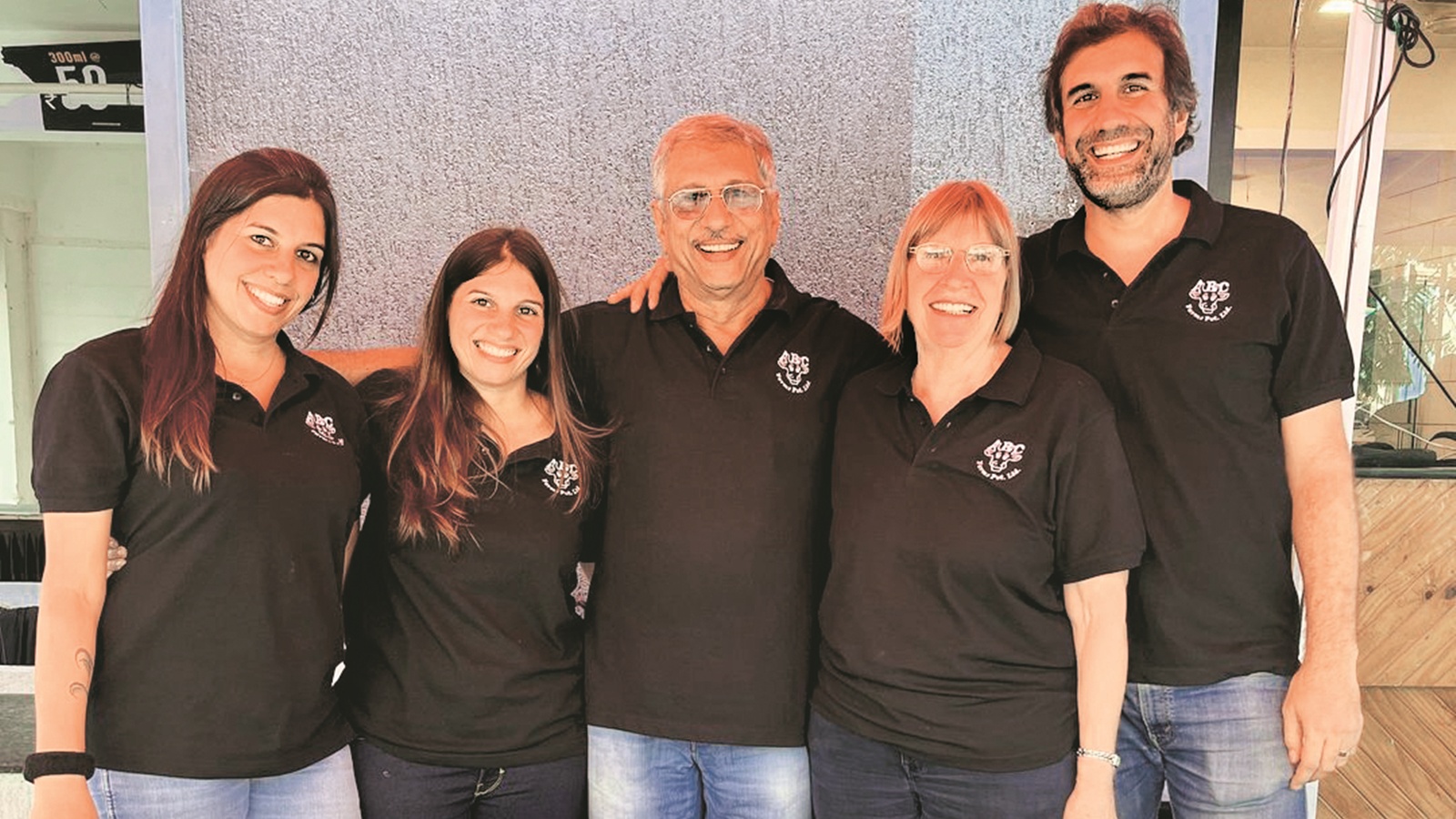 Sohrab Chinoy of ABC Farms with his family
The Palate Shifters
None of these cheeses are, strictly, Indian inventions. They borrow names and techniques from France, Italy, Holland, Norway. But nearly every maker has bent the form toward Indian taste in ways that wouldn’t exist anywhere else. Amiksa’s Cumin Gouda and its nut-and-raisin Borsalinuts, developed at a Punjabi customer’s suggestion, are unheard of in Europe.
Eleftheria’s Kaali Miri — laced with Kerala black pepper, crushed garlic and Himalayan salt (Rs 350 for 200 gm) — is what won over Narang’s parents, who were suspicious of everything mouldy. The award-winning Brunost (Rs 375 for 150 gm), a Norwegian style whey cheese that resembles Kandi Pedha in looks and flavour notes, has ‘EL and F’ written in Devnagri, to give it that local edge. In Chennai, Namrata Sundaresan of Käse rubs her cheddar cheese in podi, meant to be folded straight into a dosa.
Separate from all this sits a small set of genuinely indigenous cheese that predate the artisanal movement entirely — Kalari from Jammu and Kashmir’s pastoral herders; Bandel from Bengal; Churpi from the Himalayan northeast — none of them modelled on European technique, all of them shaped by climate, cattle and necessity. Raghavan describes it as fundamentally pastoral: no salt, almost no shelf life, meant to be eaten where it’s made, best known today as the cheese that is folded into a Kashmiri kulcha.
The not-so cheesy bits
Farm, temperature and price — these seem to be the larger barriers that curdles the end game. “The challenge starts at the farm. People need to understand that animal health matters, what the animals eat matters and that hormonal injections should not be given. That knowledge, resulting in clean and consistent milk and then the cold transport of that milk to the facility — that’s the first hurdle,” says Jasani, adding that the second challenge is the cold chain.
Cheese needs to sit between 4 and 7 degrees Celsius continuously, a narrow band that Indian courier and retail infrastructure still struggles to guarantee, and India’s heat, well above a cheese’s own melting point, doesn’t help. Third, and, perhaps, the hardest to shift is price and palate education. A kilo of paneer sells for roughly Rs 500-600. On the other hand, artisanal cheese runs four to six times that, and for defensible reasons — small batches, fresh milk, no shortcuts — but persuading a first-time buyer of that math takes time.
Mumbai-based Aditi Prabhu, a clinical and sports nutritionist, is a case in point. She was tired of the same processed cheese cubes she had grown up on. She began reading in depth about artisanal cheese about seven-eight years ago, buying it wherever she travelled. “I enjoyed Kodai Cheese (gouda 200 gm for Rs 350) in Goa, they are easily available there but not so in Mumbai,” she says, adding that she started looking for brands available in supermarkets around her home in Borivali, or ones that delivered at home. “Eleftheria is my go-to,” says Prabhu, who now has cheese at least five to seven days in a month. “I like mozzarella with my crackers and khakra, halloumi in stir-fries, burrata in my salads, and the fun, stretchy, yarn-ball-like Oaxaca just as it is.”
She also started asking her clients to include artisanal cheese in their diet but noticed resistance. “People aren’t sure about its taste, how to add it to their diet and, most importantly, its nutrition aspect,” she says. Unlike paneer, cheese is seen as an indulgence. “There are certain cheese that are high in protein and easy on your gut, say halloumi, burrata and goat cheese but that aspect has almost always been overlooked,” she says, adding that price is another concern for her clients.
Brands understand this too, and that’s, perhaps, why they are investing time in educating people on how best to enjoy their cheese. Eleftheria, Amiksa and Käse are among those that clearly list on their websites how each cheese is best enjoyed.
From cooking videos to putting out recipes made using cheese variants, there are customer awareness campaigns these makers run on social media. The country’s rising purchasing power has pushed the trend towards adopting artisanal cheese upward. Eleftheria has grown 30 per cent year-on-year since the pandemic pushed it into direct-to-consumer sales.
Many of these makers, including Eleftheria, The Cheese Collective, Amiksa, Käse and others, banded together last year to form the Indian Artisanal Cheese Association, aimed at promoting Indian-made cheese and supporting new entrants.
Asked where they see it all going, Jasani points to Japan’s own decades-long adoption of European cheesemaking, of bloomy rinds wrapped in sakura leaves and string cheese brushed with soy. She believes India is somewhere near the start of the same arc: importing a technique, then slowly, unmistakably, making it its own.