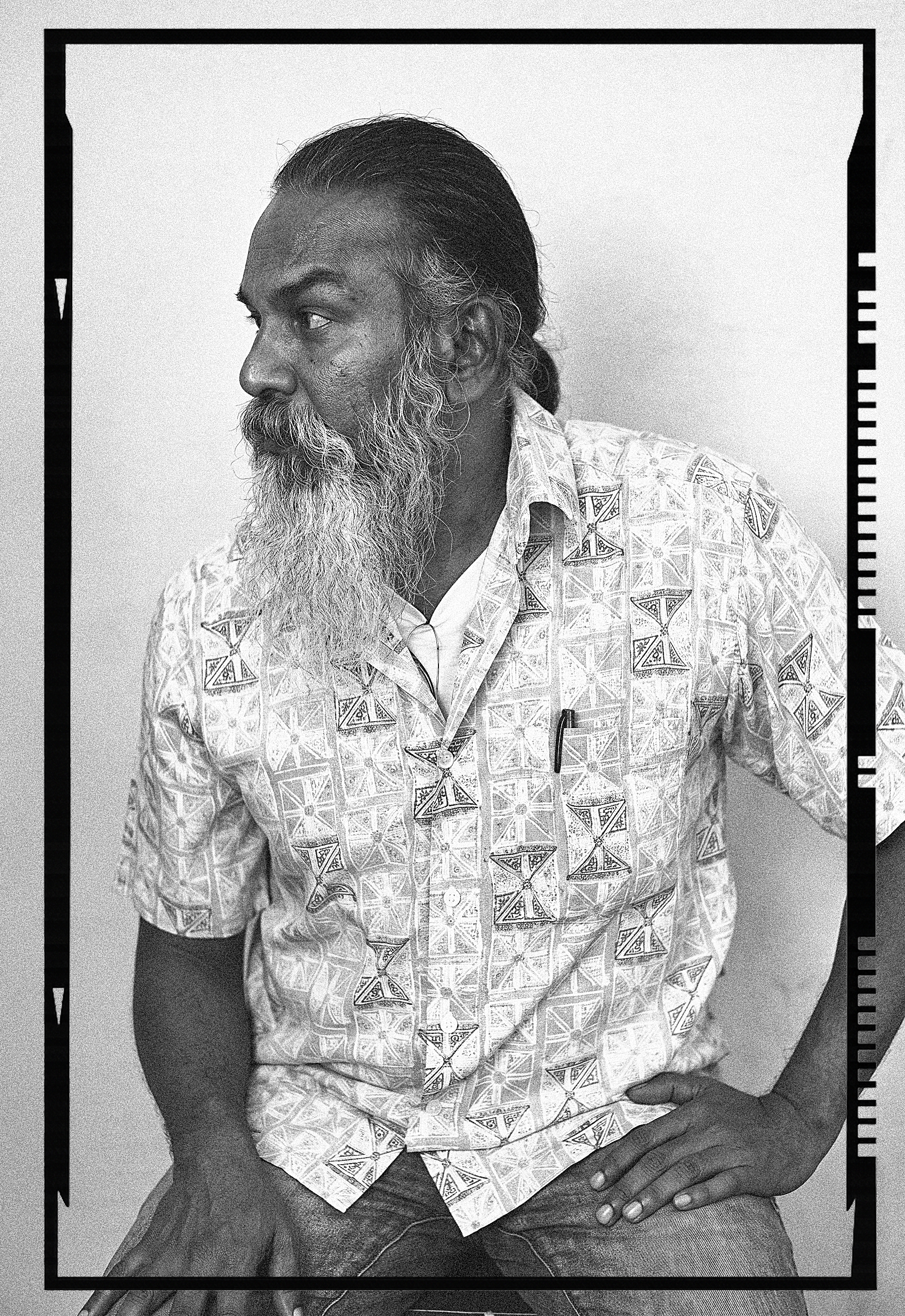
LIFE JUST happened for Kumar Pillai. To grow up as a Tamil boy in the Bombay of the 1970s, to dream of a life in the US like his brother before him, to help his father Krishna Pillai with his smuggling business, to see his father lying dead.
Now, nearly four decades later, he recalls his 20-year-old self standing in the city’s civic-run Rajawadi Hospital on October 17, 1989, surrounded by his father’s men, many who owed their underworld careers to Krishna Pillai. Inside, the man lay dead, his body pumped with bullets.

Over the next few years, a string of attacks followed, including the murder of an alleged conspirator in the Krishna Pillai killing. Police saw Kumar ’s hand in the attacks, alleging that he was avenging his father’s murder. The BSc student who dreamt of studying automobile engineering in the US was now “gangster” Kumar Pillai.
In 1997, after over six years in jail and an acquittal in the alleged revenge killing case, Kumar moved to Hong Kong, started a life and career there. But the police never took their eyes off him. They alleged that he continued to make extortion and threat calls from Hong Kong. Kumar was once again a wanted man.
Almost two decades later, in 2016, the Mumbai Police got Kumar arrested while he was on a trip to Singapore and secured his extradition to India. Back in India, he stood trial but once again, the cases against him fell and, by March 2024, he was acquitted in all.
 On October 17, 1989, Krishna Pillai was sitting in his office in Mumbai’s Vikhroli when two assailants walked in and shot him dead
In November 2025, Kumar approached a special court in Mumbai, with a plea for repatriation. On February 13, 2026, the court ordered that he be sent back, noting that he cannot be ordered to remain in India after being cleared in the three criminal cases he was extradited for.
On June 20, 2026, a decade after he was extradited from Singapore, Kumar flew back to his family in Hong Kong — a rare instance of someone being repatriated after a complete acquittal.
At his home in Vikhroli, a working-class suburb in Mumbai’s eastern corridor, Kumar sits down to tell his story — of loss, ‘revenge’, and a cat-and-mouse game with the police that lasted decades.
A night job at the docks
As a teenager in the early 1950s, Kumar’s father Krishna Pillai ran away from home in Colachel near Kanyakumari, Tamil Nadu. Kumar says his father first went to Kolkata and did odd jobs, including pulling rickshaws, before he moved to Bombay, whose bustling sea trade was where several careers began.
“Like many youngsters at the time, my father ended up as a porter on the Bombay docks, working with thousands of others, loading and unloading cargo from ships,” Kumar says.
It was there that Krishna Pillai met Mastan Mirza aka Haji Mastan, from Panaikulam near Ramanathapuram, and subsequently, Varadarajan Mudaliyar, from North Arcot or present-day Vellore, bonding over their common Tamil roots. Both Haji Mastan and Mudaliyar had started as porters before rising to become among the biggest names in Bombay’s underworld.
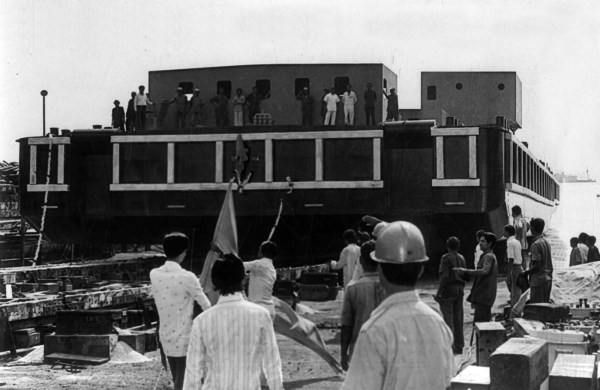 Like many youngsters in Bombay, Krishna Pillai worked as a porter on the docks, loading and unloading cargo from ships
With liberalisation decades away, those days, imported goods attracted high customs duties, and smuggling was considered a lucrative side hustle. All that was needed was access to shipping crews, who too looked to make a quick buck.
“There used to be consignments that arrived in the city on ships. My father was in charge of the landing of these consignments. The job required going to smaller creeks on boats, and approaching the ships for a handover of the goods,” Kumar says.
Initially, the most common commodity smuggled was textiles. Mastan and the others soon moved to watches, VCRs and television sets, before settling on gold. While Mastan led the smuggling activity, Kumar says his father slowly and steadily became a known name in the business.
Then came the Emergency in 1975, and Mastan, Krishna Pillai and many others were arrested as part of the government’s broader campaign against economic offences. “The crackdown helped my father. His contacts became even more solid and his network spread. He soon took charge of landing at ports stretching from Raigad in Maharashtra to Karwar in Karnataka,” Kumar says.
With Mastan entering politics in the 1980s and trying to distance himself from his past, Krishna partnered with Varadarajan, who, too, was forced to leave the city by the end of 1983 following a police crackdown.
Kumar says that for the next few years, his father set up a travel and employment agency office at Musafir Khana near Dongri in South Mumbai, as a front for his smuggling activities.
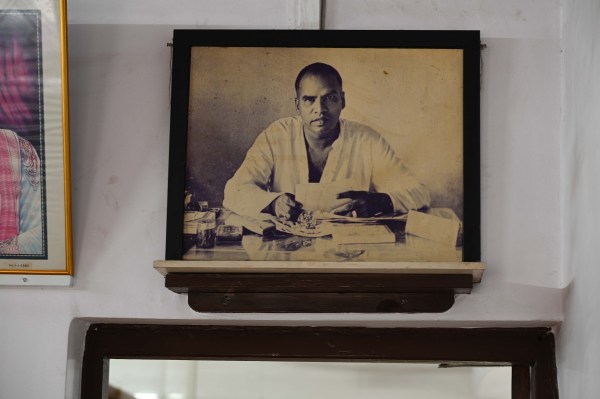 Krishna Pillai made a name in Vikhroli’s Hariyali village by building schools, temples, and doing social work
Senior police officers from the time, however, say the senior Pillai was a “peripheral player” in the underworld, not as big as Mastan and Varadarajan. Yet, he may have wielded considerable clout. “Those days, the smaller players in the smuggling world depended on the largesse of the other, bigger names. Since some even had political ambitions, they tried to be popular among the locals by building schools, temples, doing social work,” says a retired IPS officer.
Kumar recalls that throughout his childhood, he and his siblings — an elder brother and a younger sister — were aware of their father’s criminal background.
“In school, classmates would tease us, calling my father a smuggler. Parents didn’t want their children to play with us,” Kumar says.
The family first lived in a chawl in Vikhroli, before moving to Vikhroli’s Hariyali village, where Kumar’s mother continues to live in an area spread over 1.5 acres, with a temple and a school on its premises.
Sitting in a large waiting area overlooking a garden where his pet Rottweiler and an Indie playfully chased each other and a few ducks, Kumar says, “My father could not complete school but remained focused on giving us a good education. He was spiritual, so he first built a Ganesh temple and in 1981, built an English-medium school. He wanted to ensure that people in the neighbourhood had easy access to education,” Kumar says. The private school, established in 1981, remains functional, with classes from 1 to 10.
Kumar says that though Haji Mastan, Varadarajan and others walked in and out of their house and the “office” space next door that Krishna Pillai worked out of, as children, they were never involved in their father’s activities.
“In that sense, we had a fairly normal childhood,” says Kumar, wearing a white T-shirt that has a splash of colours, an abstract painting he once drew. He also collects models of vintage hot rod cars and paints them.
He says he initially wanted to pursue law or fine arts, given his interest in art, but ended up enrolling for a BSc. By 1988, his elder brother left for the US to study computers and statistics. He was to follow him a year later to study automobile engineering, an area of interest, but his visa got rejected.
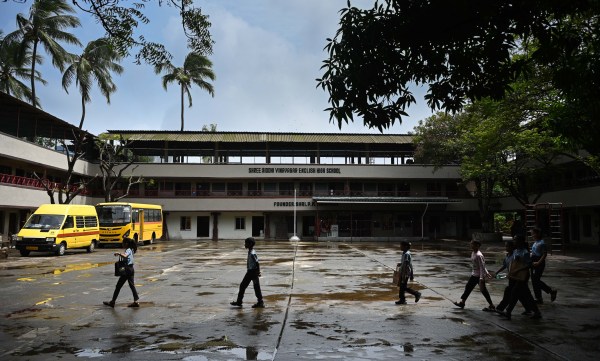 The school where Kumar, as well as his siblings, studied
Krishna Pillai then got his younger son to help him out with his work. “In those days, the goods smuggled from the various coasts that my father controlled, would be brought to our home. Then, those who had paid for the goods would come and collect the consignment. It was work that called for a high degree of trust and my father would ask me to accompany him in the middle of the night to ensure the delivery of the goods was done properly. I would oversee the landing of gold bars,” Kumar says.
Around the time, there were new entrants in the business, including a certain Dawood Ibrahim. “He soon became a big name in the smuggling world. He wanted to take control of my father’s landing areas,” Kumar says.
Rivalries peaked and then, one day, Krishna Pillai’s business partner was killed. Then, on October 17, 1989, the killers came for Krishna Pillai.
While police claim Krishna Pillai was killed over a local gang rivalry, Kumar believes Dawood played a part.
A murder in Borivali
“I remember the day very clearly. I was at work, in Parel, and my father was sitting in his office, across our home here. I was told that two assailants walked into his office in broad daylight and shot him dead. They escaped by jumping over to the railway tracks nearby,” Kumar says.
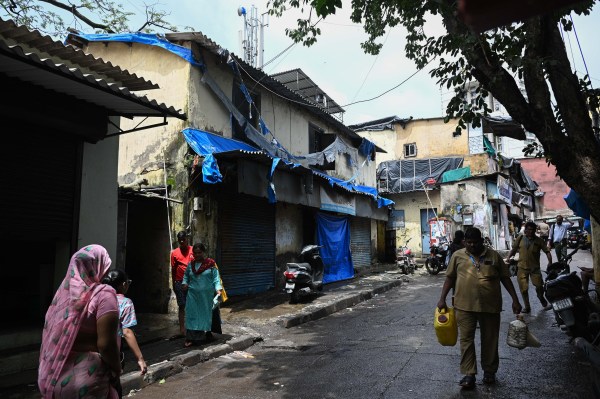
It’s a part of Mumbai that hasn’t had much room for change in these four decades. The rain-soaked road leading to Kumar’s home in Vikhroli is the same, only more crowded, and the long hoot of the trains, as they run between Vikhroli and Kanjur Marg stations, continue to pierce the air.
That day, Kumar had rushed from Parel to Rajawadi Hospital. “I was supposed to be in the US that year. Instead, I was fated to witness my father’s death,” Kumar says.
Police and those close to him say that as he stood there, watching his father’s body, the 21-year-old resolved to avenge his death. They say he was backed by the Amar Naik gang, whose lead gangster had worked with Krishna Pillai earlier.
Then, on October 7, 1990, nearly a year after Krishna Pillai’s death, came a murder that was executed with a precision that stunned the police.
Lal Singh Chauhan, a corporator of the Republican Party of India, who, police claim, was on trial for Krishna Pillai’s murder, and his associate were shot dead outside Mumbai’s Borivali station.
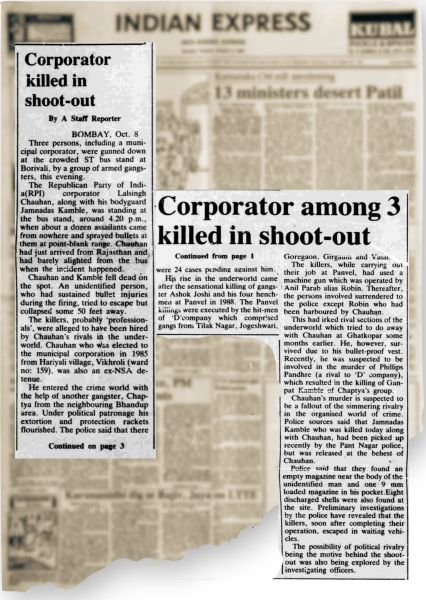 An Indian Express clip covering the murder of Republican Party of India corporator Lal Singh Chauhan
Police say the killers tracked his movements, including his visit to his village in Rajasthan and his impending return to Mumbai. They knew that on his way back to Mumbai, Chauhan would board the train from Ahmedabad. After three days of Kumar and his men allegedly staking out in Ahmedabad, Chauhan turned up at the railway station, just as they had expected. But the plan failed — there were too many police personnel on duty.
Kumar, police allege, quickly left for Mumbai in a jeep, while two of his associates stayed on the train to keep an eye on Chauhan, who was to alight at Borivali. Police claim that Kumar raced in his car and reached the station just before the passenger train could pull in. Kumar and Amar Naik’s men waited outside. Then, seconds before Chauhan and his associate were to sit in a taxi, Pillai allegedly drew his gun and shot them dead. Police say Kumar learnt how to use a gun from members of the Amar Naik gang.
After being on the run for a few months, in January 1991, Kumar, then a 22-year-old, was arrested for the twin murders and booked under the stringent Terrorist and Disruptive Activities (Prevention) Act.
He remained behind bars for five years as he faced trial and then, in 1996, the court acquitted him of the murder charge, citing lack of evidence.
Following the acquittal, Kumar got married and, the following year, in late 1997, he flew out of India to Hong Kong.
‘Happy that you guys came’
In Hong Kong, Kumar started a new life, setting up a garment business with a friend he had reconnected with. Except for a brief visit to India once in 1998, he stayed in Hong Kong, where his daughter was born in 2000. By 2013, he was a Hong Kong citizen.
Yet, the Mumbai Police claim, Kumar continued his criminal activities from Hong Kong. Between 2009 and 2013, there were at least three cases against him, including one of attempted murder and two of extortion and threat calls to businessmen and politicians. He was named as a conspirator and, in one of the cases, was charged under the stringent Maharashtra Control of Organised Crime Act.
In 2013, nearly two decades after Kumar had left India, the Mumbai Police moved to issue an arrest warrant and notified the Interpol about his “fugitive status”. In 2016, while he was on a trip to Singapore, where his teenage daughter then studied, Kumar was detained. He was visiting a department store in ‘Little India’ when the Singapore police apprehended him.
The Mumbai Police then approached the Singapore authorities with a dossier of Kumar’s pending crimes and sought his custody in six cases, of which permission was granted for three. In June 2016, Singapore allowed Kumar to be extradited to India.
When a team of the Mumbai Police finally met him at the detention centre, he is said to have spoken to them in fluent Marathi: “Tumhi aale, khoop anand zhala. Aata aila bhetnar (I’m happy that you guys came; I will finally get to meet my mother).”
But he had a regret: that they had found him three years too soon. He had it all planned out, he told them — send his daughter to college in the US, return to India and surrender, and face the pending cases against him so that he could be a free man by the time she finished college.
An official who was involved in the extradition said, “A set of fingerprints from his old record was matched to convince the Singapore authorities that he was the same person we wanted. We translated court and police records from Marathi to English to submit before the Singapore authorities.”
Flying home to Hong Kong
For over six years, Kumar spent time in Mumbai’s Taloja Central jail as an undertrial.
Between 2020 and 2022, he was acquitted in two cases where he allegedly made extortion calls — one to an MLA, another to a builder. In both instances, the court ruled that there was no evidence to show that Kumar had made the calls.
In March 2024, Kumar was acquitted in a 2009 case, where he was accused of conspiring to carry out a shootout at a builder’s office. With that, he had been acquitted in the last of the three cases for which the Singapore authorities had cleared his extradition.
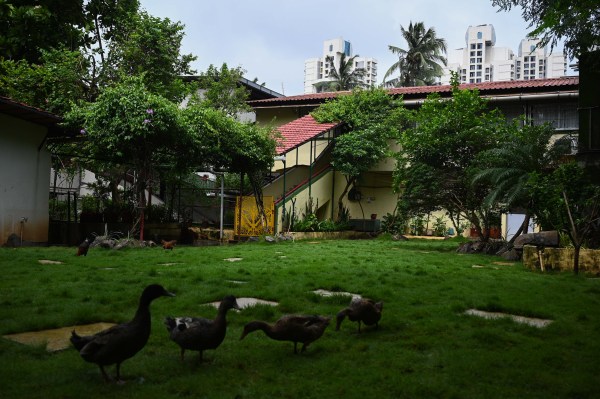 The house in Mumbai’s Vikhroli where Krishna Pillai’s wife continues to live
After waiting two months to see if the Mumbai Police would file an appeal, in May 2024, Kumar approached the Foreigners Regional Registration Office to seek permission to go back to his family in Hong Kong.
With no clarity on the pending cases against him, in November 2025, he approached a special court, seeking his repatriation to Hong Kong.
The Mumbai Crime Branch then approached the court, seeking an open warrant against Kumar, stating that their records showed that he was wanted in a 2007 case of murder, in which two of Kumar’s alleged associates had already been acquitted.
On February 13, 2026, another court decided on Kumar’s repatriation plea, stating that “in the absence of permission from the extraditing country [Singapore], the applicant [Kumar] cannot be tried in India for any other pending cases” and asking the authorities to take steps to repatriate him to Hong Kong.
On June 20, Kumar Pillai flew out to Hong Kong.
‘My father was a fair man’
Days before he left, talking to The Indian Express at his Vikhroli home, he had hoped there would be no more obstacles to his return to Hong Kong.
He had said, “My plan always was to return to India, but they arrested me (in 2016). For so many years while I was away, my mother managed the home, temple, school and other businesses. I wanted to return to her, take over all this work, continue my father’s legacy.”
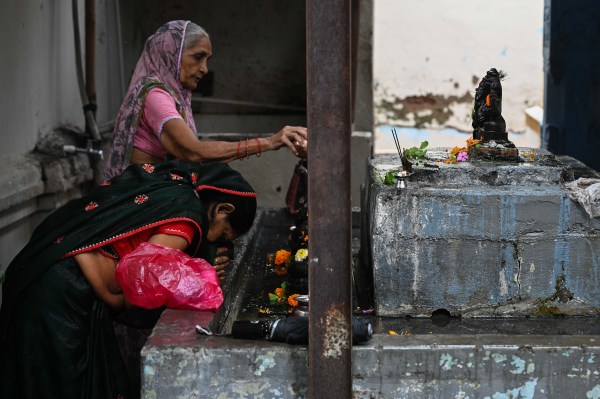 The temple built by Krishna Pillai in Vikhroli’s Hariyali village
When he speaks of his father, it’s with a reverence reserved for the pious, or even a tired revolutionary. “He was an old-timer in the smuggling business. Of course, he was disillusioned in his later days. He felt that the earlier guys in the business stood for something… loyalty, etc… That was no longer the case,” he says.
“He was a fair man. He was the kind who would beat someone up but also ensure he was given money to go to a hospital. He was my idol. Being here, doing this was never my choice. Life just happened to be this way.”