
Rolls are the ultimate on-the-go snack. You can easily wrap one up in the morning with your favourite fillings and have it on your commute. It is also extremely customisable. With any sauce and filling, you can easily make it your own. No wonder there are so many iterations of it. From kathi kebab rolls to Frankies to wraps, the format has been adopted by many cuisines, cities and food chains.But while all three may look almost identical at first glance, a kathi roll, a Frankie and a wrap are not exactly interchangeable. The biggest differences lie in the bread, filling, seasoning and most importantly, the culinary history behind each one.
What is a roll?
At its simplest, a roll is a food item in which a filling is enclosed or rolled inside a bread or flatbread, creating a portable meal that can be eaten by hand. The word itself is more of a format than a recipe, which is why you can have everything from an egg roll to a chicken roll to a vegetable roll.This is also why the terminology gets confusing. In India, roll is often used as a broad word for stuffed flatbreads, so while in Kolkata, ordering a roll can mean something else than a roll in Mumbai. Unlike a dish with one fixed recipe, the roll is essentially an idea: put something delicious inside bread, roll it up and make it easy to eat.
What is a kathi kebab roll ?
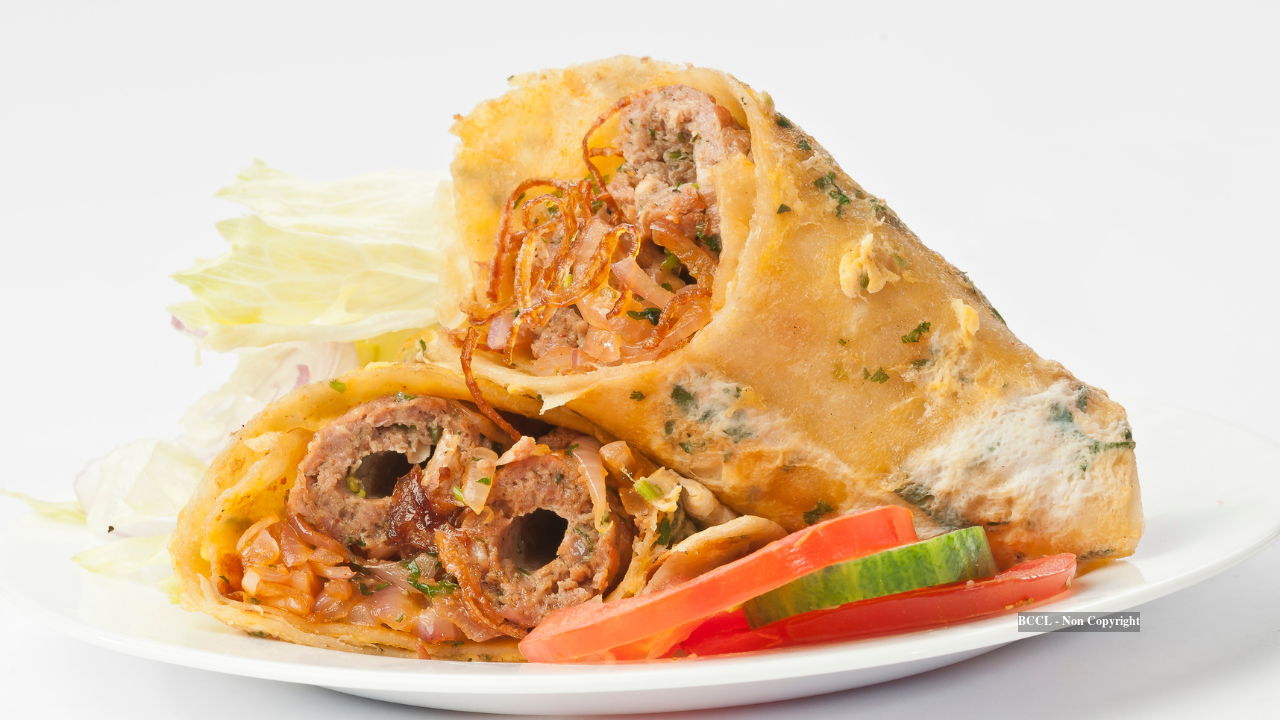
Kathi rolls origin can be traced back to Kolkata.
The kathi roll is the Kolkata original. The dish is traditionally associated with Nizam’s, the Mughlai restaurant near Kolkata’s New Market, where kebabs were wrapped in paratha to make them easier to carry and eat. The exact story of its invention has been retold in different ways, but the connection to Nizam’s and Kolkata is central to the dish’s history. The name kathi is generally linked to the bamboo sticks, or skewers, used for cooking the kebabs.Origin: Kolkata, West Bengal, traditionally associated with Nizam’s.Bread: A flaky, layered paratha. In the classic preparation, the paratha may also be cooked with an egg, giving the roll its characteristic richness.Filling: Traditionally, skewered kebabs, particularly mutton or chicken. Modern versions can contain egg, paneer, vegetables or other fillings, but the kebab-and-paratha combination is what gives the original its identity.Seasoning: Think onions, green chilli, coriander chutney, lime and a little spice. The filling is smoky from the kebab, while the raw onion and tangy accompaniments cut through the richness.Packaging: Traditionally wrapped in paper, usually leaving one end exposed so that it can be eaten straight from the hand. The packaging is practical, but it is also part of the street-food charm: no plate, fork or elaborate setup required.The important thing to remember is that a kathi roll is not simply “anything rolled in a roti”. Its original identity comes from the relationship between the skewer-cooked filling and the paratha.
What is a Frankie?
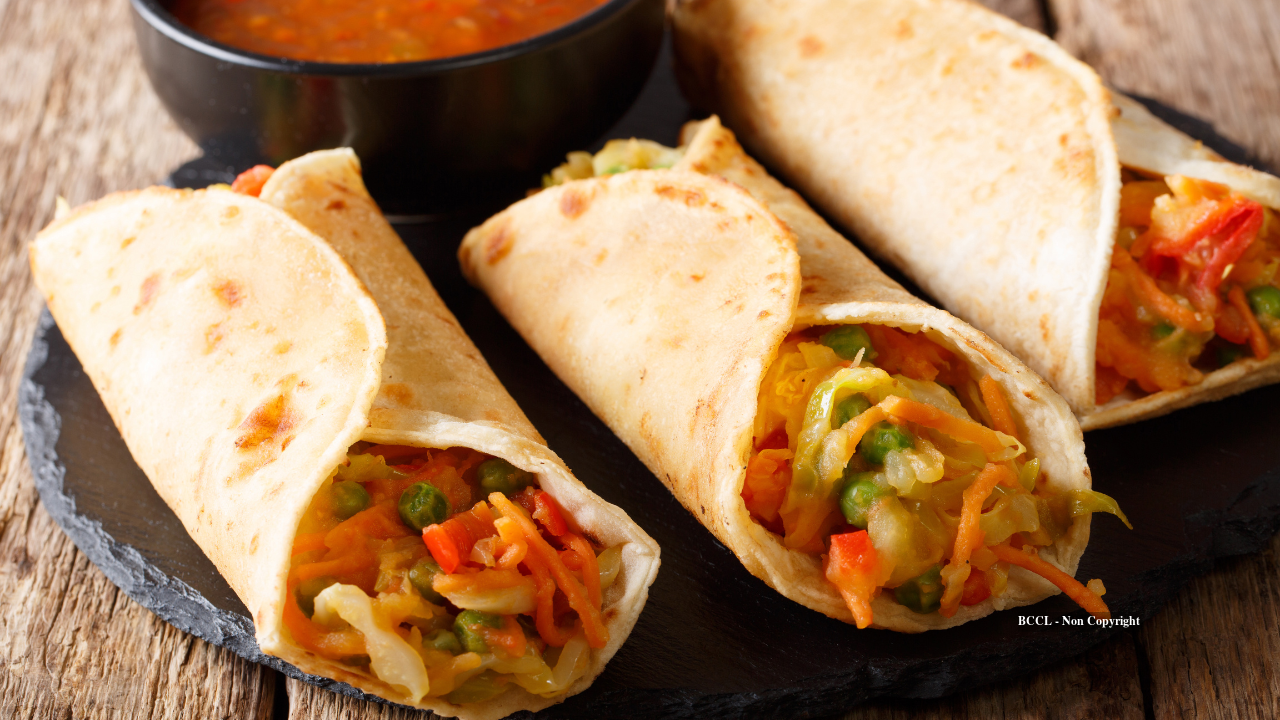
Frankies are an Indo-Chinese switch on rolls.
If the kathi roll belongs to Kolkata, the Frankie belongs to Mumbai. Tibb’s traces its creation to Amarjit Singh Tibb, who encountered stuffed pita while travelling through Beirut in the 1960s. After experimenting with the idea in Mumbai, he and his wife, Surinder Kaur Tibb, developed what became Tibb’s Frankie in 1969. The earliest version was mutton curry rolled in a roti and sold around Powai Lake.Origin: Mumbai, with Tibb’s Frankie dating its creation to 1969.Bread: A thin roti or paratha-style flatbread. Unlike the classic kathi roll, the Frankie developed around a softer, more neutral Indian flatbread that could hold a saucier filling.Filling: This is where a Frankie can feel distinctly different from a kathi roll. Instead of relying primarily on kebabs, it can contain spiced potato, chicken, mutton, paneer or vegetables, often with a more substantial cooked filling. Tibb’s own origin story specifically describes juicy Indian gravy as an important part of the original concept.Seasoning: The defining character is the Frankie masala: a punchy Indian spice mix paired with onion and tangy sauces or chutneys. It is designed to hit all at once: spicy, savoury, tangy and slightly greasy in the best possible way.Packaging: Usually tightly rolled and served in paper so it can be eaten while walking, travelling or standing at a roadside counter. The format is deliberately compact and filling, which is very much in keeping with Mumbai’s fast-moving street-food culture.There is also an interesting naming story here. Tibb’s says the name “Frankie” was inspired by a cricket match in which the crowd cheered for West Indian cricketer Frank Worrell. That is a brand-origin story rather than a universally established historical fact, but it has become part of the Frankie legend.
What is a wrap?
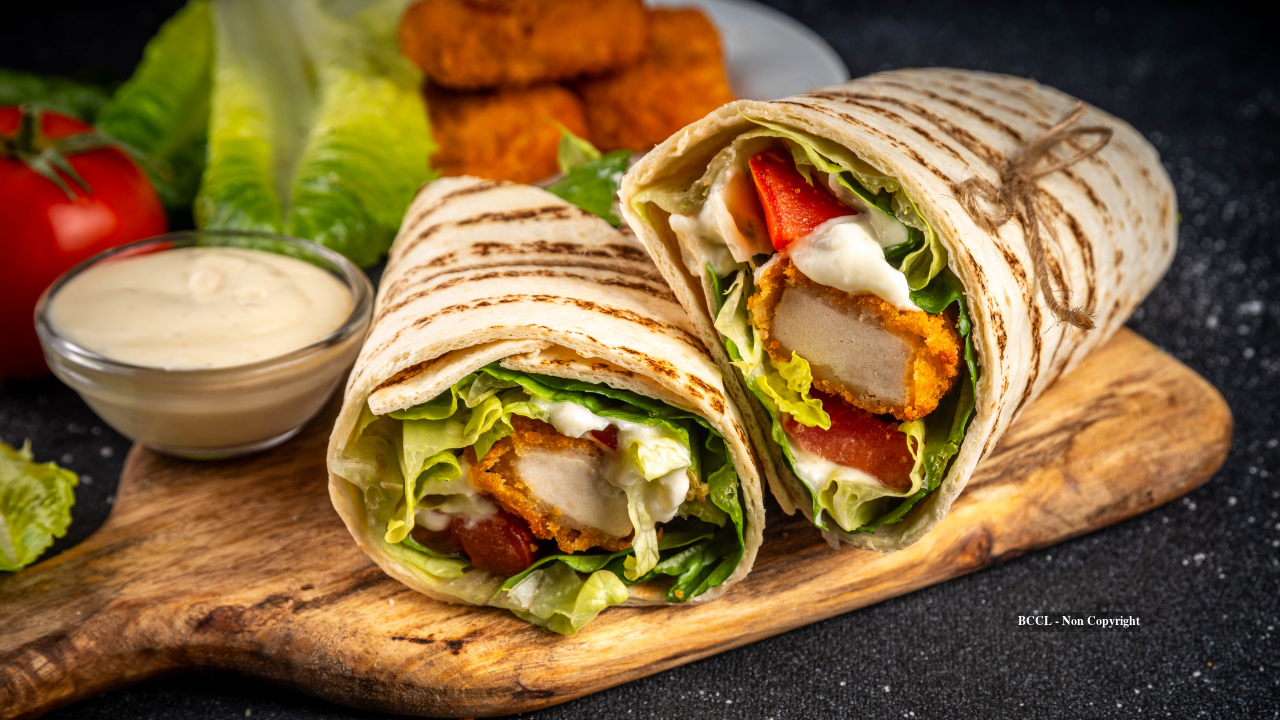
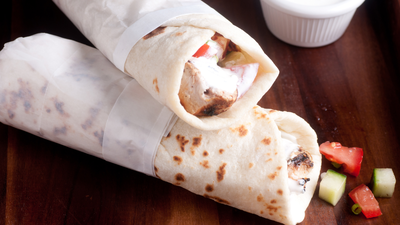
A wrap is essentially a sandwich made by folding or rolling a thin flatbread around a filling
A wrap is the broadest category of the three. Unlike the kathi roll or Frankie, it does not belong to one Indian city or one particular recipe. A wrap is essentially a sandwich made by folding or rolling a thin flatbread around a filling.The modern Western “wrap sandwich” became especially popular in the United States in the late twentieth century, with tortillas and other flatbreads being used to hold everything from vegetables and grilled meats to salad, cheese and cold cuts. By the 1990s, wraps were being described as a growing food trend in American restaurants.Origin: There is no single origin for the idea of wrapping food in flatbread. Many cuisines have done it for centuries. The modern restaurant-style wrap, however, is strongly associated with late 20th century American food culture.Bread: Usually a soft flour tortilla, though lavash, pita and other flatbreads can also be used.Filling: Almost anything goes: grilled chicken, falafel, paneer, salad, roasted vegetables, cheese, cold cuts or even leftovers from dinner.Seasoning: Unlike a kathi roll or Frankie, there is no signature spice profile. It depends entirely on the filling and cuisine, from hummus and tahini to ranch dressing, pesto or chilli sauce.Packaging: Usually wrapped in foil, paper or parchment, sometimes cut in half and served as a portable lunch. Here, the wrapping is primarily about convenience rather than a defining culinary tradition.
So, what is the actual difference?
- Kathi roll is Kolkata’s kebab-filled, paratha-based roll, traditionally smoky, tangy and onion-heavy.
- Frankie is Mumbai’s spiced, masala-forward roll, generally made with a soft roti or paratha and more substantial cooked fillings.
- Wrap is the broadest category, usually a tortilla or other flatbread carrying almost any filling and sauce.
- Roll is the umbrella term that can describe the format itself rather than one particular recipe.
So, when you are craving smoky kebabs, onions, chilli and that flaky paratha, go for a kathi roll. When you want something unmistakably Indian, masala-packed and indulgent, the Frankie wins. And when you want a more customisable meal with salad, grilled vegetables, chicken, hummus or whatever happens to be sitting in the fridge, a wrap does the job.Whatever your pick may be, the humble roll proves that sometimes the best culinary innovation is simply taking a good filling, finding the right bread and folding it up.