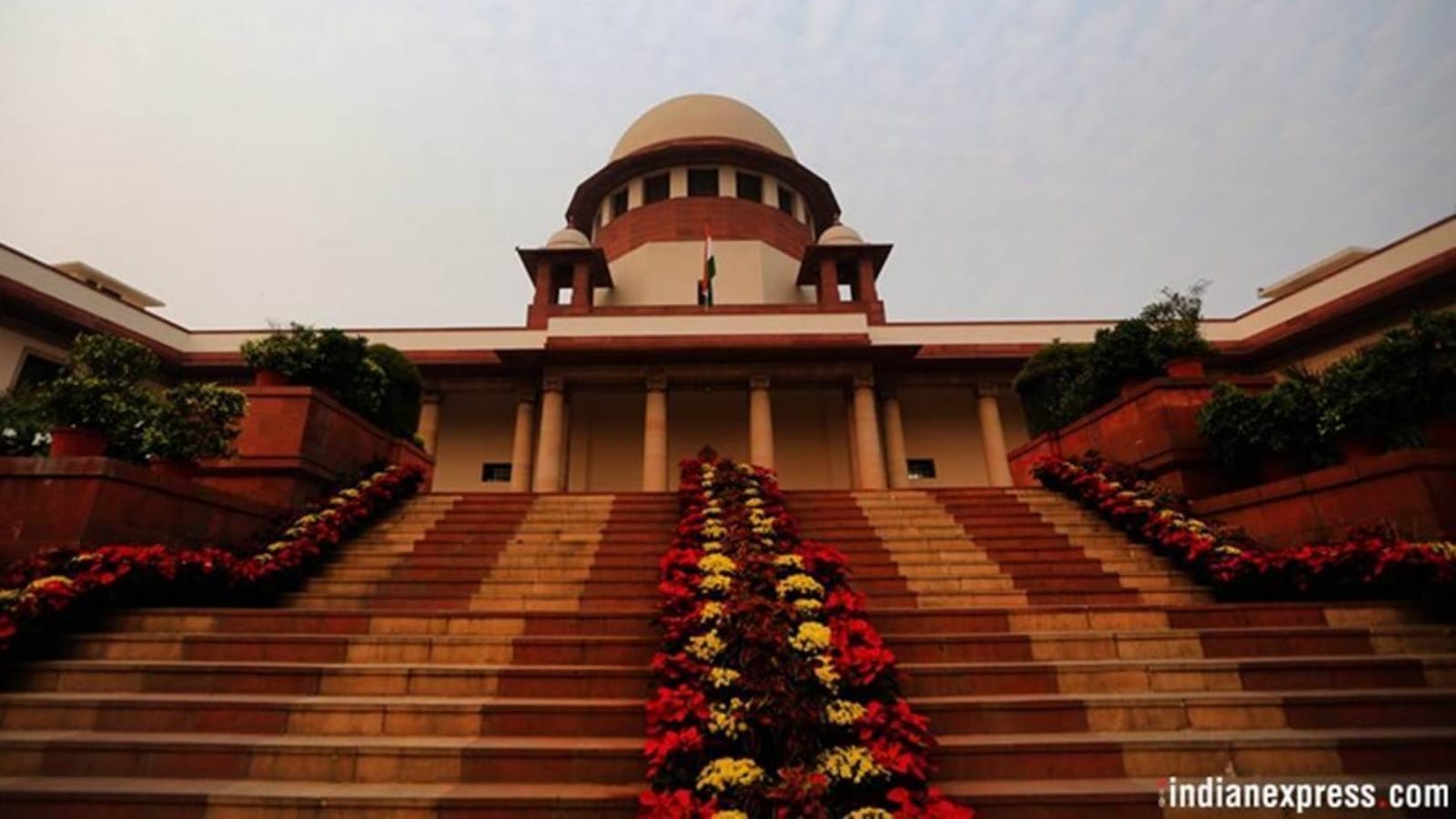
The Supreme Court moved last month to frame fresh guidelines to promote sensitivity among judges, especially in cases involving sexual offences and other vulnerable victims, following unease within the court over a previous attempt in this regard, The Indian
Express has learnt.
In an order dated February 10, a three-judge bench of Chief Justice of India Surya Kant, and Justices Joymalya Bagchi and N V Anjaria, urged the Director of the National Judicial Academy in Bhopal, Justice Aniruddha Bose, a former Supreme Court judge, to constitute a committee of experts to prepare a comprehensive report to develop these guidelines.
The earlier attempt in this direction led to the publication in 2023 of the “Handbook on Combating Gender Stereotypes” under the initiative of the then Chief Justice of India D Y Chandrachud.
This handbook states that it “aims to assist judges and the legal community in identifying, understanding and combating stereotypes about women”. It also “contains a glossary of gender-unjust terms and suggests alternative words or phrases, which may be used while drafting pleadings as well as orders and judgments”.
The February 10 order indicated that the 2023 handbook includes language that may not be comprehensible to the common man. Highly placed sources, however, told The Indian Express, that there was also discontentment among judges on the process followed in adopting the handbook and some of its content which, they felt, “reinforces prejudices” rather than help improve the situation.
On the issue of process, sources said, “It was necessary to take all judges into confidence before deciding to publish the handbook, which they were supposed to follow… It (the handbook) should ideally have been placed before the full court for a broader discussion, but this was not done.”
On the content side, sources said there were “problematic” portions in the handbook’s attempts to explain gender stereotypes. For instance, they pointed to a portion that contains an “illustrative list of stereotypes that are often applied to men and women in the context of sex and sexual violence and explains why such assumptions are wrong”.
Story continues below this ad
According to this list, sources said, there is a stereotype that “dominant caste men do not want to engage in sexual relations with women from oppressed castes” and “therefore, any allegation of sexual assault or rape by an oppressed caste woman against a dominant caste man is false”.
The handbook goes on to explain that the “reality” however is that “rape and sexual violence have long been used as a tool of social control” and “dominant caste men have historically used sexual violence as a tool to reinforce and maintain caste hierarchies”, they said.
The sources said there was a view among judges that “the Supreme Court should not be making such generalised and sweeping statements, which have the effect of painting targets on entire communities”.
The foreword to the handbook by the then CJI states that it “was conceptualised during the COVID-19 pandemic and was originally envisaged as a part of the knowledge component of the e-Committee of the Supreme Court of India”.
Story continues below this ad
It thanks “the Social Justice Sub-Committee of the e-Committee (Justice Moushumi Bhattacharya, Judge, Calcutta High Court; Justice Prathiba Singh, Judge, Delhi High Court; and Professor Jhuma Sen) for their inputs and suggestions”.
It also “appreciates the work” of other officials of the Supreme Court’s Centre for Research and Planning “for their valuable inputs and editing, as well as for coordinating the publication of the Handbook”.
When contacted by The Indian Express, ex-CJI Chandrachud said he did not wish to comment on the issue.
The February 10 order stated that “some action is required to be taken to inculcate and nurture an inherent sensitivity and discernment into the approach of members of the judiciary, as well as into the accompanying court procedures”.
Story continues below this ad
It stated that “various steps, in this direction, have also been taken by the constitutional courts of this country, from time to time, on the judicial as well as administrative side. It seems, however, that the efforts thus far have not borne the fruit that was expected”.
The court said it did not want to make a “fresh and unguided attempt to lay down any guidelines” without first understanding what was done in the past and asked the committee to also study the previous attempts.
The committee will also “ensure that the (new) Draft Guidelines are devised in a manner so that they may be understood and utilised easily by such persons…in simple language comprehensible to laypersons, whose interests the guidelines seek to protect”, the court said.
“The guidelines, we expect, will not be loaded with heavy, complicated expressions borne from foreign languages and jurisdictions. They must be contextualised in the real and lived experience of the stakeholders in the Indian judicial process, with direct reference to the ethos, values, and social fabric of our country,” the court said.
Story continues below this ad
According to sources, the fresh guidelines, which will be drawn up as per the new committee’s report, “will be placed before the full court to elicit the views of the judges before adopting them”.