UPSC Essentials brings to you its initiative of daily subject-wise quizzes. These quizzes are designed to help you revise some of the most important topics from the static part of the syllabus. Attempt today’s subject quiz on History and Culture to check your progress. Find links to previous quizzes for UPSC towards the end of the article.
Consider the following statements with reference to ancient Indo-Iranian shared identities:
1. Indo-Aryan and Old Iranian cultures are part of a broader ethno-linguistic Indo-Iranian phase of common ancestry, evidence of which is found in the Rig Veda and the Avesta.
2. While the Rig Veda contains references to horses as key elements of military and aristocratic life, the Avesta (the Zoroastrian religious text corpus of ancient Iran) does not mention horses, indicating that ancient Iranians did not use horses as ancient Indians did.
Which of the above statements is/are correct?
(a) 1 only
(b) 2 only
(c) Both 1 and 2
(d) Neither 1 nor 2
Relevance: This question is relevant for UPSC Prelims as it examines early cultural and linguistic links between Indo-Aryan and Iranian societies reflected in texts like the Rig Veda and the Avesta. It becomes especially important when ancient Indo-Iranian connections feature in global current affairs, prompting UPSC to test aspirants’ conceptual understanding of such historical linkages.
Explanation
Shared linguistic and religious heritage
Distinguished Parsi archaeologist J M Unvala, in his study of the longue durée (long duration) history of Indo-Iranian ties, pointed to archaeological parallels uncovered at Susa (Shush, in the Kuzestan province of Iran) and at the Indus Valley sites of Mohenjo-Daro and Harappa, noting similar painted pottery, polished tools, and seals.
Unvala advanced the view that the pre Aryan Indus Civilisation showed affinities with Elamite and Sumerian cultural repertoires. Accordingly, trade links brought Afghan and Iranian metals and semi-precious stones into the Indian subcontinent, underpinning an integrated Asian trade network as early as the third and fourth millennia before Christ.
Story continues below this ad
Proto-Aryan languages were spoken in the steppes of southern Russia around early 3000 BCE. Indo-European linguistic forms that emerged in the region retained loanwords that can be traced to Proto-Aryan forms. For example, as pointed out by eminent Finnish Indologist Asko Parpola, the Finno-Ugric word for ‘hundred’ is ‘sata,’ close to the Proto-Aryan ‘shatam’. Proto-Finno-Ugric people were dispersed by about 2500 BCE; hence, Indo-Iranian languages were present in southern Russia even earlier.
Besides, since the earliest evidence for horse domestication comes from the Srednij Stog culture of the Ukrainian steppes, around about 4200–3500 BCE, and the Yamnaya culture, of about 3500–2800 BCE, these pastoral cultures with their horse-dependency circulated Euro-Indo-Iranian languages and Indo-Iranian populations across a vast region. Both the Rig Veda and the Avesta (the Zoroastrian religious text-corpus of ancient Iran) contain representations of horses as key elements of military and aristocratic living.
As Romila Thapar adds, Indo-Aryan and Old Iranian cultures are part of a broader ethno-lingual Indo-Iranian phase of common ancestries, whose evidence is found in the Rig Veda and Avesta, in that “the cult of soma/haoma and the emphasis on the worship of fire were common to Iran and India”. Notably, this cult “does not occur elsewhere in the Indo-European speaking world,” according to Thapar. They may well have had roots in Central Asian shamanistic traditions.
Besides, as Unvala notes, Indo-Iranians shared natural cults and solar and lunar divinities. The composition of the Gathas and parts of the Avesta had a shared substratum of cultural wellsprings, potentially around 2000 BC. By this time, Indo-Iranians formed a culture known as Sintashta, whose language was Proto-Indo-Iranian.
Story continues below this ad
This was followed by the Andronovo culture, which marked the first recognisable splits between Indian and Iranian oral traditions. Around 1650 BC, the Mittani Empire, which was established around modern-day Syria, is known to have used an Indo-Aryan language that resembled Sanskrit—albeit written in Mesopotamian cuneiform. In fact, a treaty between the Mitanni and the Hittites is even known to have invoked Indo-Aryan gods like Varuna, Indra, and Mitra. Even the royal names of Mitanni rulers resembled Sanskrit and Iranian names.
Therefore, a is the correct answer. Read more: Trade, language, and shared identities: How an ancient world linked India and Iran thousands of years ago
QUESTION 2
With reference to the term “Yankees”, which of the following statements is correct?
(a) In nineteenth-century India, British officials frequently used the term “Yankees” to describe European settlers who opposed the policies of the British East India Company.
Story continues below this ad
(b) During the Revolt of 1857, rebel proclamations referred to British soldiers as “Yankees”.
(c) “Yankees” were among the first Americans to reach India because they were experienced merchants and, after the American Revolutionary War, they were barred from trading in British markets.
(d) In colonial India, “Yankees” was the official designation for Indian labourers who migrated to the United States for plantation work.
Relevance: This question is relevant for UPSC Prelims as global terms like Yankees often appear in international news and political discourse. UPSC may link such terms to their historical context in India.
Story continues below this ad
Explanation
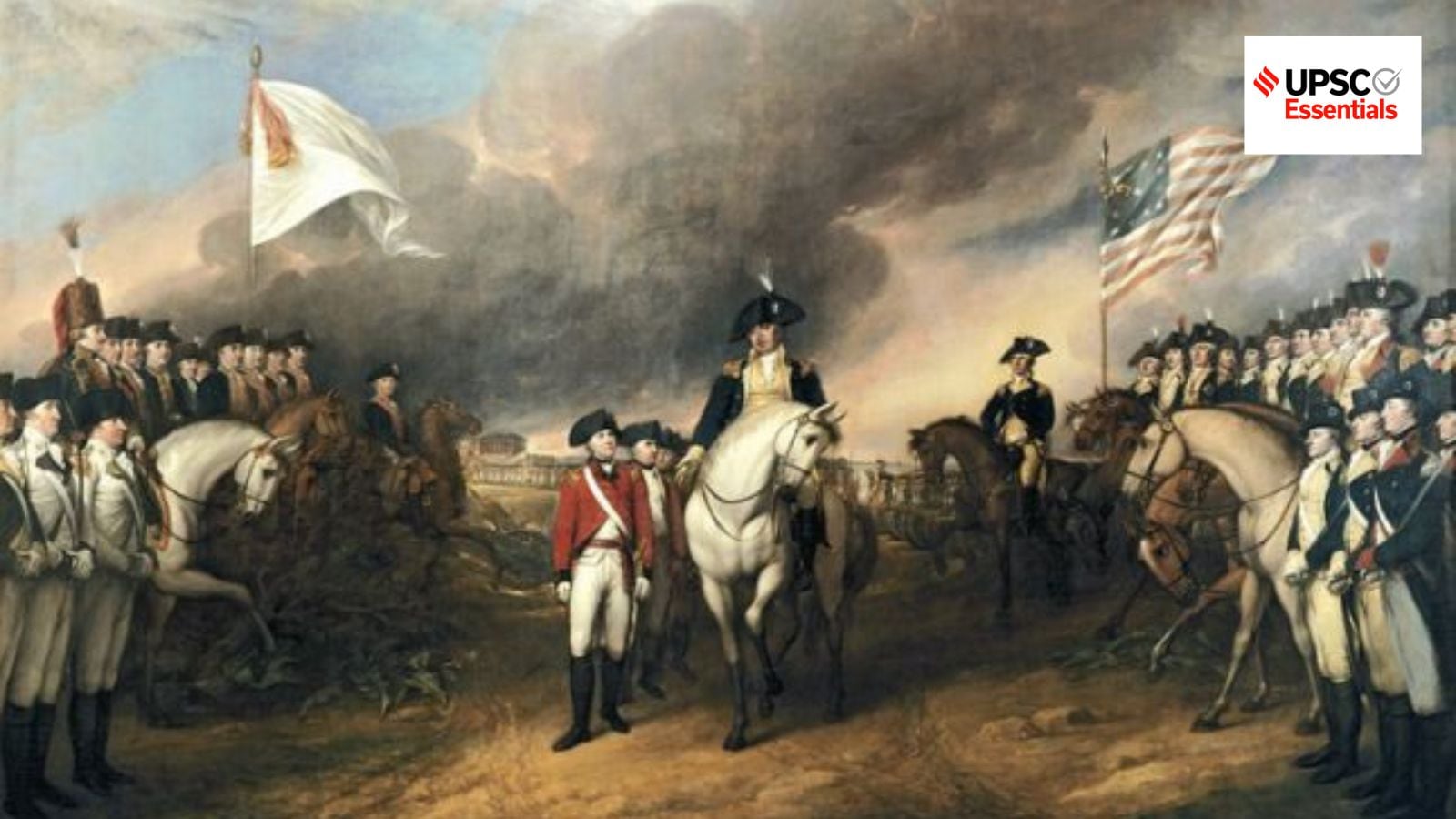
US trade with India began immediately after America’s independence from Britain in 1783, when American shipowners, no longer bound by the British East India Company’s monopoly, could trade directly with the East. They entered an arena long dominated by the Portuguese, Dutch, and British, following established global sea routes. At the time, “India” referred broadly to the “East Indies,” stretching from the subcontinent to Southeast Asia and the Malay Archipelago, and sometimes even including China and Japan.
After the 1783 Treaty of Paris opened the Indian Ocean to US vessels, Yankee merchants moved quickly. ‘Yankees’ refers to traders from New England, particularly the ports of Salem and Boston. They were among the first Americans to reach India because they were already seasoned merchants and, after the American Revolutionary War, were forbidden from British markets. Seeking new opportunities, they sailed to Asian markets.
Therefore, c is the correct answer. Read more: The forgotten story of Yankee merchants: America’s first trade connection with India
QUESTION 3
She was elected to the Constituent Assembly of India from the Madras constituency and, at the age of 34, was one of the youngest members and the only Dalit woman in the Assembly.
Who was she?
(a) Dakshayani Velayudhan
(b) Muthulakshmi Reddy
(c) Rukmini Lakshmipathi
(d) Sathyavani Muthu
Story continues below this ad
Relevance: This question is relevant for UPSC Prelims as the composition and notable members of the Constituent Assembly of India are important themes in modern Indian history and polity. Questions about lesser-known yet significant figures help test an aspirant’s understanding of the diversity and social representation in the constitution-making process.
Explanation
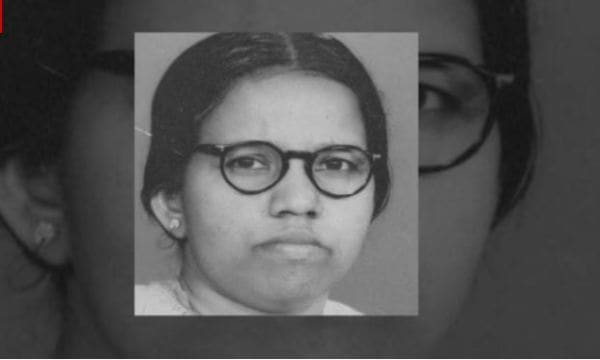 Dakshayani Velayudhan
Dakshayani Velayudhan was born on 15 July 1912 in Mulavukad, in present-day Ernakulam district, and belonged to the Pulaya community. She was elected to the Constituent Assembly of India from the Madras constituency and, at the age of 34, was one of the youngest members and the only Dalit woman in the Assembly.
In the Assembly, she emerged as an independent voice who argued that the Constitution should not only define the relationship between the state and society but also transform Indian society. She also criticised the demand for separate electorates for Scheduled Castes associated with B. R. Ambedkar opposed proposals that, in her view, resembled separate electorates.
Therefore, a is the correct answer.
QUESTION 4
Consider the following pairs with reference to administrative offices in the Mughal Empire:
1. Waqia Navis – Auditor
2. Mir Saman – In charge of Karkhanas
3. Mir Bakshi – Head of the military establishment
Story continues below this ad
Which of the pairs given above is/are correctly matched?
(a) 1 and 2 only
(b) 2 and 3 only
(c) 3 only
(d) 1, 2 and 3
Relevance: This question is relevant for UPSC Prelims because the administrative structure and official positions of the Mughal Empire are frequently tested in the exam.
Explanation
Waqianavis was a medieval royal functionary in charge of news writing/reporting.
Therefore, b is the correct answer.
QUESTION 5
The term Kantakasodhana refers to:
(a) Removal of obstacles to agriculture in village administration
(b) A term used with reference to criminal justice
(c) A tax imposed on traders entering fortified cities
(d) A ritual performed to purify the king before coronation
Story continues below this ad
Relevance:This question is relevant for UPSC Prelims because administrative and judicial concepts from ancient Indian texts like the Arthashastra are frequently asked in the exam.
Explanation
The term Kantakasodhana appears in the Arthashastra and refers to the system dealing with the detection, suppression, and punishment of criminals, essentially relating to criminal justice and maintenance of public order.
Therefore, b is the correct answer.
Previous Daily Subject-Wise-Quiz
Daily subject-wise quiz – International Relations (Week 152)
Daily Subject-wise quiz — History, Culture, and Social Issues (Week 147)
Daily subject-wise quiz — Polity and Governance (Week 152)
Daily subject-wise quiz — Science and Technology (Week 152)
Daily subject-wise quiz — Economy (Week 151)
Daily subject-wise quiz — Environment and Geography (Week 151)
Subscribe to our UPSC newsletter and stay updated with the news cues from the past week.
Stay updated with the latest UPSC articles by joining our Telegram channel – IndianExpress UPSC Hub, and follow us on Instagram and X.