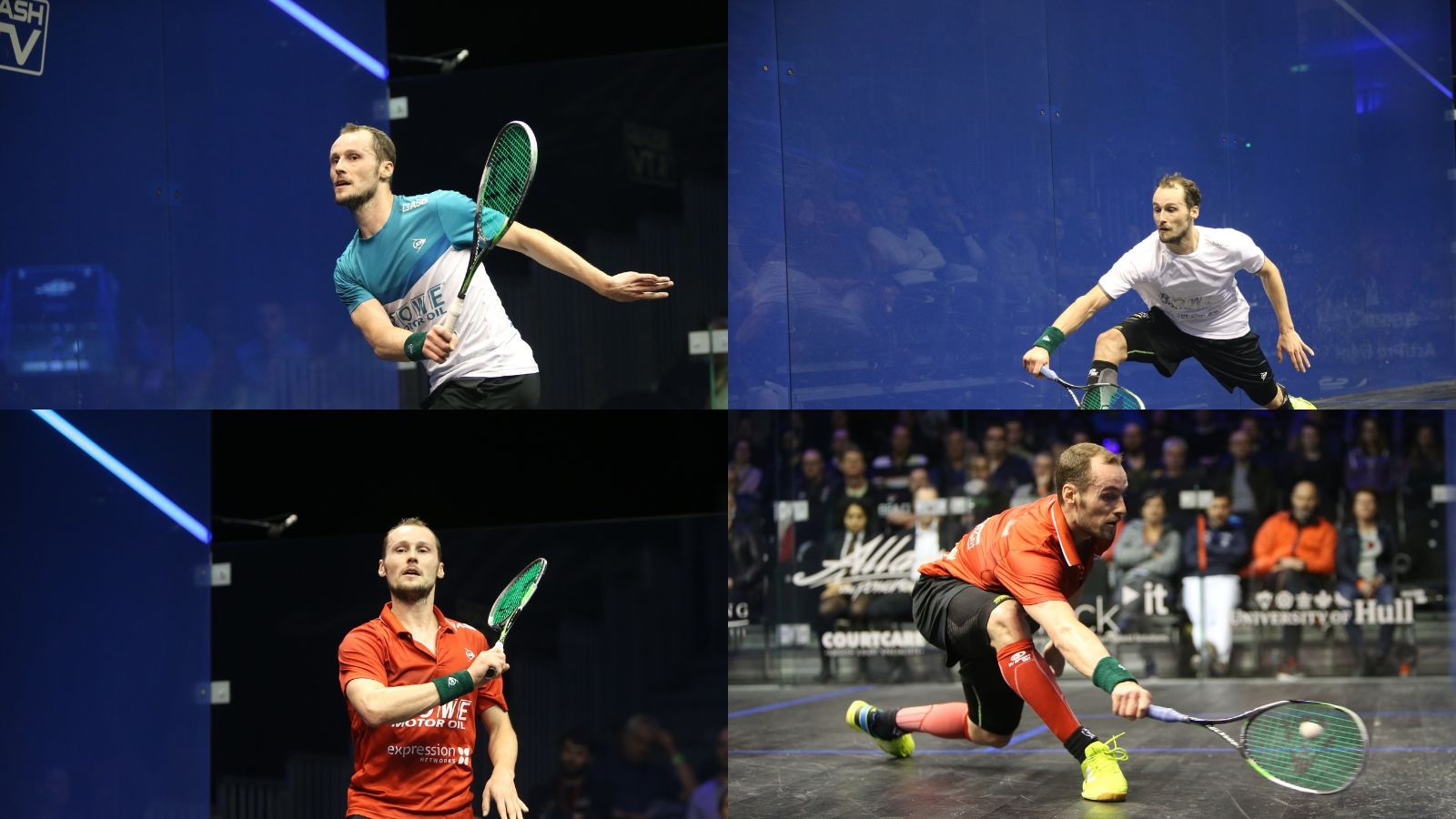
Gregory Gaultier won four silver medals at the squash World Open (Championships) over 10 years, before he struck his first gold. In an illustrious career spanning 22 long years, starting out as a French prodigy, he ended with nine Worlds medals, including four bronze. Now, tasked with guiding young Indian talent Anahat Singh, the deep-thinking Frenchman brings a unique understanding of losing from winning positions and, learning from those defeats and never letting go of the ambition, before the gold is finally nailed.
The 43-year-old would reckon ‘choke’ is a very English word, and in a very Albert Camus-fashion embraces the absurdity of keeping on losing, while keeping on wanting to win, in a way that only sport could quantify.
“Today, if I flashback that first hard loss of a Worlds final in 2006, I’ll ask myself, ‘Gregory, if you had won that final, would life have turned out the same? Would I have done it all’?” he wonders, in an interaction before heading to India for the JSW Open in Mumbai, where Anahat will defend her title. What he’s essentially asking is, had he found success early and won the biggest title there was, would Gaultier have been motivated to win eight subsequent medals and play 15 more years at the top?
Gaultier was almost born on a squash court, he chuckles, to explain how he grew up surrounded by the sport in France, where it gets raucous support. A top-ranked junior in the early 2000s, he had won a bunch of big titles at 21-22 when he lined up for the final with Egypt’s Pyramids as an iconic backdrop. He was expected to take the world by storm at 23. A crowd of 4000 (big for squash wall courts) had stirred a din, backing the World No 8 sensation. “I got to the final beating World No 1 and had 5 match points (11-9, 11-9, 9-11, 14-16, 2-11) vs David Palmer in the final,” he describes. The word ‘choke’ is in the respiratory realm, and Gaultier describes, “I was not in control of my breathing to convert those match points. Even a quick 2-second slowing pause would’ve changed things, but I took that loss hard.”
It’s where his hypothetical reasoning about that scarring loss forks into two. “Of course, I could’ve won more World titles and been more successful.” Like, Australian cricket. Manchester United. Liverpool. Lin Dan. “Or would I have been satisfied too soon having achieved my goal?” Like Taufik Hidayat. Like contentment stopping him from growing. “It took more than 10 years to achieve that goal,” he says, and that eternal struggle, like New Zealand cricket, or South Africa or Lee Chong Wei or more parallelly, PV Sindhu, brought out some of his best problem-solving in squash, making his game complete.
In his second World final in 2007, he was blanked 3-0 (11- 7, 4, 6) by Amr Shabana, Egyptian Harry Potter. Against Nick Matthew in 2011, his third, it could’ve gone either way, and at Manchester 2013 he lost again to Brit Matthew 5-0 (9-11, 9-11, 13-11, 11-7, 2-11). He was 31 by then.
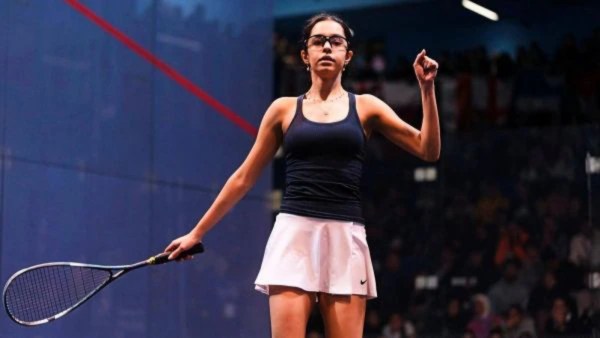 Anahat Singh in action. (FILE photo)
“As I kept getting older, and kept pushing, I thought ‘Oh my god, I’m nearing my end, and I’m going to miss out on the biggest thing in my career’,” he recalls, of moments of intense self-doubt, mixed with a bitter thought, “That this trophy should’ve been in my hands.”
Story continues below this ad
As it turned out, the year that he triumphed in 2015, Gaultier least expected to win. Not that the workhorse training he was known for ever ebbed. “I was not playing my best in that tournament. I was a bit sick. But the draw opened up as top seeds fell in Round of 16. I stayed sharp in the final, and was 2-0 (11-6, 11-7) up,” he recalls that Bellueve win in USA against Egyptian Omar Mosaad. It’s when all the nightmares, misses, bottlings, screw-ups, flashed before his eyes.
“I was within minutes of losing the third game, and was game-ball (game-point) down. It’s when I remembered a message from my friend which said, ‘Tomorrow if anything happens, just look at the ball. Put all energy into focusing on that ball, blank out all else.’ It helped me get rid of all the bad thoughts. And it worked like magic after a wait of years and years,” he says, like living a movie.
He’s honest about how he felt afterwards. “Frankly, that feeling of winning after all that lasts only a short period. You celebrate afterwards. And then, life goes on. There are other targets. I got to World No 1 after that.” Both Camus and Sartre would toast to that phlegmatic end.
When Gaultier looks back to nine medals and five more semis, he can dissect all those losses and bottlings, like tweezing a fibre out of a petri dish specimen. “Since I was a kid, I was expected to win, also because I won all other tournaments on Tour easily. But Worlds brought on extra pressure. I needed to find a way not to take that pressure, treat it like any other tournament. To not feel alone on court. I persevered and never gave up. My parents only said keep the hard work and discipline going. Somewhere, at some point, it went my way,” he says.
Story continues below this ad
His hard-learnt lesson? “It’s important ‘what’ you put in your brains. You could put 100 million hours in the tank in practice. But on the final day, if you don’t think right, you can end on the wrong side. You keep learning from shots that didn’t go in. But you take it on the chin,” he says. And start all over again, next day. Squash stays brutal Day One to Day Last.