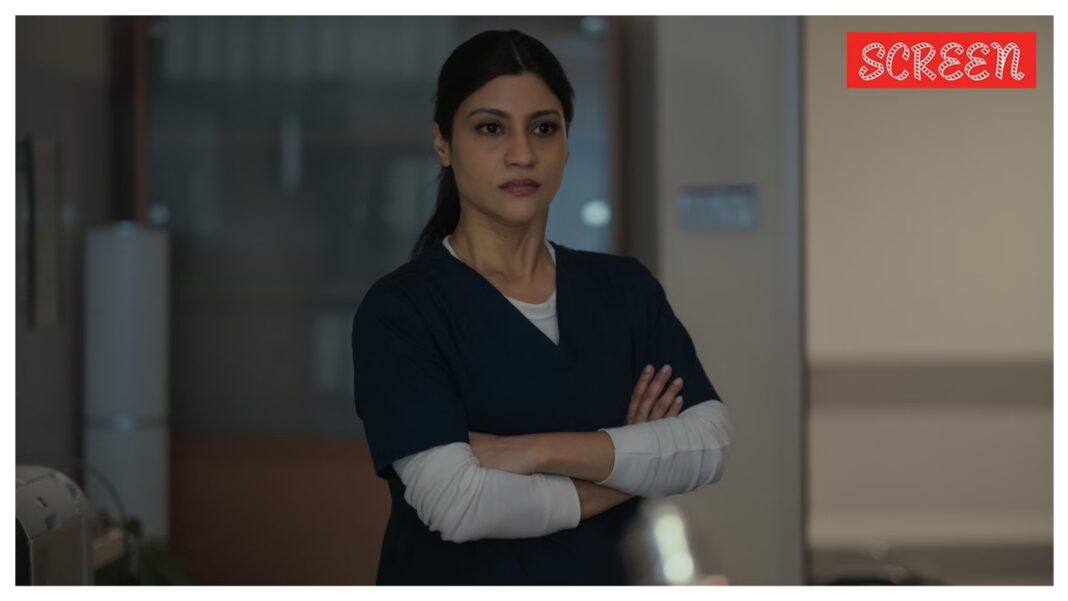
Four years after her directorial debut feature, Ayushmann Khurrana-starrer Doctor G, Anubhuti Kashyap is back with another film set in the medical world. Accused on Netflix India, starring Konkona Sen Sharma and Pratibha Ranta, revolves around the events surrounding a senior gynaecologist in London after she’s accused of sexual misconduct anonymously. In an exclusive interview with SCREEN, Anubhuti unpacks the film, her creative choices, and admits that she saw the criticism of an “underwhelming climax” coming her way.
Was Accused always the story of a woman? Or was it initially a man who was changed to a woman?
It came in the form of an idea that we should explore a woman accused of sexual misconduct. The idea actually came from the Netflix creative team. This part was clear. While discussing, it emerged as a good opportunity to not only have a woman at the centre of the film, but also have a queer relationship. So, there was no man in the mix right from the starting point.
Would it have been a different story had it been a man accused of sexual misconduct?
I’m not sure if I’d have liked the idea at that stage. Because we’d heard of so many Me Too stories in real life and in some films as well, not so much in India but in world cinema. But this was different. I found the idea very relatable, but also far more different.
Why did you choose to not set the story in India?
When we began researching, we realized there are more such cases where a woman has been accused in Western nations than there are in India. It’s happened in India as well, but we either don’t report or aren’t aware of them. There’s much more research available from Western nations. Secondly, to have more weight, we decided to go with a queer marriage. Because then there are higher stakes and more credibility. So, that lent itself to the UK naturally. We were very clear from the beginning that though these two characters and their relationship form the heart of the story, we didn’t want to make it an issue and have any commentary on it. That would have been possible only when the story was set abroad. In India, you’d at least have to acknowledge it from other characters’ point of view. Then of course, we had to make a partly Hindi film, so we were looking for a country like the UK and Canada, where there’s a large diaspora.
Story continues below this ad
How did you strike the balance between not making it a pronounced queer story and yet being fair to those from the community who feel marginalized?
In the initial drafts, we had put in a stronger angle where Meera was really struggling with her identity. There was an explanation about why she was in London and relatively new there. The kind of freedom she’s found and her having not come to terms with it weigh her down throughout the film. But while balancing the pace of the film and focusing on the central idea, what ended up happening was we weren’t able to do too much justice to that aspect. So, we felt if we don’t do it well, we’d rather not have it. Even if there’s a trace of identity crisis, we should do full justice to it. So, it was a creative choice. Maybe in another time and another world, I’d like to tell the story with a lot more depth and colour. But we worry a lot about a tight narrative these days.
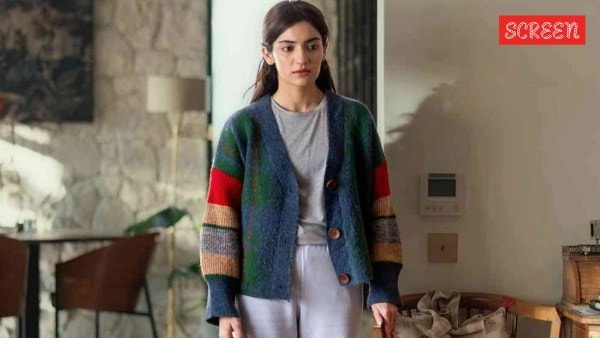 Pratibha Ranta as Meera in Accused.
Konkona said Accused came as a breath of fresh air to her because more often than not, the protagonist of a Hindi film is a straight, North Indian, able-bodied, fair-skinned man. How important is representation for you?
Yeah, absolutely important. Which is why I try to slip in some form of representation as much as I can, which is true to that country as well. In our country, I don’t know if we’re just obsessed with whitewashed characters or we’re not showing them enough content. We also have South India, where very normal-looking people become massive stars. I hope more of that happens. It’s always very conscious for me. Characters need to look and behave normally, like the people we see around with all kind of body types and faces. I’m all for representation.
Story continues below this ad
Accused starts with the word ‘abuse’ being cancelled to reiterate that the story is of an accused, and not of a convicted abuser. Does that speak of your stance on cancel culture?
I don’t appreciate the cancel culture at all. Social media has made it possible for a lot of things to come out, but it’s also allowed for facts to emerge. We as people have to change and have the patience to carefully study the facts, follow the due process of investigation, and believe in the system, and not cancel someone at the first news of something gone wrong.
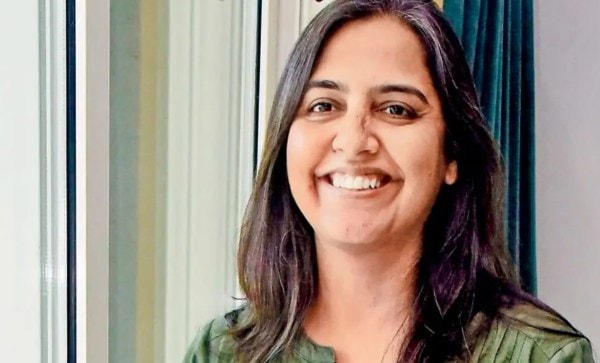 Anubhuti Kashyap breaks down her new film, Accused.
But one can’t deny that the system is broken. If the due process is followed, a few guilty abusers may slip out too. Do you think that’s just a small price to pay?
Like in any good movement, there’s a price to pay. There’ll always be all types of people trying to take advantage to somehow bring down the movement. They’re often trying to settle personal scores, have something to lose or are not comfortable with a certain kind of change. I hope this price remains small, and people view it as that, because the movement is for a good cause. In fact, we have to somehow try that it stays alive. We’ve to put in more systems that segregate false cases from the right ones and not being affected by all the noise around. Unfortunately, it doesn’t remain a small price. It becomes the cost of any good movement. Like it seems to be kind of fizzling out right now.
Story continues below this ad
Why did you choose to have an age gap in the central queer relationship in Accused?
The idea was to have a central character who doesn’t fit into your ideas of a perfect woman in power. We were trying to add layers where she could look a bit weak, despicable, and abrasive. In India, we even judge men who are with much younger women. We tried to reverse that so that the moment you notice that, you say, “Oh! It’s not done.” So, you’re already judging her. The point of the film is not so much whether she’s guilty or not, but about how we’re quick to judge people. We don’t even try and wait for the facts. We should sit with our biases and try to examine them.
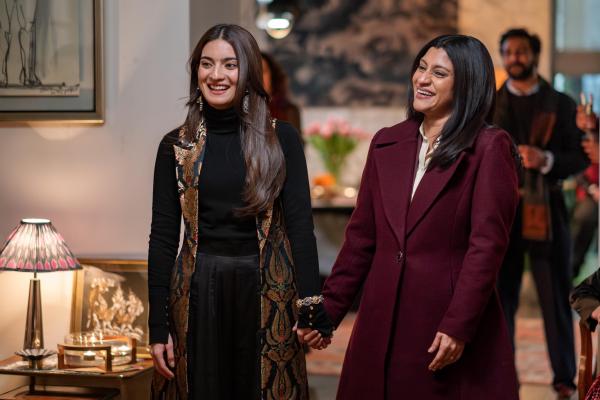 Pratibha Ranta and Konkona Sen Sharma in Accused.
Why did you opt for that climax, and did you not think it’d be polarizing?
We’re so attuned to watching thrillers that we’ve seen so many stories where someone close to you has done that. So, we wanted to avoid that. Secondly, research showed some such cases happened because of workplace jealousy. It’s a risk I took because I knew a lot of people would find it underwhelming. Because eventually, it becomes about the villain. But I was trying to consciously avoid that. It’s not about who’s done it. It’s about this person’s journey, before and after the accusation, and what’s changed in her. Which is why I quickly move to something else.
Story continues below this ad
This is your second film in a row with a gynaecologist in the lead role. Where does the obsession come from?
Of course, I’ve noticed it. I didn’t want to do another film with a gynaec or even set in the medical world. I didn’t have a choice. In fact, we tried 2-3 different professions, but research told us there are many, many more cases reported in the medical world. Also, it’s a kind of profession where you’re so exposed, emotionally and physically, to your doctor that I had to eventually give in. I obviously have no obsession with gynaecologists (laughs). In fact, since I come from a non-science background, I had to really work hard for the authenticity of my first film. Thankfully, we don’t go so much into the profession here, so I could stay away. But ya, I hope never again or not soon enough.
Did your voice somewhere come from rebellion that you didn’t want to make movies similar to your brothers’, Anurag Kashyap and Abhinav Kashyap?
I never thought I’d be in movies because I had a corporate background, happily working and very cut off from this. So I never imagined I’d be here anyway. But once I started to step in, it happened over time. It wasn’t conscious that I’d make my stories like this or that. But subconsciously, it may have happened because you don’t want to be completely like your brothers and live in their shadows. So, you automatically have a voice of your own. I’m happy slightly different voices emerged and I’m somewhere between both my brothers’ voices. So, there’s some sort of a balance.
Story continues below this ad
Did their journeys also give you the reassurance that you could also be a part of the film industry?
Absolutely. I did act in plays during school, but I thought of it as a hobby. So, that kind of got lost. But there were a couple of plays I’d co-written which my elder brother Anurag had seen. So, he always felt I had a creative inclination and could write. There was a period in my corporate life where I’d gotten promoted. It was like if you’re in it, you’re completely in it. I felt secure, so I took a sabbatical for six months. My brother and I were fairly close then, so he said, “Khali kyun baithi hai? Come over to my place.” So, I started to hang out at his place those days. I met a couple of emerging filmmakers like Vasan Bala. We decided to watch films and research on some things together. So, it wasn’t just my brothers’ journeys, but him subtly nudging me and believing in me that I could do this more than I did.