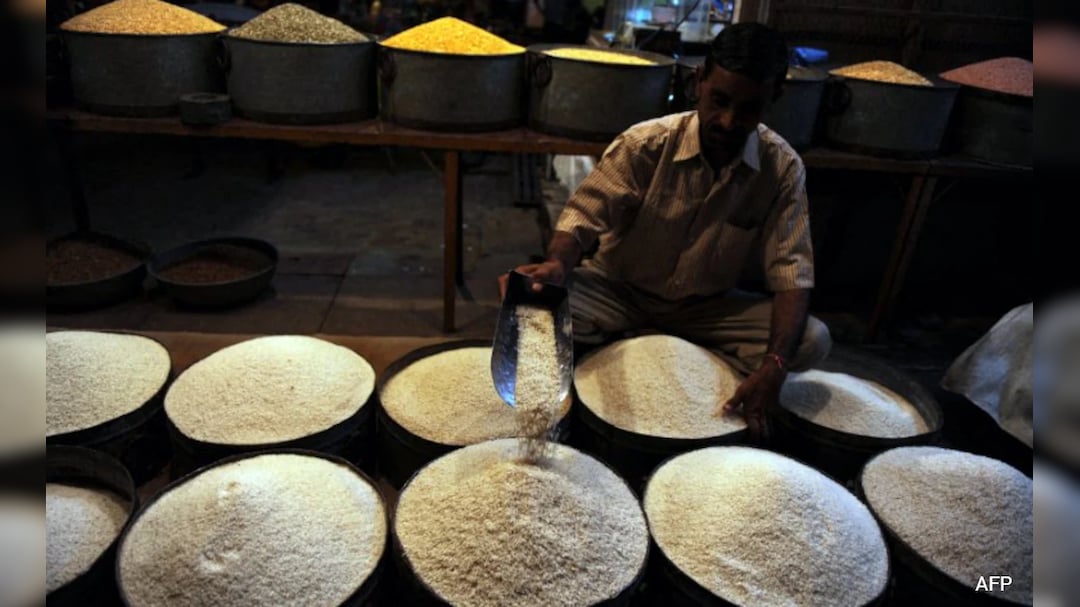
Indian basmati rice exports are facing renewed pressure as freight rates to the Middle East have surged sharply amid geopolitical tensions, disrupting logistics and squeezing exporter margins. The rise in shipping costs comes even as domestic rice prices have softened by nearly 10%, creating a sharp divergence between export economics and local market trends, industry executives and experts said.
The Middle East and the Persian Gulf remain central to India’s basmati trade. “Overall, India exports around 70% of its basmati to the Middle East and Persian Gulf,” said Akshay Gupta, Head of Bulk Exports at KRBL Ltd, India’s largest basmati exporter and owner of the India Gate brand.
Freight Surge And Logistics Disruption
Exporters say freight rates to Gulf markets have doubled in recent weeks, driven by higher war risk premiums, vessel re‑routing, and container shortages. “Freight rates to the Gulf have surged 100%, rising from around $600 to nearly $1,200,” said Rahul Suri, Whole‑Time Director at basmati exporter Amir Chand Jagdish Kumar, which markets rice under the ‘Aeroplane’ brand.
According to Suri, logistics disruption has added roughly $50 per tonne to the cost of exporting basmati rice. “The price increase has been fully passed on to clients,” he said, adding that exporters have had little choice given the scale of cost escalation.
KRBL said it is closely monitoring developments in the region and remains engaged with stakeholders on the ground. “We are in constant communication with our regional partners and authorities to navigate this period of uncertainty with caution and resilience,” Gupta said.
ALSO READ: Fuel Shortages From War Begin To Threaten Global Food Supply
Domestic Prices Soften, Exporters Seek Support
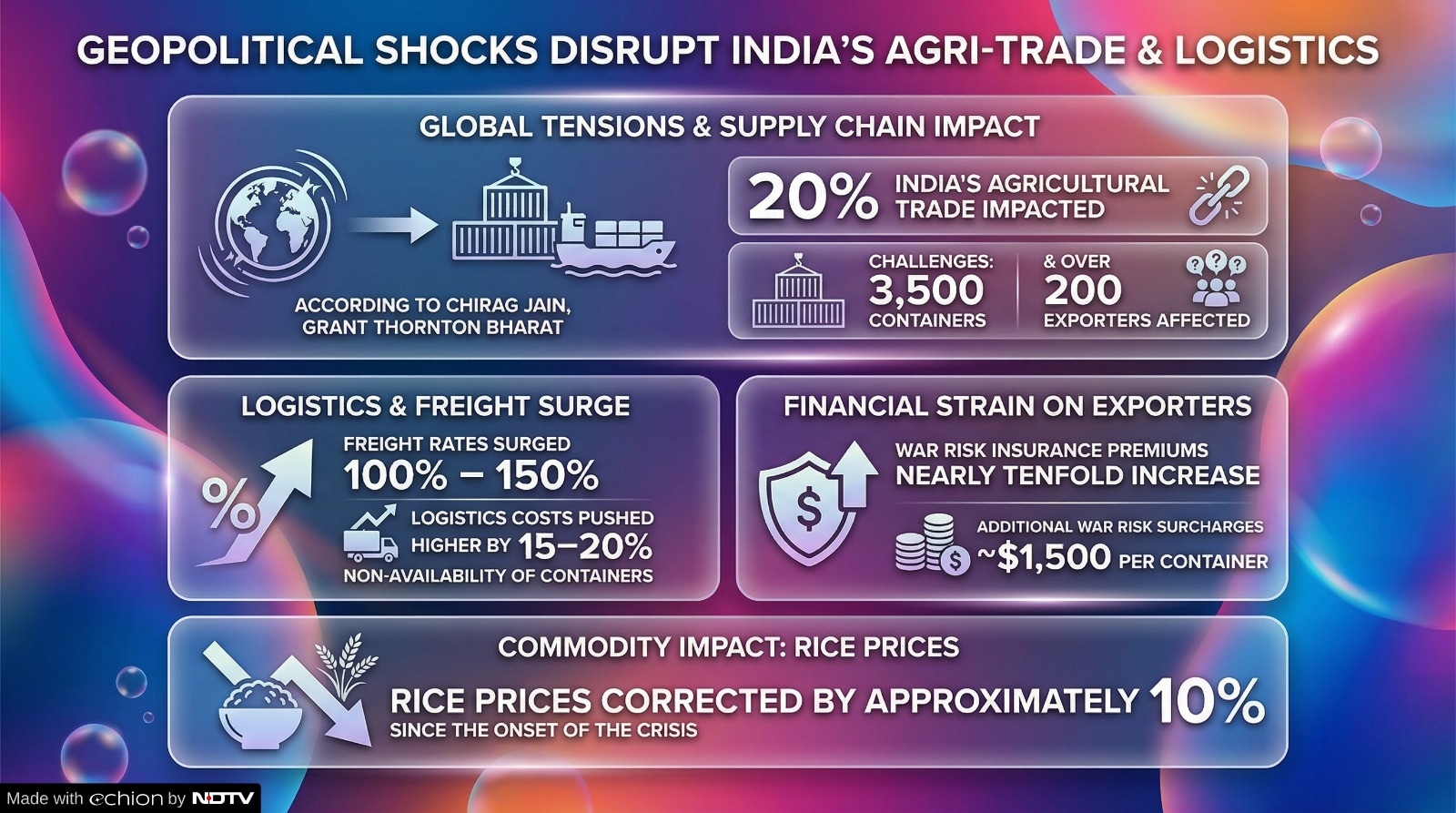
The international disruption is also beginning to reflect in domestic markets. According to Chirag Jain, Partner and Food Processing Industry Leader at Grant Thornton Bharat, ongoing geopolitical shocks have resulted in non‑availability of containers and pushed logistics costs higher by 15–20%. “This has also led to a softening of domestic prices, with rice prices correcting by approximately 10% since the onset of the crisis,” Jain said.
While overall demand for basmati remains largely intact, Jain said exporters are facing mounting pressure as rising logistics costs coincide with weakening export orders. “The immediate concern is safeguarding the margins of exporters, as profitability is being adversely impacted,” he said.
Jain said nearly 20% of India’s agricultural trade has been impacted due to geopolitical tensions, particularly disruptions around the Strait of Hormuz. An estimated 3,500 containers and over 200 exporters are currently facing challenges, with consignments stranded at ports, held up at sea, or delayed before final delivery. Freight rates have surged between 100% and 150%, war risk insurance premiums have increased nearly tenfold, and exporters are facing additional war risk surcharges of about $1,500 per container, Jain said.
Given the severity of the disruption, Jain said there is a strong case for government intervention. “Targeted support from the Ministry of Commerce and APEDA is required to help exporters manage these disruptions, ensure continuity of trade flows, and safeguard the interests of the exporting community during this period of uncertainty,” he said.
ALSO READ: Trade Disruption: Centre Rolls Out Rs 500 Crore Relief Package For Exports To Middle East
Essential Business Intelligence,
Continuous LIVE TV,
Sharp Market Insights,
Practical Personal Finance Advice and
Latest Stories — On NDTV Profit.