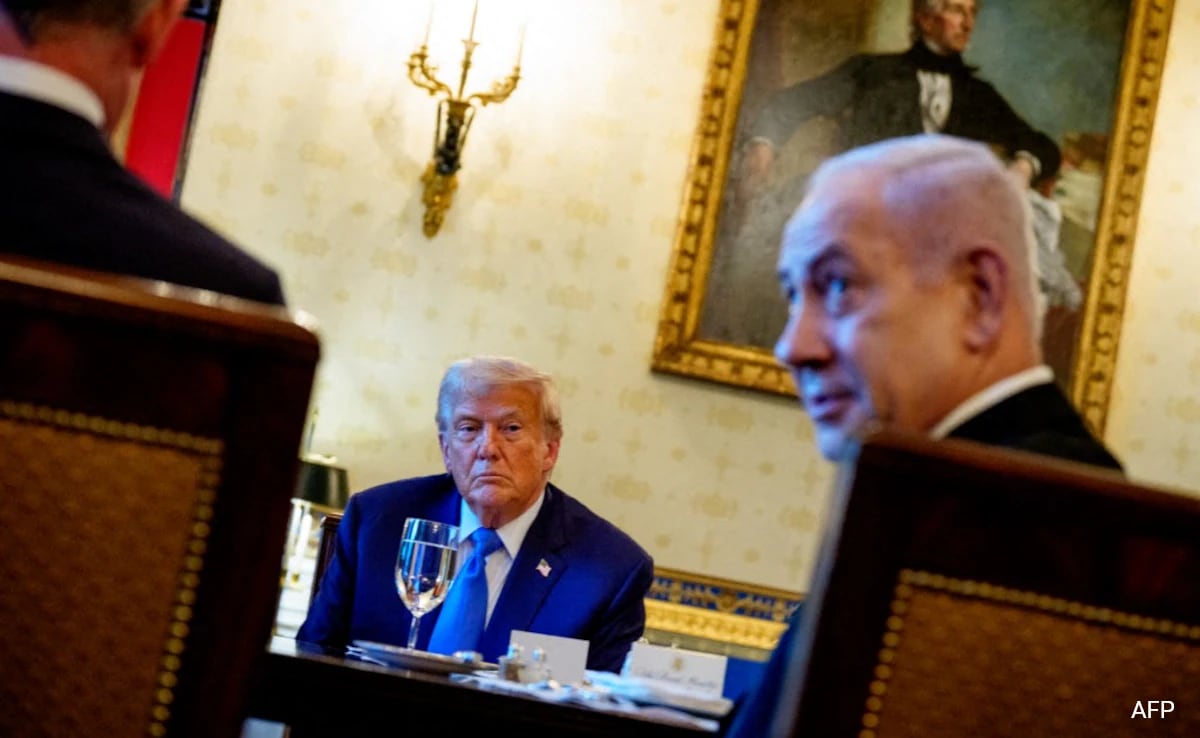
As the fourth week of the US-Israeli military campaign against Iran unfolds in March 2026, what is emerging is not merely another episode of kinetic escalation in the Middle East, but a familiar interplay between coercion and diplomacy that has long defined Washington’s engagement with Tehran. President Donald Trump, never one to shy away from grand declarations, has signalled movement toward what he calls a “comprehensive resolution” even as the fog of war continues to obscure both intent and outcome.
The trajectory to this moment has been predictable in its broad contours. Deadlines issued in 2025 demanding Iran’s complete nuclear rollback – cessation of enrichment, dismantling of infrastructure, and abandonment of proxy networks – were never likely to be met on American terms. The subsequent resort to force, led by Israeli strikes and reinforced by US strikes on nuclear and leadership targets, reflects a classic escalation ladder: diplomacy first as an ultimatum, then as justification for military action. Tehran, for its part, has stayed consistent in its denials of nuclear weapon ambitions even as its regional posture and capabilities have drawn sustained scrutiny.
Advertisement – Scroll to continue
The Choreography Around The Talks
Trump’s announcement on March 23 of “very good and productive conversations” with Iranian representatives, alongside claims of near-total agreement, must be read less as a breakthrough and more as a tactical pause. The much-touted 15-point framework, still shrouded in secrecy, appears to follow the logic of maximalist demands softened by the promise of sanctions relief and normalisation. Nuclear disarmament remains non-negotiable in Washington’s framing, with Trump underscoring that Iran “is not going to have a nuclear weapon” – a reiteration that collapses diplomacy into a singular objective.
Yet, what is equally striking is the choreography around the negotiations. The emergence of Pakistan as a mediator, with a high-level summit in Islamabad reportedly involving figures such as Mohammad Bagher Ghalibaf, reflects a pragmatic widening of diplomatic channels. The involvement of familiar Trump-era interlocutors like Steve Witkoff and Jared Kushner suggests that back-channel diplomacy remains central to this effort, even as public rhetoric oscillates between conciliation and coercion.
At its core, this approach is vintage Trump: a fusion of “maximum pressure” with transactional deal-making. Iran is cast as a long-standing destabiliser, its nuclear ambitions framed as imminent and existential, particularly for Israel. Military action, in this narrative, becomes both punitive and preventative – degrading capabilities while forcing Tehran to the negotiating table before any potential “breakout” moment. The subsequent offer of a deal is positioned as magnanimity, though it leaves little room for Iranian agency beyond capitulation.
What’s At Stake
The proposed framework, if it indeed mandates the physical removal of enriched uranium, possibly with external facilitation, marks a significant escalation in demands compared to earlier nuclear agreements. It also raises questions about sovereignty and enforceability that Tehran is unlikely to concede easily. Iran’s outright denial of formal talks underscores this tension, while scepticism in Israeli strategic circles points to fears of premature de-escalation that could dilute hard-won military gains.
Should the framework hold – and that remains a considerable “if” – the implications would be far-reaching. A verifiable dismantling of Iran’s nuclear programme, coupled with constraints on its proxy networks, would significantly alter the regional balance. Energy markets, long hostage to instability in the Strait of Hormuz, could stabilise, offering relief to a jittery global economy. For Washington, it would represent a reaffirmation of non-proliferation credibility without the burdens of prolonged military engagement.
What Failure Could Look Like
But the risks are equally stark. Iran’s strategic culture, shaped by resilience under pressure, suggests that any pause may well be tactical. Failure of talks could trigger intensified strikes on critical infrastructure, asymmetric retaliation across the region, and further volatility in energy flows. Divergences between Washington and Jerusalem, particularly if speed is prioritised over strategic depth, could complicate alliance dynamics. Moreover, the broader signal this sends to other aspirant nuclear states remains ambiguous: coercion may deter, but inconsistency could just as easily embolden.
What is being witnessed is not a clean pivot from war to peace, but a continuation of conflict through different means.
Trump’s 15-point framework embodies this duality- an attempt to translate battlefield leverage into diplomatic closure. Whether it delivers a genuine reset or merely a temporary lull will depend not on rhetoric but on the hard realities of verification, compliance, and mutual distrust. The coming days, particularly with the Islamabad channel in play, will reveal whether this is the prelude to resolution or simply an intermission before the next round of escalation, as has been the case with the Middle East in the past.
(Harsh V Pant is Vice President, Observer Research Foundation, New Delhi.)
Disclaimer: These are the personal opinions of the author