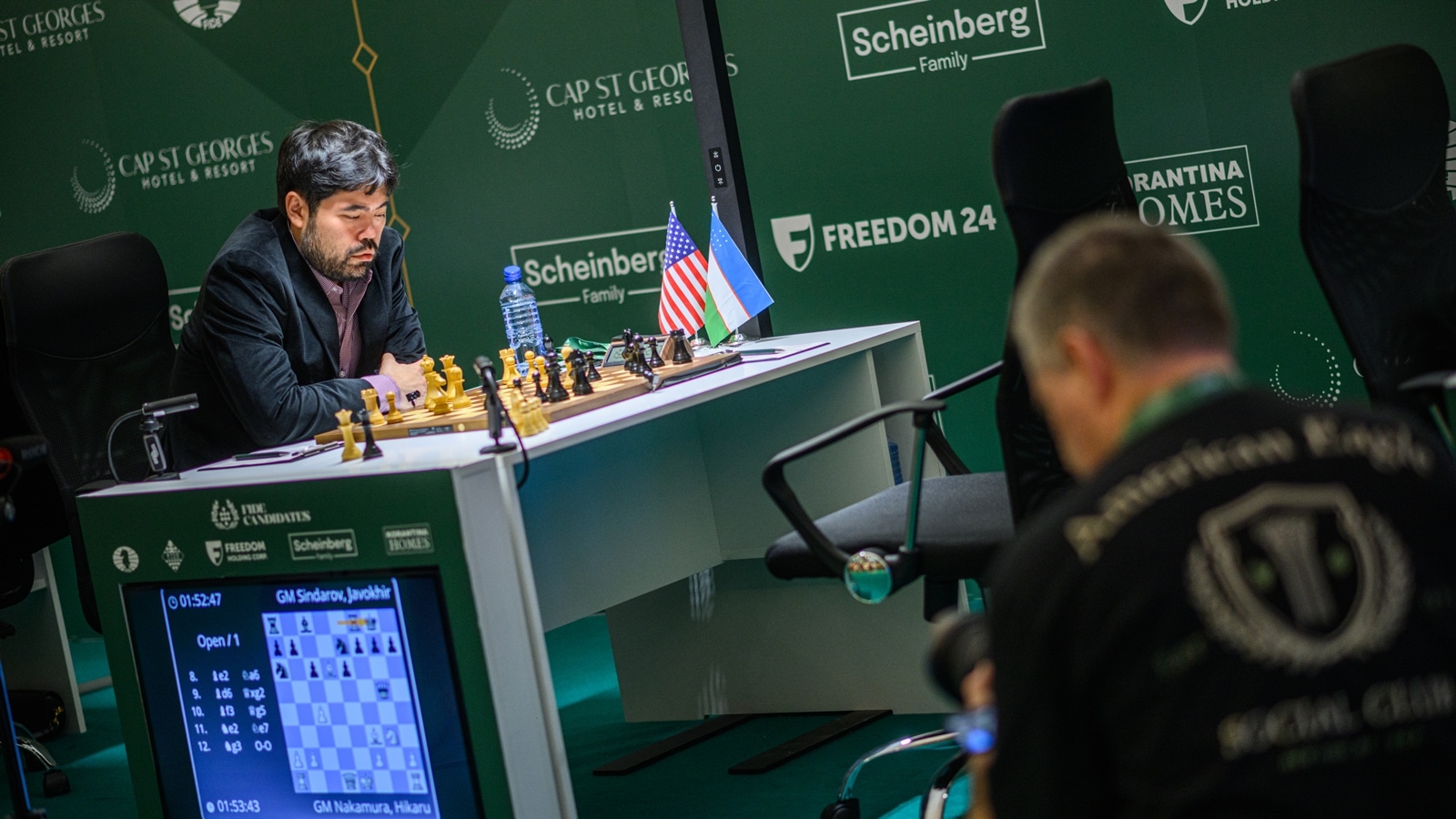
When American Grandmaster Hikaru Nakamura voiced his dissatisfaction with what he called FIDE’s excessive anti-cheating measures at the Candidates Tournament in Cyprus, the chess world split into opposing camps.
Nakamura’s remarks targeted protocols introduced by FIDE, the sport’s world governing body. Yet officials argue that such measures are necessary to preserve the integrity of the game. In recent years, numerous cheating allegations, including some levelled by top players themselves, have surfaced, alongside confirmed cases of individuals caught red-handed during over‑the‑board (OTB) tournaments. These incidents leave little room for lax security for FIDE.
While the process may sound invasive, with scanners at multiple stages and constant monitoring of the players, but in practice, it’s actually straightforward, no more intrusive than airport boarding security.
A player’s entry into the playing venue typically involves a walk‑through scanner followed by a manual check. For the Candidates Tournament, in addition to the walk‑through scanner and a non‑linear junction detector used during the manual check to detect phones or chips, FIDE also introduced additional advanced screening steps. According to the organisation, these measures do not infringe on players’ privacy or the sanctity of the competition.
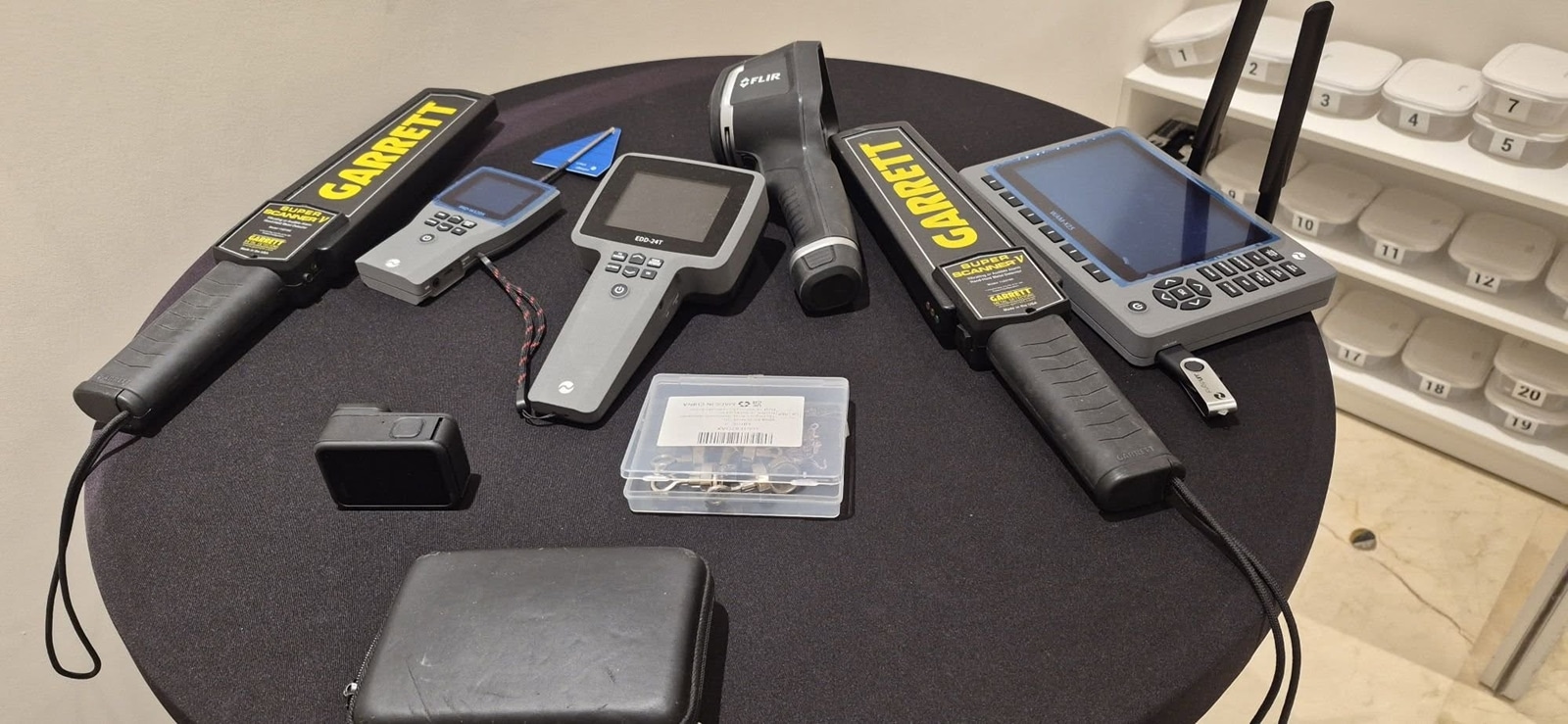 Fair play equipment at the 2026 Candidates (Pic Credit: FIDE Fair Play Commission)
“Well, this is a qualifier for the World Championships. This is as big as it gets. So we have to make sure that the players are comfortable and that they’re in a safe environment,” said FIDE’s Deputy Chief Arbiter and Fair Play Officer, Andy Howie, in a video released by the governing body on YouTube.
Nakamura recently called the entire process of excessive checking “complete nonsense.”
“My general view about the whole topic of delay, cheating over-the-board, and all this stuff is that I frankly think it’s nonsense. Considering the amount of machines they have to scan the players in the room, it’s all complete nonsense. I really do,” he said on his YouTube channel.
Story continues below this ad
The highest-rated player at the World Championship challenger event, taking place on the small Mediterranean island of Cyprus, Nakamura took a dig at FIDE by sarcastically asking if the players were Mossad agents in Iran.
“It’s not that I have any problems with it. I just think that the fears some players have expressed are completely overblown. I’m just going to be honest… They scan us before the game. They scan us after the game. They have the metal detector. They have a variety of other separate scanners. I mean, who are we? Are we like Mossad agents inside Iran or something? Come on, we’re chess players! Let’s be real,” he had said.
Howie clarified that while FIDE uses advanced anti-cheating measures, these measures are in no way excessive. He explained that players are required to go through just two scanners as an absolute minimum.
“Technology is advancing, so we have to be at the forefront of it. We do have some new scanners here that we’re using on the players, but it’s not excessive, it’s pretty normal” he said. “We have what we call covert devices and overt devices. The physical scanners are the overt devices that you can see. In the playing hall, we also have covert devices that monitor signals coming into the hall.”
Story continues below this ad
For the Candidates, FIDE has installed four covert scanners in the playing hall at the Cap St Georges Hotel and Resort in Pegeia. Officials there detect incoming signals to determine whether they pose a threat.
Another Deputy Chief Arbiter and Fair Play Officer for FIDE at the Candidates 2026, Ana Srebrnic, explains that players are sometimes checked even after the game. She said that if the fair play officials find something unusual, they proceed with a thorough check of the players, which usually runs a bit long.
“If we find something suspicious during the game, of course we check them,” she told FIDE. “If we notice something before the game and we weren’t completely sure what was going on, then we check it after the game. The scans after the game can be a little bit slower and more detailed, as we check bags, jewelry, and things like that.”
While Nakamura’s frustrations can still be justified from a player’s perspective, having to go through layers of scrutiny while simply doing their job, his repeated complaints ring hollow.
Story continues below this ad
It was Nakamura himself who once accused the current top-rated Indian Grandmaster Arjun Erigaisi without any incriminating evidence. The boomerang came back years later for the American, who then found himself fending off allegations from Vladimir Kramnik that he had cheated in online games.
After Nakamura vented his frustration by asking FIDE whether players were Mossad agents in Iran, Hans Niemann also took a dig at him, saying Nakamura was objecting to stricter anti-cheating measures.
In a social media post on X, Niemann wrote: “Historically, Hikaru Nakamura has made numerous public accusations against other players without consistently providing strong evidence or facing meaningful accountability. Now that stricter anti-cheating measures are being implemented, he appears to object to them.”
Now Nakamura’s complaints may feel ironic, but they do highlight a real tension and as technology evolves, the debate over what’s reasonable and what’s not is only heating up.