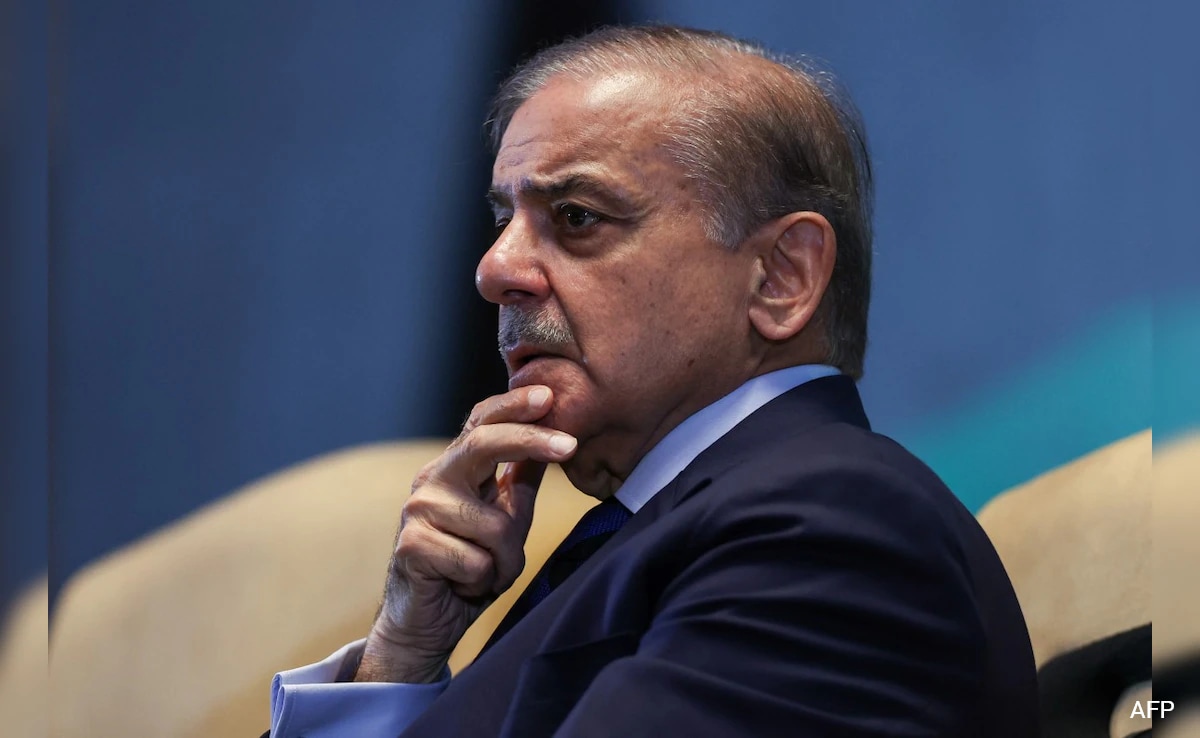
Pakistan is considering financing from both countries and banks as options to help maintain foreign-exchange reserve levels amid soaring oil prices, Finance Minister Muhammad Aurangzeb said, after the United Arab Emirates asked for the full repayment of a $3 billion loan.
The South Asian country this month failed to reach an agreement with the UAE to roll over the debt for the first time in seven years, adding pressure on external buffers at a time when the economy is getting hit by the fallout from the conflict in the Middle East.
“Whatever we need to cover will be a combination of many sources,” including commercial options and bilateral lenders, Aurangzeb told Bloomberg in Washington on Monday. “We’re looking at all options,” he said, declining to provide further details.
The country’s foreign-exchange reserves stood at $16.4 billion as of March 27, enough to cover close to three months of imports.
Before the US-Israeli attack on Iran at the end of February, Pakistan had solid buffers both on the fiscal side and foreign exchanges, the finance minister said, expressing his confidence in the country’s ability to pay back its creditors.
“We’re very committed to pay and ensure there are other resources available to keep our reserves at the right place,” he said.
Aurangzeb declined to comment on whether there are ongoing discussions with China and Saudi Arabia for financial support. Bloomberg News reported earlier that such talks were taking place, citing people familiar with the matter.
Back to Global Markets
The finance minister is in Washington for the IMF and World Bank spring meetings this week, along with other economy chiefs and central bankers. Before the conflict in the Middle East, topics of discussions would have included global trade imbalances and artificial intelligence. Now the impact from the conflict, and the major oil and supply shock that resulted, will dominate the gathering.
Pakistan still plans to return to global bond markets this year by issuing eurobonds for the first time after a four-year gap, Aurangzeb said.
“It is going to be a combination of eurobonds, Islamic sukuks and dollar-settled rupee-linked bonds,” he said, adding that the country will go ahead with requests for proposals in the next few days to appoint lead managers for all three types of issuance.
“We think this is the right time to actually look into all of these options as we go forward,” he said.
The government is also preparing for its first-ever yuan-denominated debt — known as Panda bonds — in the second quarter, the minister said, with the Asian Development Bank and Asian Infrastructure Investment Bank doing the credit enhancement. The inaugural sale will be $250 million, out of a total $1 billion, he said.
Pakistan is expecting the International Monetary Fund’s executive board to meet soon to approve the latest tranche from a $7 billion bailout program, which will give the country access to close to $1.3 billion, when adding disbursements from the so-called climate Resilience and Sustainability Facility.
As of now, the minister said Pakistan is not looking to request an acceleration or augmentation of the original program as a result of the oil shock.
“If we see any vulnerability arising in terms of the macroeconomic situation, then we will talk” to the IMF, he said. “But at this point in time, that’s not on the table.”
(This story has not been edited by NDTV staff and is auto-generated from a syndicated feed.)