A 10-day ceasefire between Israel and Lebanon came into effect a few hours ago today (2:30 am India time). The deal was announced by US President Donald Trump before Israel or Lebanon — and though much-needed and marking some historical firsts — comes with inherent contradictions.
Israel was not fighting the Lebanese State, its justification for the devastating strikes across much of the country was uprooting Hezbollah, the Iran-backed militia operating from south Lebanon. Soon after the ceasefire announcement, statements from Israel Prime Minister Benjamin Netanyahu and the Hezbollah seemed to imperil it.
The ceasefire has been met with criticism in Israel, with many blaming Netanyahu for failing to capitalise on military gains. In the 10-day truce period, Israel and Lebanon are supposed to iron out their differences for “lasting peace”, and a White House summit of leaders from both countries has been proposed.
What do Israel and Lebanon want, and what does the truce propose?
According to a release by the US Department of State, the terms agreed to include:
“…Lebanon and Israel have reached an understanding in which both nations will work to create conditions conducive to lasting peace… full recognition of each other’s sovereignty and territorial integrity, and establishing genuine security along their shared border, while preserving Israel’s inherent right to self-defense.”
Notable here are “ full recognition of each other’s sovereignty and territorial integrity”, given Lebanon has never officially recognised Israel, and Israel wants to occupy southern Lebanon up to 30 km north of the border as a security buffer against Hezbollah. Also, the right to self defence has often been Israel’s rationale for actions against its neighbours.
The deal further says that “Israel shall preserve its right to take all necessary measures in self-defense, at any time, against planned, imminent, or ongoing attacks. This shall not be impeded by the cessation of hostilities”, and that the “Government of Lebanon will take meaningful steps to prevent Hezbollah and all other rogue non-state armed groups in the territory of Lebanon from carrying out any attacks, operations, or hostile activities against Israeli targets.”
Story continues below this ad
Soon after the announcement, Netanyahu said Israel would hold on to the areas in southern Lebanon it has occupied, and Hezbollah said “any ceasefire must be comprehensive across all Lebanese territory and must not allow the Israeli enemy any freedom of movement”, failing which, Lebanon would have the right to resist.
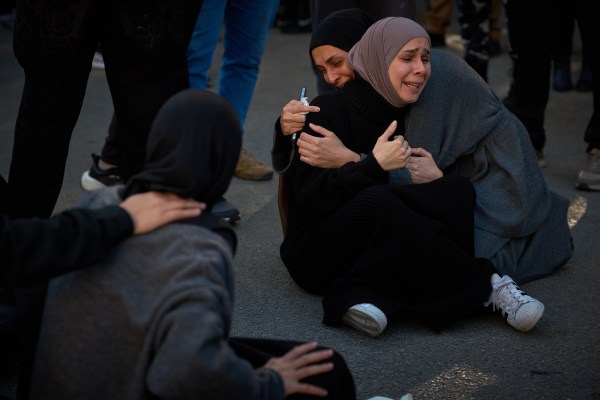 Mourners react during the funeral of 13 state security officers killed the previous day in an Israeli strike in Lebanon’s coastal city of Sidon, Saturday, April 11, 2026. (AP Photo)
If the ceasefire holds and the two sides keep talking, Israel is likely to focus on ensuring the disarmament of Hezbollah, while Lebanon would want Israeli forces to vacate its territory, international help with reconstruction and return of the displaced, and the release of Lebanese prisoners in Israel.
This is the first time since 1993 that Lebanon and Israel are talking directly. The many other ceasefires between them have been mediated by third parties, like the UN, US, or France. A common sticking point has been Israel saying Lebanon did not uphold its part of the bargain by disarming Hezbollah, and Lebanon saying Israeli forces never left its territory.
What the Lebanon ceasefire means for Netanyahu
Bibi has been heavily criticised domestically, including for the fact that even ministers in his Cabinet heard about the ceasefire from Trump’s announcement, reported Times of Israel.
Story continues below this ad
Residents and leaders of north Israel, which borders Lebanon and where Hezbollah’s rockets generally fall, claim their safety has been compromised in international deal-making.
Additionally, the truce comes after Iran repeatedly claimed that its ceasefire with the US would hold only if Lebanon was included in the deal. Now, Iran can claim credit for stopping two of Netanyahu’s campaigns, in Iran as well as in Lebanon, before his self-stated maximalist objectives were met.
Lebanon’s President, Joseph Aoun, had been offering direct negotiations ever since Israel’s latest campaign in his country began early March, after Hezbollah fired some rockets into Israel to protest Ayatollah Ali Khamenei’s killing. But his call was heeded only after the US-Israel-Iran ceasefire.
After that truce halted Israel’s operations in Iran, Netanyahu had intensified the bombing in Lebanon, to growing international condemnation. While not many countries criticised Israel’s actions in Iran, whose regime is seen as adversarial by much of the West, hitting civilian targets in Lebanon saw an outcry, including from allies like Italy’s Giorgia Meloni. Netanyahu, who projects a strongman image, faces an election in the second half of this year. He will have to fight allegations that he caved to international pressure.
Story continues below this ad
Times of Israel quoted former IDF chief of staff and Yashar party chairman Gadi Eisenkot as saying that a ceasefire was forced on Israel for a third time. “A pattern is developing where a ceasefire is being forced upon us — in Gaza, in Iran, and now in Lebanon.”
Also, Netanyahu has been claiming since October 2023 that Hezbollah would be wiped out. While the group’s senior leadership has indeed been killed and its military capability degraded, Israel’s campaign has killed thousands of Lebanese civilians, but Hezbollah is still around and fighting.
What the ceasefire means for Lebanon and Hezbollah
First, it means some critical pause in fighting for a beleaguered population — in the past 1.5 months, 1,000 Lebanese have died and a million have been displaced. Refugee tents and hospitals are overwhelmed. After the truce announcement, while the government urged the south Lebanese not to return to their homes just yet, people had already started travelling back.
The Lebanese government would like to disarm Hezbollah, but lacks the resources to do so. It opposes Hezbollah’s actions that drag it into regional wars. On March 2, after the Hezbollah’s rocket attacks into Israel, the government banned its military activities. Last August, it had also asked the official Lebanese army to implement a phase-wise plan to disarm all non-state actors.
Story continues below this ad
If the current truce gets it the required international support to move against the Hezbollah, it might welcome it. However, the government does not wish to start an armed conflict with Hezbollah — which even in its weakened state, is probably a stronger fighting force, and which enjoys genuine popularity in swathes of Lebanon.
Apart from its militia, Hezbollah also has an active presence in the country’s political and civic life. In the 2022 elections, the Hezbollah won 13 seats, and with its alliance partners, holds 62 seats.
The Hezbollah was formed in 1982 with Iran’s active help specifically to drive Israel out of Lebanese territory. It claims to be the only Arab group to have successfully withstood Israel. It has rejected all calls for disarmament till the “threat from Israel” exists.
As talks between Lebanon and Israel continue, they are likely to get entangled in this circle of “threat”, “self defence” and “resistance” between Hezbollah and Israel.