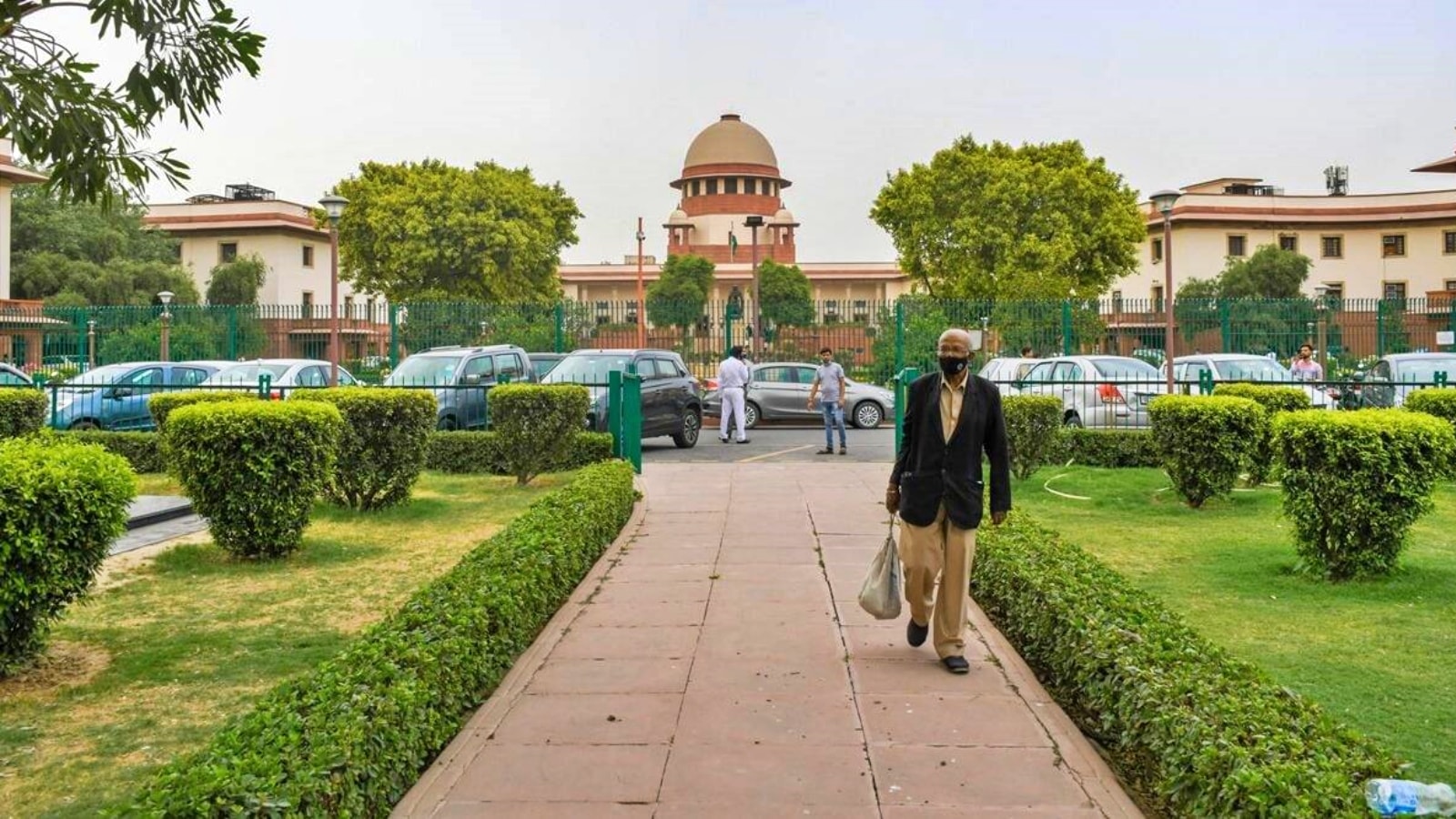
The Supreme Court Wednesday said it would be difficult for the court to lay down any future guidelines regarding state intervention in religious affairs to carry out social reforms, adding that the extent of legitimate or excessive intervention will depend on the facts of each case.
Chief Justice Surya Kant, presiding over a nine-judge bench on Sabarimala reference hearing, made these remarks as Senior Advocate Gopal Subramaniam, appearing for some of the petitioners, continued his arguments on the interplay between Articles 25 and 26 of the constitution. The bench — also comprising Justices Aravind Kumar, B V Nagarathna, M M Sundresh, Ahsanuddin Amanullah, Augustine George Masih, Prasanna B Varale, R Mahadevan and Joymalya Bagchi — was hearing the pleas seeking a review of the SC’s September 28, 2018 judgment striking down age-restrictions on the entry of women to the hill shrine.

While Article 26(b) gives religious denominations the right to manage their own religious affairs subject to public order, morality and health, Article 25(2) empowers the state to regulate economic, political or secular activities of such institutions.
Advocating to limit the right of state intervention for social reforms, Subramanian said it must be ensured that the laws are expressly for social reform and does not hollow out the religion.
“Under Article 25(2)(b), social welfare and reform laws are capable of a wide expression, but they must be honestly falling as social welfare…and must not also completely eviscerate the right of the [religious] denomination under Article 26,” he submitted.
To this, Justice Nagarathna said, “If a religious denomination believes that a lady who becomes a widow has to commit Sati and therefore, Sati must be abolished in the context of Article 25(2)(b), it can’t be considered to be an invasion of a religious practice…So social reforms will prevail there.”
The CJI said, “So far as social welfare or reforms are concerned, it’s a very wide term and the state is not a stranger or it is not an alien; state represents the will of the people and if the people want certain social evils to be reformed, probably that power can be exercised. But it’s very difficult for us to lay down any future guideline. It will always depend upon case to case as to whether the reforms fall under Article 25(2)(b) or it amounts to exceeding the power under the name of reform, introducing something which amounts to infringement of a religious practice protected under Article 25(1).”
Story continues below this ad
The CJI added it was difficult if not impossible for courts to decide what is an essential religious practice for a group. “For a judicial forum, these are difficult if not impossible parameters…to declare a particular practice as essential, the other non-essential,” CJI Kant said.
He said this as Senior Advocate Rakesh Dwivedi, also representing some review petitioners, said the court should not get into the questions of what is an essential religious practice, instead leaving it to the group. “The freedom of religion would include that the believers decide for themselves how they want to worship, when they want to worship, what time etc. So it’s a wide sweep…Leave it to the denomination to decide,” Dwivedi told the bench.
The CJI added that barring the prohibitions of public order, morality and health under Article 26, all other practices of a religious group must be deemed a religious practice.
The hearing will continue Thursday.
Plea challenging excommunication in Dawoodi Bohra community
Besides Sabarimala, the apex court is also seized of a writ petition against the practice of excommunication in the Dawoodi Bohra community. The plea challenges the 1962 SC judgment striking down the Bombay Prevention of Excommunication Act, 1949, which forbade the practice.
Story continues below this ad
Senior Advocate NK Kaul, appearing for the Syedna of the community, questioned the maintainability of the petition on Wednesday.
Justice Nagarathna then wondered how a writ petition could be filed challenging a judgment, adding: “You can’t go on like this, filling writ petitions and challenging judgments of this court… There will be no finality [to judgments].”
The judge recalled that a bench presided by her had recently dismissed a writ petition challenging the 2014 SC judgment which upheld the exemption of minority educational institutions from the Right to Education Act, 2009.