4 min readKolkataUpdated: Apr 28, 2026 08:46 AM IST
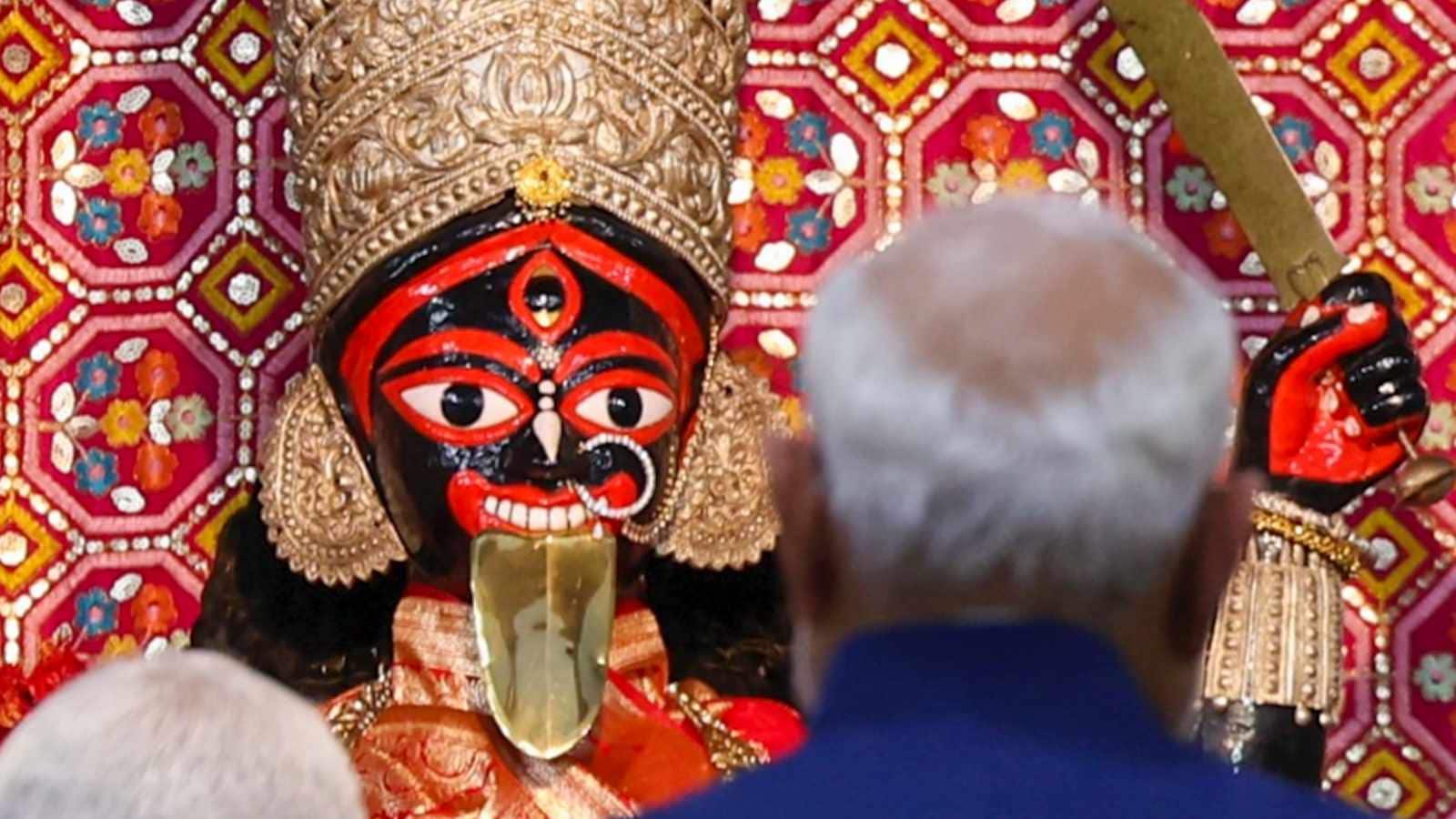
The Thanthania Kalibari temple in north Kolkata made headlines on Sunday as Prime Minister Narendra Modi, currently in West Bengal for election campaign, offered flowers to the deity here.
Famous among the Bengalis, Goddess Kali is worshipped here as ‘Siddheswari Kali’. PM Modi paid obeisance at the temple shortly before holding a roadshow in the area ahead of the phase-2 of the West Bengal Assembly elections.

In a now-viral video, the PM was seen buying flowers from a shop outside the temple. Raju Maity, 37, whose family originally hails from Khejuri in Purba Medinipur has been running the shop for three generations, shared: “He (PM Modi) did not talk, he only asked me to make a ‘dali’ for the puja. We know all that is offered here, so I made a thali with ‘jaba’ (hibiscus), ‘rajnigandha’ (tuberose) and ‘padmo’ (lotus) flowers. He paid me three hundred rupees.”
PM Modi also bought sweets from another shop next to the temple. The owner of the sweet shop, Shambhu Adak said, “He bought ‘khirer pyara’ sweets worth Rs 200. After getting the sweets, he said, ‘bhalo theko’ (stay well).”
During his election rally later in the day, PM Modi described the shrine as closely connected to the cultural fabric of West Bengal.
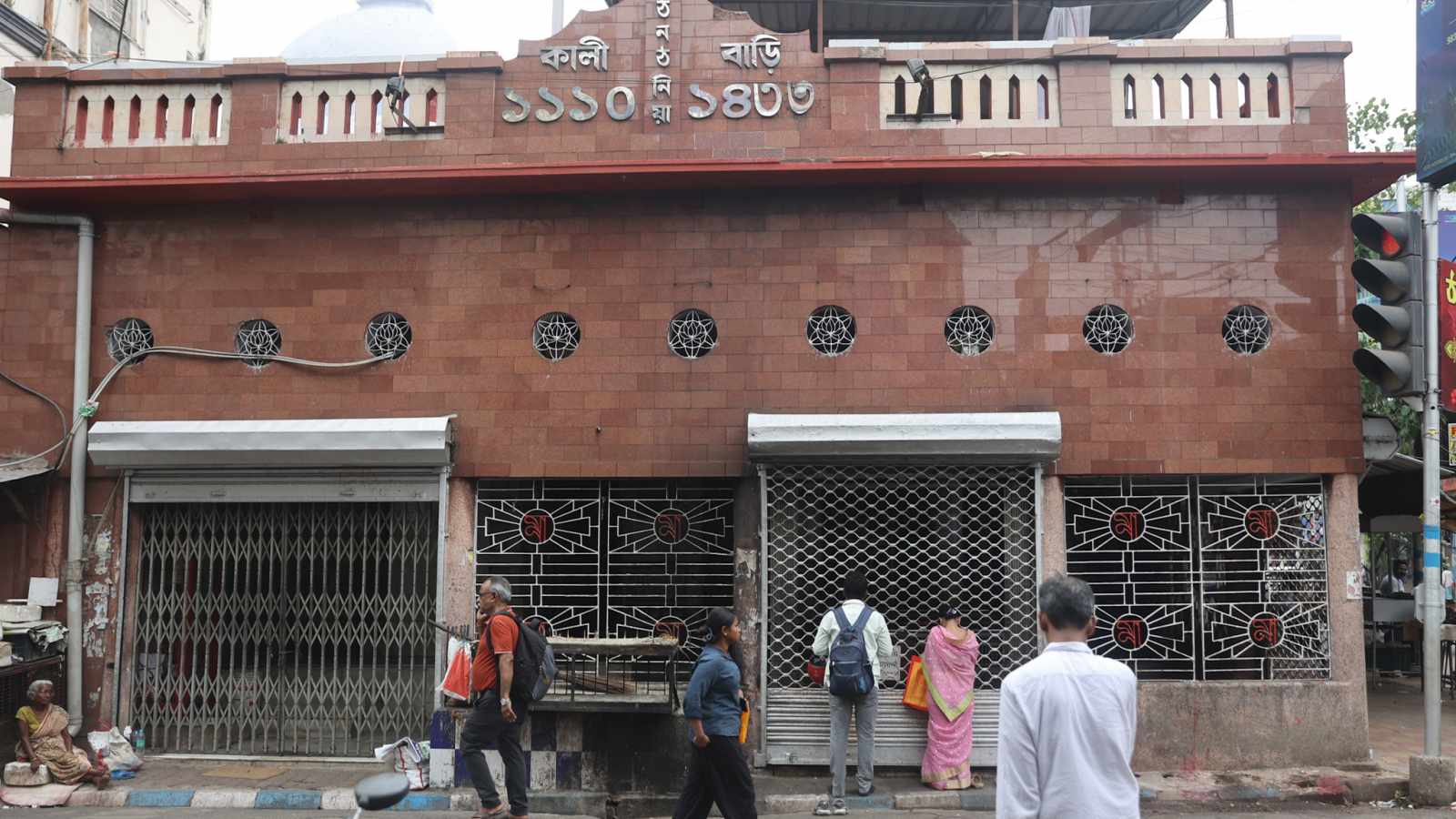 The Thanthania Kalibari temple in north Kolkata. (Express Photo: Partha Paul)
Earlier in December, Union Home Minister Amit Shah had also prayed at the Thanthania Kalibari temple. Notably, to counter the Trinamool Congress party’s allegations of the saffron party being “anti-Bengali”, the BJP leaders have now started chanting “Jai Maa Kali” along with their usual religious slogan of “Jai Shri Ram”. On the occasion of the Bengali New Year’s Day, three BJP leaders, Tapas Roy, Suvendu Adhikari and Bijay Ojha, had visited the Firangi Kalibari temple, as well.
A temple rooted in history & rituals
While the exact recorded history of Thanthania Kalibari remains debated, like many old temples, a plaque on the top of the temple dates the shrine back to around 1703 AD.
Story continues below this ad
It is believed that Udaynarayan, a ‘brahmachari’ (celibate) priest of the tantric order, had settled on an earthen mound in the area, and established a Kali idol seated atop five human skills, referred to as the ‘panchamundi asan’. After his death, a Brahmin of Haldar caste took over as the priest here, and a temple was subsequently erected at the place.
A marble plaque inside the temple credits the erection of the temple to one Babu Shankar Chandra Ghosh in the early 1800s.
It is said that the region was once covered in dense vegetation and frequented by dacoits. To warn the nearby settlements, a bell was installed in the region, and it was rung when dacoits attacked. Locals believe it was the ‘than, than’ sound emanating from the bell which gave the place its name, Thanthania. It may be noted that the historical Maratha Ditch, built to keep the Maratha raiders or ‘bargis’ away, was not far from the temple.
Another interesting ritual at the temple is the practice of offering ‘daab chingri’ — a Bengali prawn dish cooked in coconut — to the deity. Adak, the sweet shop owner, said that the tradition is believed to be started by spiritual leader Ramakrishna Paramhansa.