
5 min readNew DelhiMay 1, 2026 08:00 AM IST
The Jammu and Kashmir and Ladakh High Court has taken strong exception to ‘scandalous and wholly unsubstantiated’ allegations made against judicial officers in a transfer petition, directing the petitioners to tender an unconditional apology.
Justice Wasim Sadiq Nargal was hearing a transfer petition filed by a senior citizen litigant seeking the shifting of the case from a court in Pattan, Baramulla district. During the hearing, the court noted that the petition contained serious allegations accusing the judge of the trial court of being under the influence of the principal district judge and acting with bias.

“Since the petitioners have levelled scandalous allegations in the instant matter without any basis and without any corroboration, this Court deems it proper, at the first instance, to direct the petitioners to file an unconditional apology,” the court ordered.
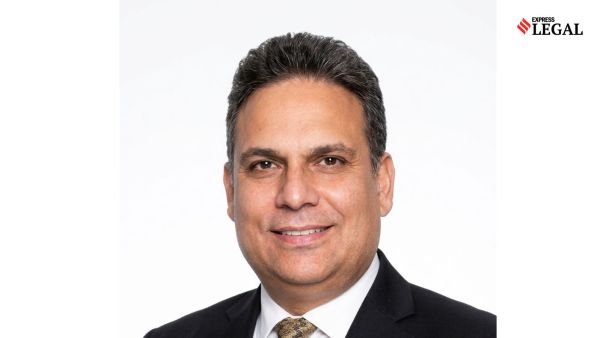 Justice Wasim Sadiq Nargal
‘Reckless and unsubstantiated allegations’
When the high court confronted the counsel for the petitioner who authored the petition, the court noted that he failed to substantiate the allegations and sought to withdraw the plea. However, the court declined the request, observing that allowing withdrawal would enable litigants to escape the consequences.
“Permitting such a course would amount to allowing them to escape the consequences of making reckless, scandalous, and unsubstantiated allegations, which is wholly impermissible in law,” the court said.
The court observed that such allegations are not merely against individual judges but strike at the dignity, independence, and institutional integrity of the judiciary.
“The sanctity of judicial proceedings cannot be permitted to be sullied by reckless pleadings which, under the guise of advocacy, seek to malign the judicial process,” the court added further.
Story continues below this ad
Referring to settled law, the court cited Supreme Court precedents wherein the ‘pernicious practice’ has been expressly ‘disapproved and deprecated.’
The court observed that any indulgence of baseless imputations would not only strike at the root of judicial independence but also corrode institutional integrity and erode public confidence in the administration of justice.
“To permit such allegations to gain publicity, in the absence of cogent and credible material, would have a chilling effect on the judicial process and imperil the dignity of the institution itself,” the court said.
In a strong observation, the court cautioned litigants and all members of bar to refrain from making unfounded and scandalous allegations against judicial officers. It added that any repetition of such conduct without any basis or material shall invite appropriate action in accordance with law.
Story continues below this ad
The court directed the petitioners to file separate affidavits tendering an unconditional apology within one week, expressing genuine remorse and undertaking not to repeat such conduct.
Cautioning the counsel, the court also expressed that the conduct exhibited was not commensurate with the standards expected of an advocate of such standing.
While the court refrained from passing adverse orders against the counsel, noting his standing at the Bar, it issued a clear warning that advocates must exercise due care and responsibility while drafting pleadings and avoid making allegations without supporting material.
“In deference to his experience and position, refrains from passing any coercive or adverse orders against him at this stage. However, a stern and unequivocal caution is hereby issued that he shall, in future, ensure that pleadings are drafted with due care, responsibility, and verification, and that no averments are made without adequate material to substantiate the same,” the court said.
Story continues below this ad
The court indicated that any recurrence of such conduct would invite appropriate action in accordance with law.
The matter has been posted for further proceedings on May 6, for the limited purpose of the petitioners to file an unconditional apology.
Punjab and Haryana High Court’s ruling
- In another case, while dealing with three transfer petitions filed by a husband in an ongoing matrimonial dispute, the Punjab and Haryana High Court observed that mere allegation of bias, itself cannot weaken the very edifice of the judicial system.
- Justice Archana Puri dismissed the plea filed by the husband seeking transfer of three pending cases, including divorce and child custody proceedings, alleging that the presiding officer was biased against him.
- The court noted that denial of adjournment in the case did not reflect any biased attitude of the presiding officer.
- “Allegations for seeking transfer are quite vague. No specific case is made out for transfer of the cases in hand. Mere allegation of bias, itself cannot weaken the very edifice of the judicial system and even erode the confidence of the Presiding Officer, who is dealing with the cases,” the court said in its order dated March 23.


© IE Online Media Services Pvt Ltd