Anxiety has become one of the most common mental health concerns worldwide, affecting people across age groups, professions, and lifestyles. Fast-paced routines, constant digital exposure, and several other factors have contributed to its prevalence. While occasional anxiety is a natural response to stress, chronic anxiety can impact daily functioning, sleep, focus, and overall well-being. According to the World Health Organisation (WHO), anxiety disorders affect 359 million people across the world. While the condition is highly prevalent, there are simple ways that can help you calm the anxiety.
There are several breathing techniques which can be beneficial to regulate the nervous system. Among them is box breathing. It has a structured, easy-to-follow method that can be practiced anywhere. Read on to know what box breathing is, how to practice it and how it helps to calm your anxiety.
What Is Box Breathing?
Box breathing, also known as square breathing, is a controlled breathing technique that involves inhaling, holding the breath, exhaling, and holding again, each for an equal count. The process forms a “box” pattern, which is where the technique gets its name. A common way to perform this is:
- Inhale for 4 seconds
- Hold the breath for 4 seconds
- Exhale for 4 seconds
- Hold again for 4 seconds
This cycle is repeated several times, usually for a few minutes. The timing helps create a sense of rhythm and structure, which can be grounding during moments of anxiety or panic. By focusing on counting and breath control, the mind is gently redirected away from racing thoughts and toward the present moment.
How Box Breathing Calms Anxiety
Box breathing works by directly influencing the autonomic nervous system, which controls involuntary bodily functions such as heart rate and breathing. When a person feels anxious, the body activates the “fight-or-flight” response, leading to rapid breathing, increased heart rate, and heightened alertness. Box breathing helps to counter this by activating the parasympathetic nervous system.
Here’s how it helps:
- Slows heart rate: Deep, controlled breathing signals the body to relax
- Reduces cortisol levels: Helps lower stress hormones associated with anxiety
- Improves focus: Redirects attention away from anxious thoughts
- Stabilises breathing patterns: Prevents hyperventilation
- Promotes emotional regulation: Gives a sense of control
How To Practice Box Breathing Effectively?
1. Choose a calm and comfortable position
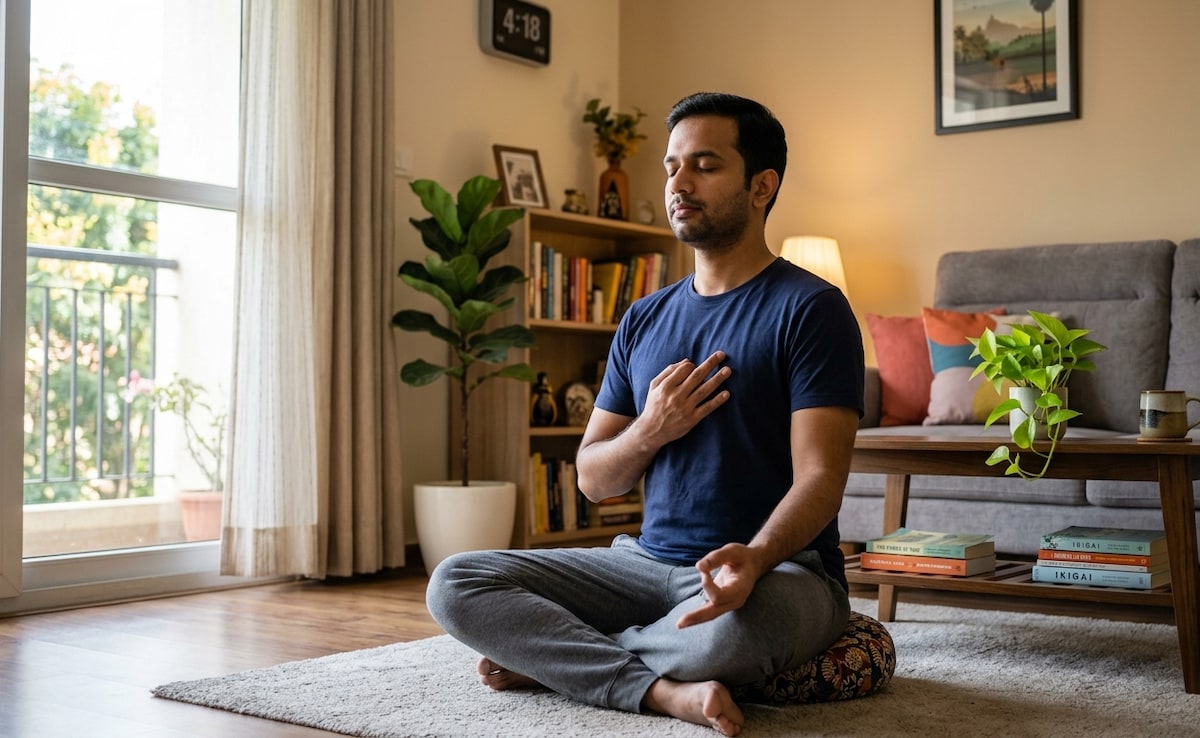
Sit upright or lie down in a relaxed posture. This helps prevent physical tension from interfering with your breathing rhythm.
2. Focus on slow, steady inhalation
Breathe in deeply through your nose for a count of four, allowing your lungs to fill completely. Avoid shallow chest breathing and try a fuller, diaphragmatic breath.
3. Hold your breath gently after inhaling
Pause for four seconds without tightening your throat or chest. This helps regulate oxygen flow.
4. Exhale slowly and completely
Release the breath through your mouth over four seconds, letting your body relax further. A controlled exhale signals your nervous system to calm down.
5. Pause again before the next inhale
Hold your breath for another four seconds after exhaling. This second pause completes the “box” cycle and reinforces a sense of rhythm and control.
6. Maintain consistency in counting
Keep each phase equal in duration to create balance in your breathing pattern. If needed, mentally count or use a timer to stay on track.
Other Helpful Tips:
- Start with shorter counts (e.g., 3 seconds) if 4 feels difficult
- Keep your breathing smooth and controlled, not forced
- Close your eyes to reduce distractions if comfortable
- Practice regularly, not just during stressful moments
Benefits Other Than Anxiety Relief
While box breathing is widely known for its calming effects, its benefits go beyond immediate anxiety management. Regular practice can improve overall mental and physical well-being.
Some other benefits of box breathing are:
- Better sleep quality: Helps quiet the mind before bedtime
- Improved concentration: Useful for tasks requiring sustained attention
- Lower blood pressure: Supports cardiovascular health over time
- Improved resilience to stress: Builds the ability to handle challenging situations
- Emotional clarity: Encourages mindful awareness of feelings
Disclaimer: This content including advice provides generic information only. It is in no way a substitute for a qualified medical opinion. Always consult a specialist or your own doctor for more information. NDTV does not claim responsibility for this information.