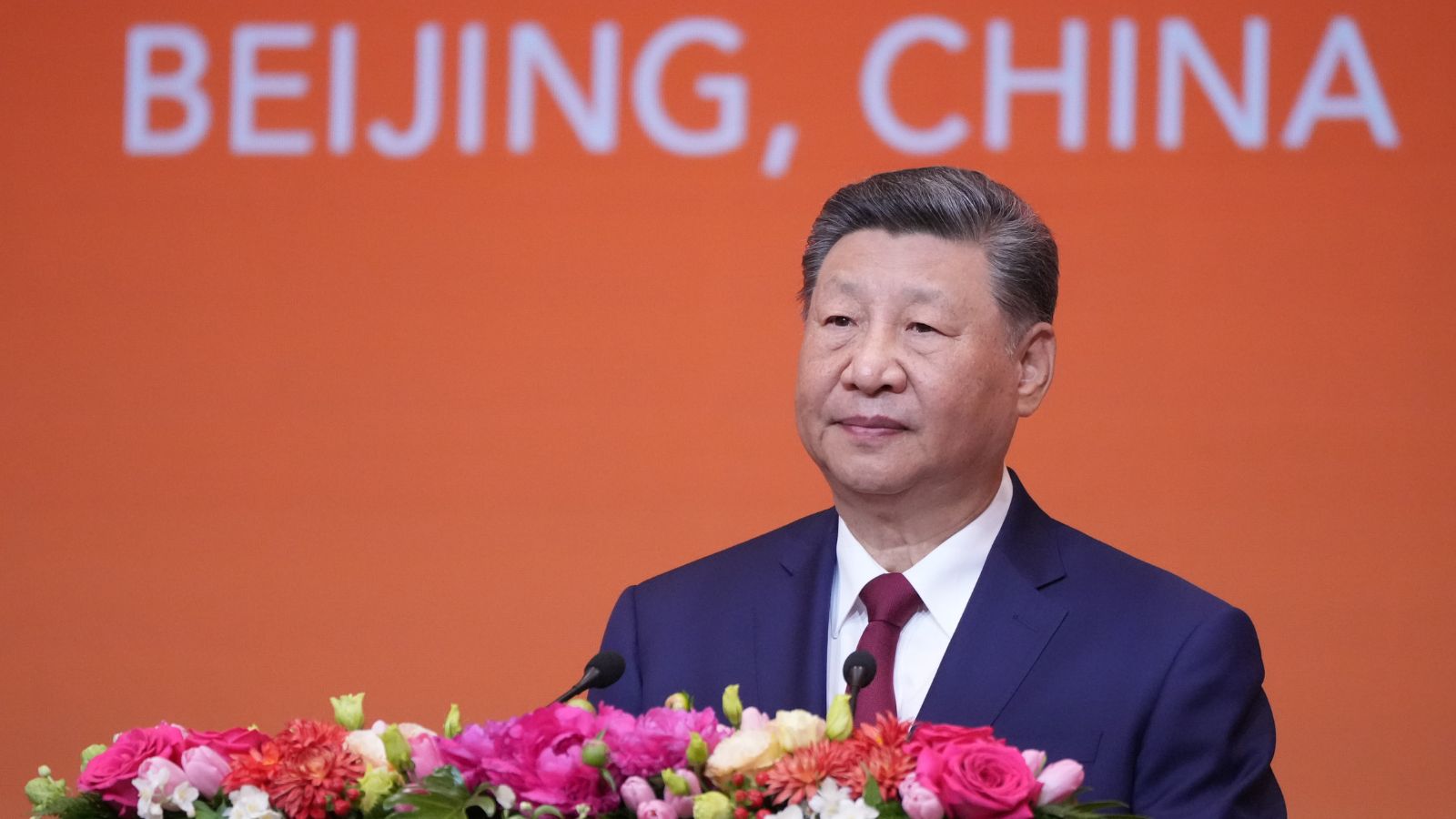
 Chinese President Xi Jinping speaks during a state dinner with President Donald Trump at the Great Hall of the People. (Photo: AP)
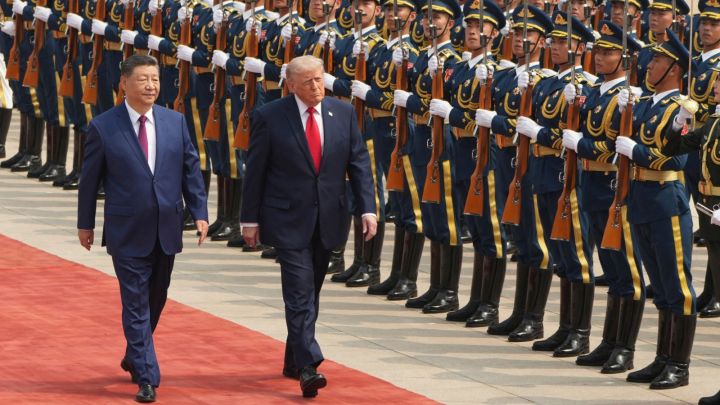
 Chinese President Xi Jinping invoked the idea of the “Thucydides Trap” during his high-stakes meeting with US President Donald Trump in Beijing, framing it as a defining challenge in ties between the world’s two largest powers.
Ahead of their talks, Xi asked whether both countries could “overcome the Thucydides Trap and create a new paradigm of major country relations,” according to reports cited by CNBC. The remark came alongside a warning on Taiwan tensions, with Beijing asserting that “‘Taiwan independence’ and cross-Strait peace are as irreconcilable as fire and water,” as per China’s foreign ministry.

The reference underscores long-standing concerns that strategic rivalry between a rising China and an established United States could spiral into conflict if not carefully managed.
What is the ‘Thucydides Trap’?
The “Thucydides Trap” is a theory popularised by Harvard political scientist Graham Allison in the early 2010s. It draws on the writings of ancient Greek historian Thucydides, who chronicled the war between Athens and Sparta.
In his account of the conflict, Thucydides famously observed: “It was the rise of Athens and the fear that this instilled in Sparta that made war inevitable.”
Story continues below this ad
Building on this idea, Allison argued that when a rising power threatens to displace an existing dominant power, the resulting tension often leads to war. In his book Destined for War, he examined 16 historical cases of such rivalry, finding that 12 ended in conflict.
A frequently cited example is the rise of Japan in the early 20th century, which contributed to escalating tensions with the United States and culminated in the attack on Pearl Harbor and Washington’s entry into World War II.
However, the theory does not suggest conflict is unavoidable. Allison identified four cases where war was avoided, including the Cold War rivalry between the US and the Soviet Union, where tensions remained high but did not escalate into direct military confrontation.
Xi has repeatedly used the concept in past speeches to caution against confrontation, urging both nations to find ways to manage competition without falling into a destructive cycle.