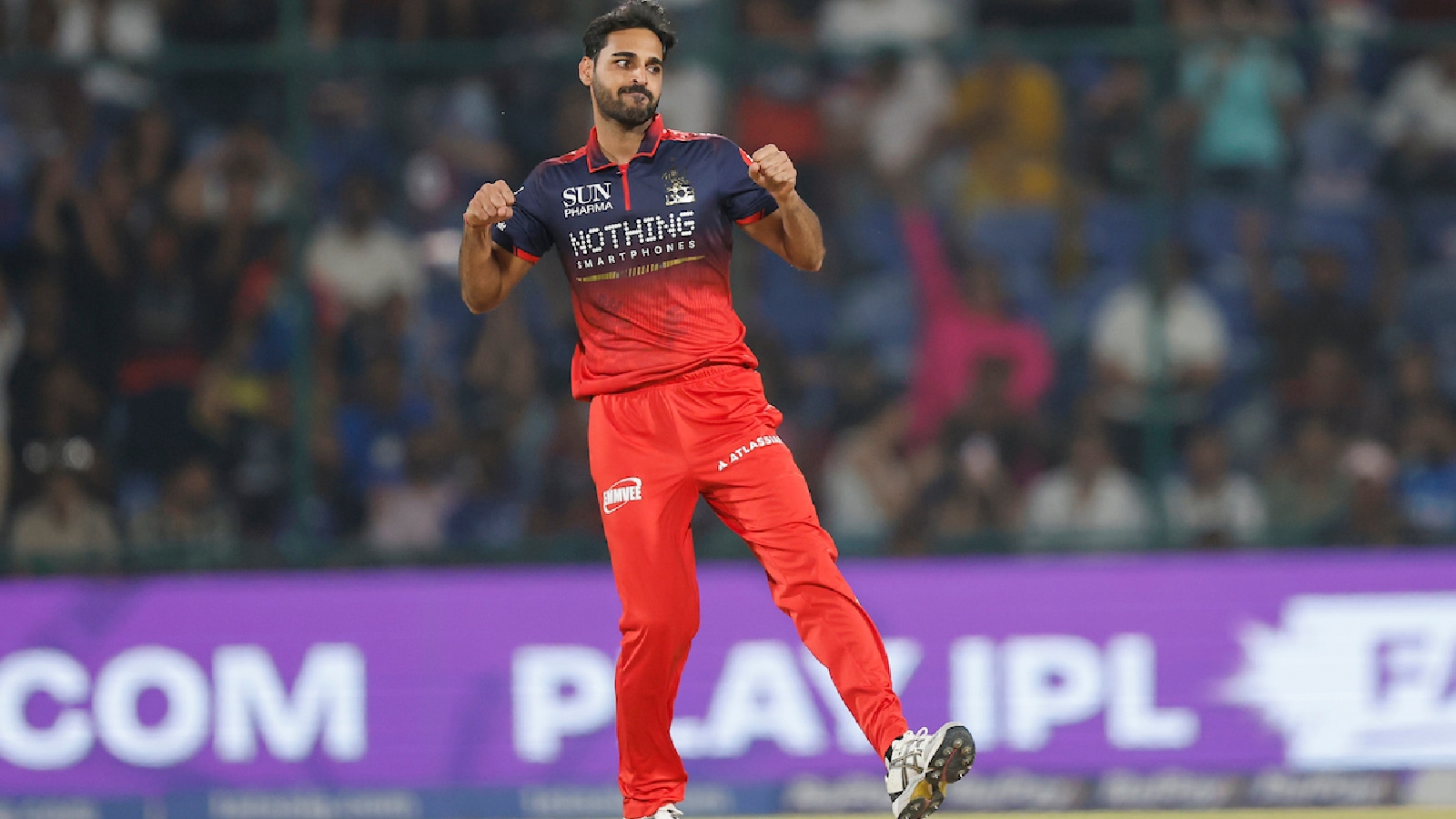
The 2016 IPL final at Chinnaswamy. Bhuvneshwar Kumar in orange, winning the trophy for Sunrisers Hyderabad. Nine years later, same ground, different jersey – this time Royal Challengers Bengaluru’s maiden title. Two franchises, two championships, and a career that refuses to follow the arc most fast bowlers trace.
Swinging the ball was never something Bhuvneshwar had to learn. It came naturally. His inswingers and outswingers were a puzzle for batters even in the shortest format, where the white ball and its seam have rarely been kind to fast bowlers. Over 11 years, he evolved from a swinging new-ball bowler into a death bowling specialist – nailing yorkers in the final overs, winning two Purple Caps, becoming as complete a T20 bowler as you will find.

The secret was length. To swing the ball, you pitch it up. But at SRH, Bhuvneshwar discovered that the fuller deliveries were not always his most fruitful. The real damage came from slightly behind – 6 to 8 metres – that corridor where batters do not know whether to drive or cut, whether to go forward or stay back. The ball swung from there. He picked up 81 of his 157 SRH wickets bowling at that length.
𝙎𝙬𝙞𝙣𝙜 it like Bhuvi 🤌
Vintage Bhuvneshwar Kumar at his very best ❤️
Updates ▶️ https://t.co/HIiNNEutP0#TATAIPL | #KhelBindaas | #DCvRCB | @RCBTweets pic.twitter.com/esscp0jTec
— IndianPremierLeague (@IPL) April 27, 2026
His final memorable spell at Uppal came against Rajasthan Royals in 2024 – 3 for 41, and a masterclass in the craft. Jos Buttler was on the back foot to cut, the ball full and swinging back in, taking the edge to slip. Sanju Samson got a delivery not quite full enough to drive, stayed back, pushed his bat in front of his pads, and watched the ball swing in sharply to uproot the stumps.
But 2024 was also the season the batters began finding answers.
Bhuvneshwar picked up 11 wickets at an economy of 9.35 – his worst at SRH since joining the franchise.
When Bhuvneshwar moved to RCB, finding swing at Chinnaswamy was never going to be easy. Last year was decent – 17 wickets – but the economy sat at 9.29, still high.
So he adapted again. At SRH, when he varied his length, he tended to go fuller – 2 to 6 metres, the traditional swing bowler’s territory, his second-best wicket-taking length there with 28. At RCB this season, he has gone shorter – 8 to 10 metres. The good length is still there, but the variations have shifted back.
Story continues below this ad
The results tell the story. At the 8 to 10 metre length, he is averaging 16.5 and going at an economy of 6.7. At the 6 to 8 metre length, the average is 20.5 and the economy 7.6. The shorter length is working better, and he is using it with the kind of cunning that only comes from experience.
Woke up, chose swing, and completely dismantled the batting 🤌
Describe Bhuvneshwar Kumar’s phenomenal opening spell in just one word 🗣️
Updates ▶️ https://t.co/HIiNNEutP0#TATAIPL | #KhelBindaas | #DCvRCB | @RCBTweets pic.twitter.com/7GrRElK5QZ
— IndianPremierLeague (@IPL) April 27, 2026
The Tristan Stubbs wicket showed exactly how. Stubbs was set up for something fuller, bat ready for the drive. He got the 8 to 10 metre delivery instead, held his line, and watched the ball swing away from a length at which it had no business swinging – the outside edge flying to slip. For Axar Patel, the 6 to 8 metre trap was laid first before the fuller one undid him.
And then there is the yorker. At 36, Bhuvneshwar’s yorker is going at just 5 runs conceded, compared to 6.9 at SRH. He is using it more with the new ball this season too – deployed earlier, a weapon that most bowlers reserve for the death.
At 36, in his second franchise, on a ground that offers him nothing, Bhuvneshwar Kumar is still taking wickets. The method has changed. The results haven’t.