5 min readNew DelhiMay 27, 2026 12:38 PM IST
The Punjab and Haryana High Court recently directed the authorities to grant proportionate pension and other retirement benefits to a typist who resigned in 2012 after rendering 13 years of service, holding that a resignation tendered due to compelling family circumstances could not deprive him of pensionary benefits.
Justice Kuldeep Tiwari observed that the petitioner, Pankaj Mehta, had an unblemished service record and that no disciplinary proceedings were ever initiated or contemplated against him.
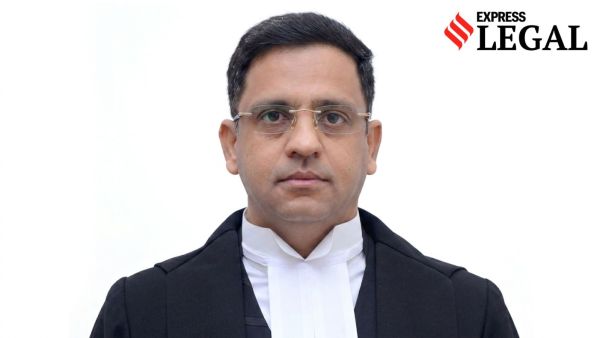 Justice Kuldeep Tiwari found that the order rejecting the petitioner’s claim was unsustainable and liable to be set aside.

“At this juncture, this court is necessitated to reiterate, even at the cost of repetition, that the petitioner had rendered service for 13 years before putting papers, owing to the pressing family conditions, and no disciplinary proceedings were ever initiated or even contemplated against him. Considering the length of service the petitioner had rendered, this court is persuaded to adopt a pragmatic approach, rather than a hyper-technical approach, to deal with the claim of the petitioner,” the May 25 order read.
The high court was hearing a plea filed by Mehta challenging a July 2021 order rejecting his claim for proportionate pension and other retirement benefits.
‘Unsustainable order’
- The high court found that the said order rejecting the petitioner’s claim was unsustainable and liable to be set aside.
- The court directed the respondent authorities to grant proportionate pension, death-cum-retirement gratuity (DCRG) and other consequential retiral benefits to the petitioner in proportion to the service rendered by him, within four months.
- However, the court declined to award interest on arrears, noting that the petitioner had approached the authorities for pensionary benefits nearly six years after his resignation.
Served for 13 years
- It was placed on record that Mehta was appointed as a steno typist in September 1999 by the district and session judge, against a regular post in the corresponding pay scale.
- However, owing to certain compelling family circumstances, he resigned along with availing one month’s salary, by an application dated October 1, 2012, which was accepted by the said judge on October 3, 2012.
- Thereafter, Mehta moved the authorities seeking proportionate retirement benefits, including death-cum-retirement gratuity (DCRG), by an application dated August 1, 2018.
- However, having been considered at different levels, the same was rejected by an order under challenge, in terms of relevant rules of Punjab Civil Services Rules, now read as Haryana Civil Services (Pension) Rules, 2016.
- Aggrieved by the same, the petition moved the Punjab and Haryana High Court with this petition.
No punishment ever inflicted
Appearing for the petitioner, advocate Rakesh Nagpal submitted that he is entitled to a proportionate pension in the light of relevant rules of the Punjab Civil Services Rules, 2007, as applicable to the state of Haryana.
He argued that the rule relied upon by the authorities was intended to apply to cases where an employee resigns to avoid dismissal or removal from service and could not be invoked against an employee who voluntarily resigned due to family circumstances after maintaining an unblemished service record.
He argued that post completion of 13 years of service, the petitioner is entitled to the benefit of gratuity, which could not have been forfeited, only on account of resignation.
Story continues below this ad
It was further submitted that the gratuity deposited by the petitioner could not be forfeited, as no punishment was ever inflicted upon the petitioner, resulting in any kind of loss to the department.
Rules applicable to retiree only
Representing the district and session judge, advocate Dhiraj Chawla argued that the said rules apply only to the cases of retirement, and not resignation, as is the issue in the matter at hand.
He further submitted that the statutory rules did not include resignation within the ambit of retirement and, therefore, judicial precedents could not override the express language of the rules.
He added that it is a conceded position that the petitioner did not tender a technical resignation to join another state/central government service and, therefore, the only natural consequence of his resignation was forfeiture of service.
Story continues below this ad
He further pointed out that, accordingly, he is not even entitled to pro-rata pension, as per the said rules.

© IE Online Media Services Pvt Ltd