4 min readUpdated: May 30, 2026 10:39 AM IST
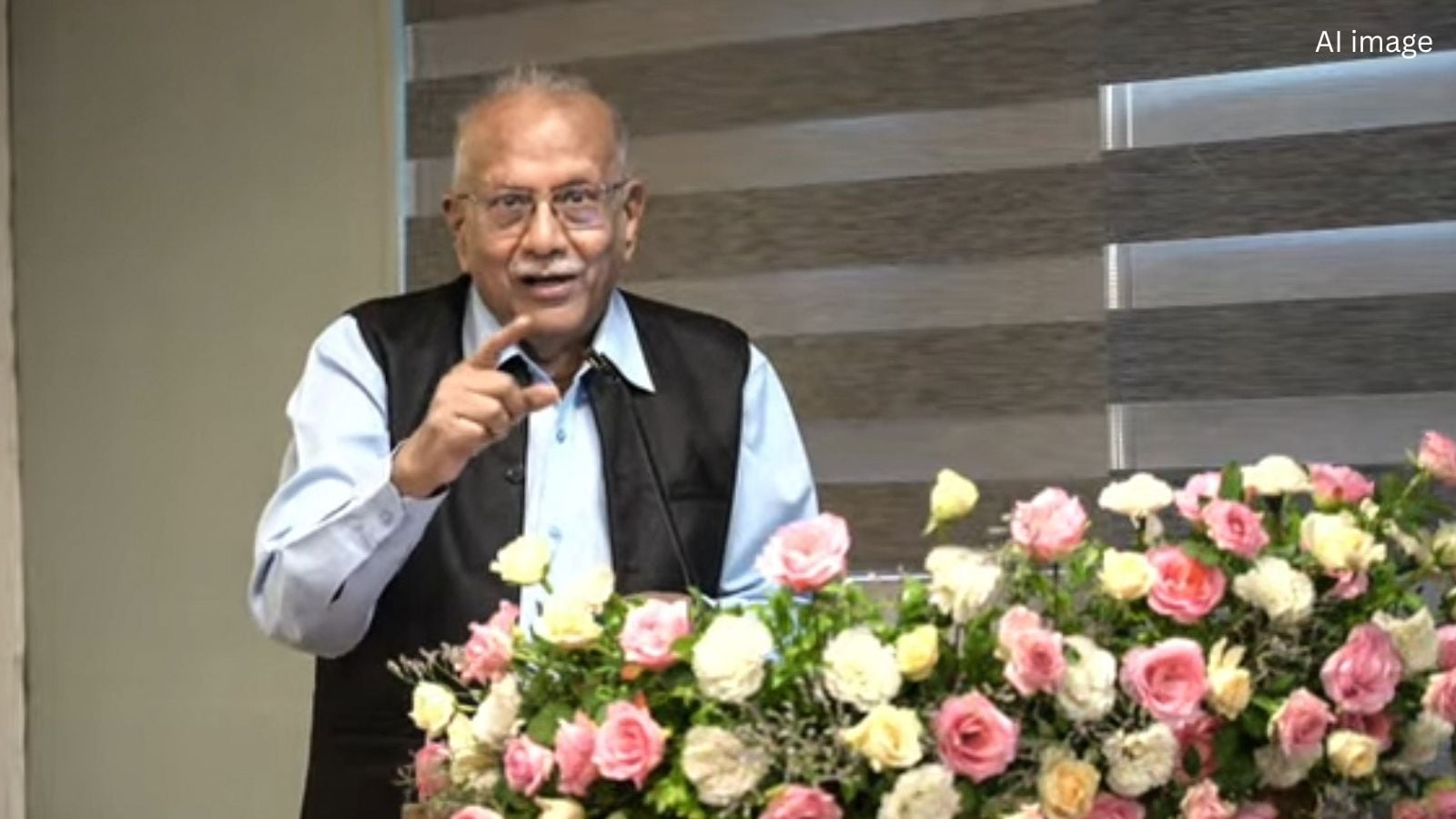
India must move beyond the liberalisation policies of 1991 to address modern economic challenges such as geopolitical fragmentation and the politicisation of trade, economist Nitin Desai said in Ahmedabad on Friday evening.
Sustained growth requires greater investment in research and development and a reduction in government dependency, Desai said. There is also a need to bolster state capacity, and to develop a decentralised, region-based strategy on agriculture that moves beyond minimum price supports for wheat and rice to embrace cooperatives and diverse crops like milk, he said.

Desai, chairman of the Governing Council of The Energy and Resources Institute (TERI) New Delhi, was speaking on India’s manufacturing and agriculture sectors at the first Prof Y K Alagh Memorial lecture organised by the Sardar Patel Institute of Economic and Social Research (SPIESR).
In his lecture titled ‘Policy Priorities in a Changing World’, Desai spotlighted the critical stagnation in India’s manufacturing sector, and stressed on the need to transition from a business-friendly environment to a market-friendly one, and on empowering new entrepreneurs rather than the established conglomerates.
“Our problem today is that…the manufacturing sector has become excessively dependent on the government. Our government policy also is business-oriented, not market-oriented,” Desai said. “We had a time when entrepreneurship was strongly controlled under licensing. That is gone. But you still have a degree of control exercised by the government on what people will invest in, partly because some of them are investing in infrastructure, which is subject to government control, but partly because of the government’s programmes like PLI…,” he said.
The “power of the conglomerates” in India was very strong, Desai said. He contrasted India’s experience with that of China’s, stating that the latter’s huge manufacturing growth came entirely from newcomers.
“Because the old pre-communist Chinese companies were gone, all the people who came up when they liberalised the system were newcomers, mostly technologists. This is a dimension we should keep in mind,” he said.
Story continues below this ad
Conglomerates were important for economic growth, Desai said, “but they are not the people you should focus on in terms of government assistance. That should be focussed very strongly on the new enterprises… And this is not happening in India. We have a business-friendly government, but we do not have a market-friendly government. And we need to have a market-friendly government if we want fast growth of manufacturing.”
The Prime Minister’s call for austerity on the part of the people was not enough, Desai said. “We have an immediate problem, which is connected with the war which is going on in the Gulf. And the Prime Minister…[has] called for significant austerity by the people of India. I would argue that relying on people’s austerity and [on] people doing things differently, is not enough if the government doesn’t do something,” he said.
Steps like travelling by Metro instead of by car would not “save the country”, Desai said. “…I think we need an approach to development, which takes into account the fact that we are living in a market economy. And that impact of that depends on what happens in the market,” he said.
The current reality is that of a system that is highly politicised in many ways, Desai said. “We really have to have a bilateral agreement with everybody. There’s no point in relying on what the rules or multilateral rules require you to do. The very fact that you today have differential tax tariffs with different countries is a departure from the most favoured nation rule, which was there in the WTO.”
Story continues below this ad
“The reason we need to develop a policy change is not just a Gulf war, not just the politicisation, which is coming from the USA, but to recognise that in certain areas, we have not been successful enough in ensuring growth,” Desai said.
A comparison between India’s and China’s manufacturing makes this more than obvious, he said. “This is the reason why we ought to be focussing on trying to get a new way of managing.”

Stay updated with the latest – Click here to follow us on Instagram