
4 min readUpdated: Jun 3, 2026 09:47 AM IST
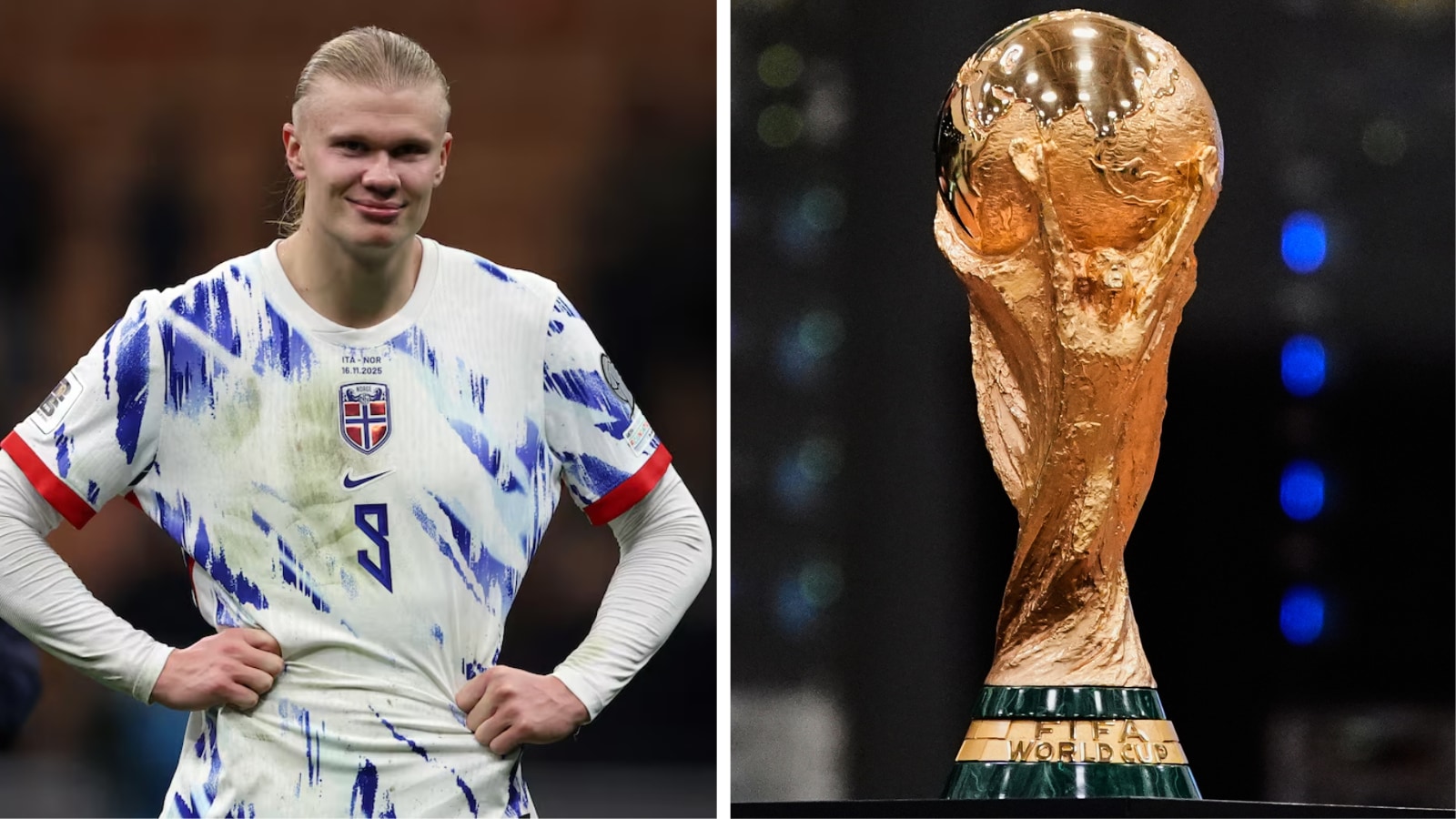
Here’s a sentence that might not have been possible in a 32-team World Cup: Norwegian striker Erling Haaland lines up against Iraq at Boston’s Gillette Stadium for their group opener. The presence of one of the best strikers in the contemporary game will be new, and so will be the Asian team he goes up against.
For long, the FIFA World Cup has excluded some of the game’s greatest players and elbowed out teams that didn’t have the required strength in depth. Players like George Weah, Ryan Giggs and George Best were never part of the biggest show on the planet because Liberia, Wales and Northern Ireland never qualified for the World Cup during their time. But a 48-team World Cup’s most convincing argument is its inclusivity.
ALSO READ | FIFA’s Gianni Infantino, Trump’s favourite sport administrator
The biggest beneficiaries
Ten teams from Africa and nine from Asia – two continents that have never produced a World Cup winner now get to share the stage with Europe’s 16 and South America’s six. The four extra slots that Europe received has resulted in teams like Norway and Turkey making it – helped in no small measure by the presence of Haaland and, in Turkey’s case, Real Madrid star Arda Guler.
A 48-team World Cup rewards countries who had been on the periphery of a World Cup till now. Uzbekistan is a country that comes to mind as a beneficiary of a larger World Cup, bringing Manchester City’s Abdukodir Khusanov to a tournament they would have found tough to reach earlier.
A tournament of excess
It’ going to be the biggest FIFA World Cup – more host cities, more teams, more games – as well as an extra knockout stage.
The 2026 edition will take place across the vast expanse of the United States of America, Canada and Mexico. It will be a 39-day affair – a week longer than the longest FIFA World Cup ever and will have 40 matches more than the 2022 edition in Qatar.
Story continues below this ad
104: With a total of 104 matches in 39 days, the 2026 FIFA World Cup will be the longest World Cup ever, eclipsing Qatar by 40 games.
Who misses out?
Most notably, Italy. The three-time champions have now not made it to three consecutive editions of the World Cup. They were expected to seal their spot considering more European places were on offer. Missing out from Africa would be Cameroon and Nigeria – both with multiple past appearances. From Europe, Denmark, Wales, Serbia and Poland will be some of the other teams that didn’t make the cut.
ALSO READ | Roberto Baggio: The 1994 legend no missed penalty could erase
But if FIFA were to be asked, the biggest teams to miss out would be China and India. An unwritten goal of the 48-team World Cup was to welcome the two countries, and their combined populations of over three billion, into the fold – a pipe dream for now.
Story continues below this ad
The death of the ‘Group of Death’
A 48-team World Cup reduces the likelihood of a group stage where three teams of roughly similar strength are pooled together to create some jeopardy. This iteration of the World Cup, with its 12 groups, will see two of the best teams from each group progressing to the Round-of-32.
Following them would be the eight best third-placed teams – essentially reducing the excitement that surrounds the last group-stage days at a World Cup.
Expert speak
“I believe that 48 teams is the right number. It’s less than 25% for 211 countries who are affiliated to FIFA. That means one team out of four has a chance to participate. That means still 75% of the teams are not there.”
Arsene Wenger – FIFA Chief of Global Football Development