Kuwait is in talks with Saudi Arabia and the United Arab Emirates about routing its crude oil through their pipeline networks, as the near-closure of the Strait of Hormuz continues to block the Gulf state’s access to export markets, Kuwait Petroleum Corp’s chief executive has said.
As per Bloomberg report, KPC Chief Executive Officer Sheikh Nawaf Al-Sabah disclosed the discussions at a conference in Washington on Tuesday, saying the company was exploring whether its neighbours could expand their existing pipeline systems to carry Kuwaiti barrels. He did not specify how advanced the talks were or when Kuwait could begin moving oil through either route.
Why Kuwait Uniquely Exposed To Hormuz Disruption
Kuwait’s geographical position leaves it particularly vulnerable to the Hormuz disruption.
The country has no coastline outside the strait and no bypass pipeline of its own, leaving it entirely dependent on a waterway that has been effectively closed since late February, when the US-Israel war on Iran triggered Iranian retaliation across the Gulf.
The conflict has knocked out roughly a fifth of daily global oil and gas supply. A ceasefire between Washington and Tehran has held since mid-April, but shipping through Hormuz remains at a near-standstill. Since the outbreak of hostilities, KPC has been running its oil fields at minimum levels — enough to protect wells from damage and meet domestic demand while allowing for a rapid restart once the strait reopens.
ALSO READ: Kuwait, Bahrain Activate Warning Sirens, Air Defences After Iran Attacks US Bases
Which Pipelines Are On The Table
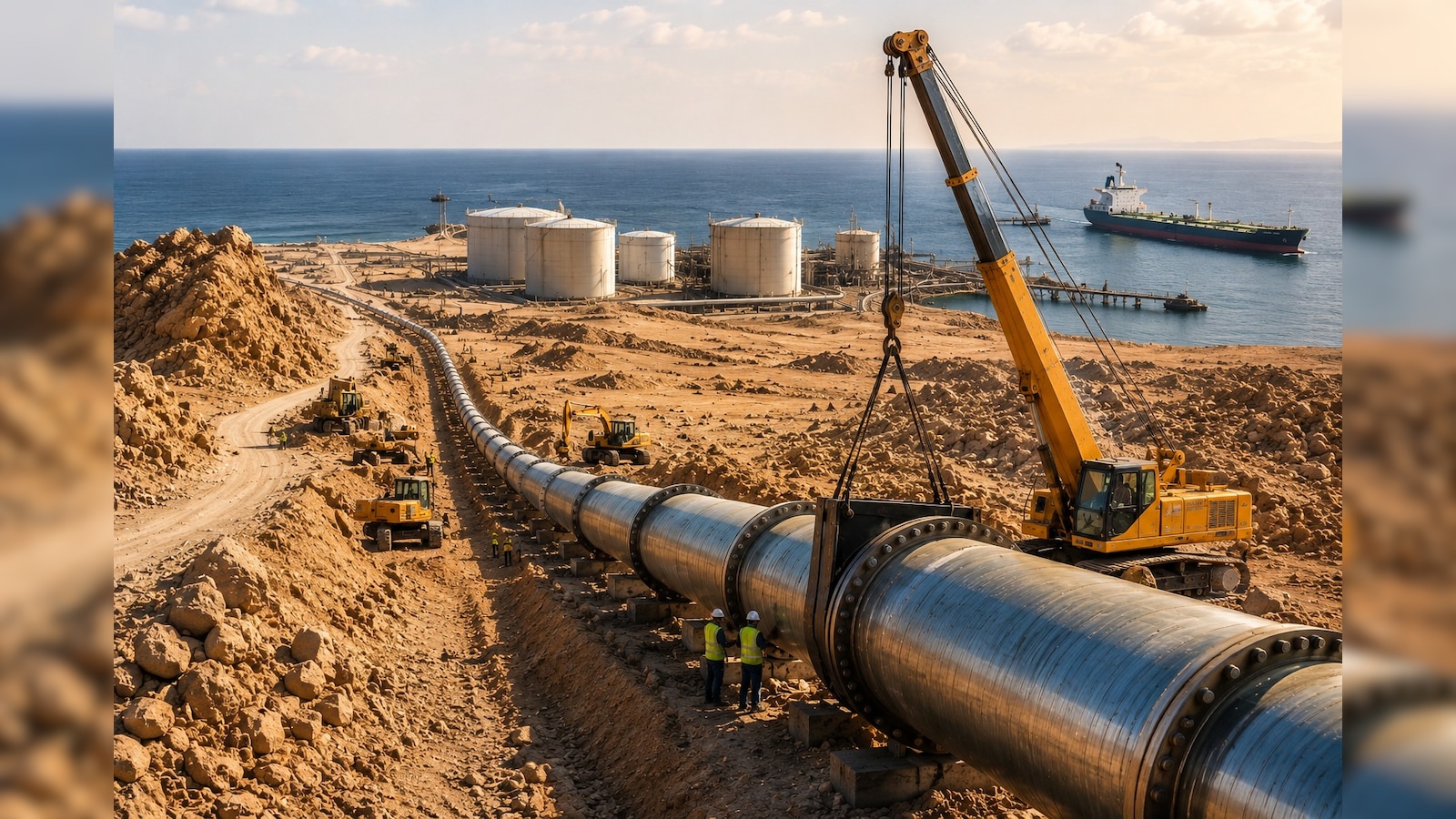
The two routes under consideration are Saudi Aramco’s East-West Pipeline, which runs 1,200 kilometres from the Abqaiq oil fields to the Red Sea port of Yanbu at a capacity of seven million barrels per day, and the UAE’s Abu Dhabi Crude Oil Pipeline, connecting Habshan to the port of Fujairah on the Gulf of Oman outside Hormuz at 1.5 million barrels per day, Bloomberg reported.
Abu Dhabi National Oil Company (ADNOC) is also building a second crude pipeline that will double Fujairah’s export capacity, expected to be operational in 2027.
The Vulnerability Of Any Pipeline Fix
Sheikh Nawaf acknowledged the limitations of a pipeline-based solution.
ALSO READ: Iran Attacks US Bases In Kuwait, Bahrain And Jordan After Fresh Air Strikes
“When you look at pipelines, they are only as safe as the export facility at the end of it,” he said, as per Bloomberg report.
“You’ve seen how Iran targeted both the Saudi and Emirati ones,” he added. Iran struck Saudi Aramco’s East-West pipeline in April, temporarily cutting throughput by around 700,000 barrels per day before repairs restored full capacity. Fujairah port has also come under Iranian attack.
Protection of pumping stations and export terminals would need to be discussed with neighbouring countries and with the United States, Sheikh Nawaf said, pointing to improved air defences for pipeline assets as one area under consideration.
KPC’s London conference delegation separately confirmed the company is also looking at expanding overseas oil storage to reduce its exposure to further export disruptions, report said.
Essential Business Intelligence,
Continuous LIVE TV,
Sharp Market Insights,
Practical Personal Finance Advice and
Latest Stories — On NDTV Profit.