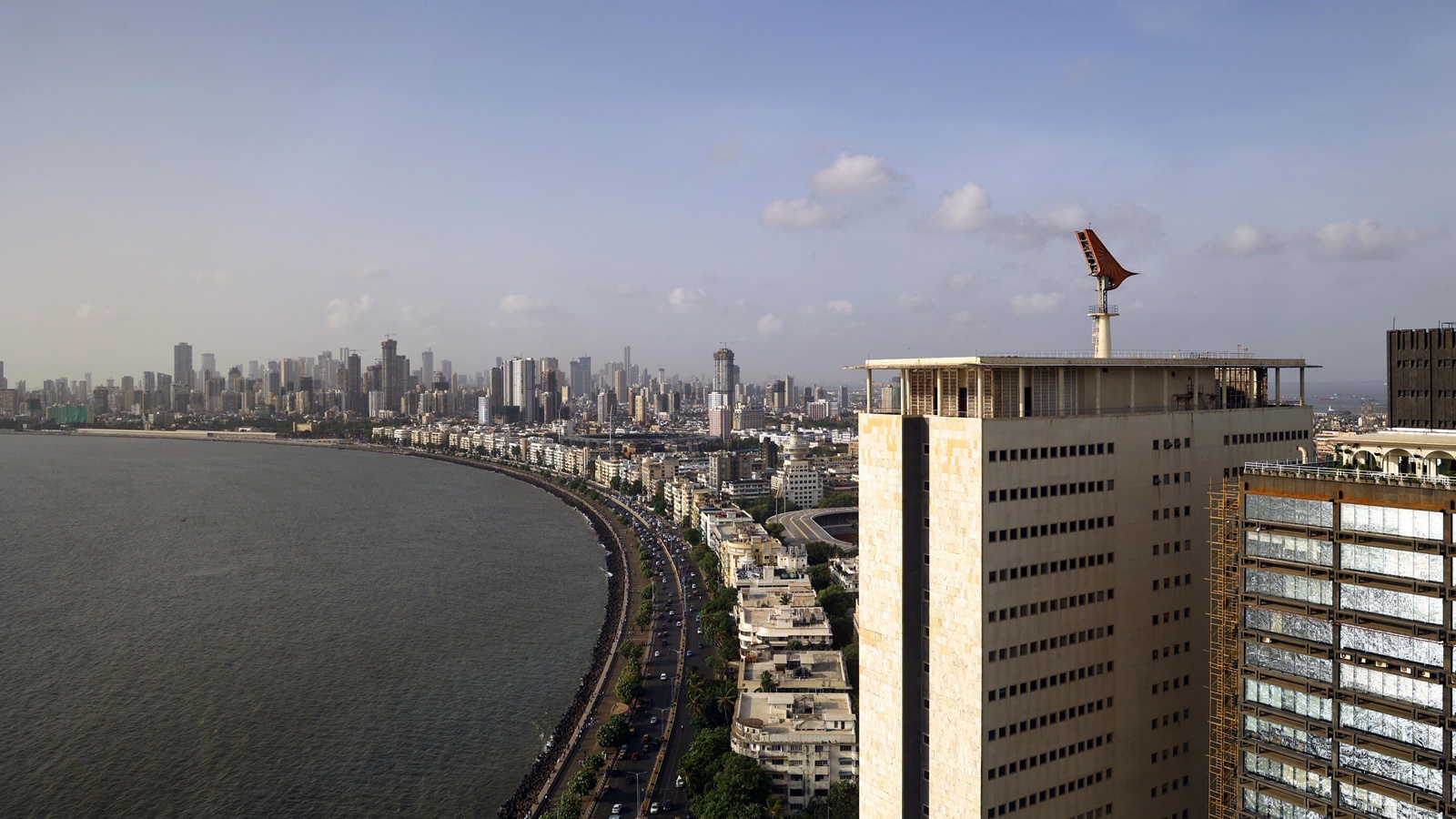
Late on June 2, two labourers perched atop the iconic publicity board abutting the Air India building in Nariman Point. Among the many Air India advertisements that were displayed on the board, one in 1991 had said, “Tata doesn’t always mean goodbye”, as JRD Tata announced his retirement.
Amid inspection and instructions of the Public Works Department (PWD) staffers, the men worked through the midnight to install a brand new hoarding — it bore the state’s gold emblem and read, “Government of Maharashtra”.
Earlier that afternoon on June 2, the Maharashtra government took charge of the 56-year-old building after Chief Minister Devendra Fadnavis signed an agreement with Air India Assets Holding Limited (AIAHL) and completed formal transfer of the landmark for Rs 1,601 crore.
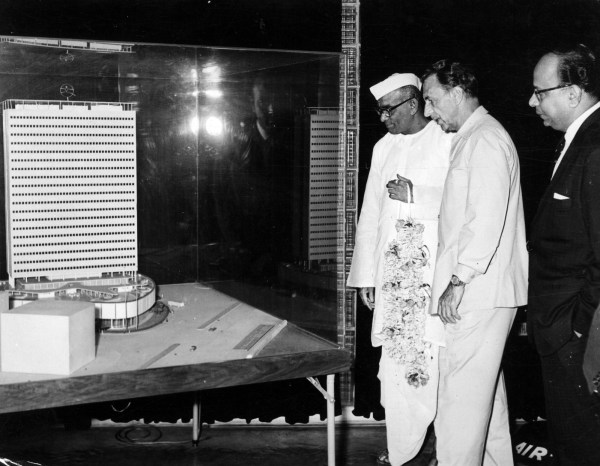 At a time when skyscrapers were alien to the Bombay skyline, JRD Tata’s vision of constructing a contemporary structure led his team around the world in search of an architect in 1965. (Express Archive)
Soon after the change of hands, the Maharashtra Government’s PWD staffers swiftly moved in to remove traces of its old owner. Over a span of two days, the staff extracted the Air India logo and signages etched on the building’s marble edifice. While the shattered pieces of the insignia were discarded, a bust of JRD Tata was shifted from the Nariman Point compound to Air India’s Old Airport office in Kalina.
The Indian Express visited the building on June 9 to find memories of Air India’s glorious past hidden in plain sight — a broken chandelier, dangling wires, scattered office material, abandoned cutouts of the beloved Maharajah mascot.
While the city’s first escalator and a massive auditorium have now been rendered defunct, senior government officials maintained that the decades-old building remains structurally sound. The 23-storey building’s top floor, affixed with floor length glass windows, continues to hold a place of pride offering a 360-view of the Mumbai skyline.
Story continues below this ad
The making of Bombay’s new ‘IT place’
Since its launch by founder JRD Tata in 1932, Air India was emerging as a fast growing domestic airline. As the airline spread its wings, the need for a new headquarters was increasingly felt.
It was during the creation of Nariman Point in the 1960s — as a part of the original Bombay backbay reclamation scheme — that JRD Tata envisioned plans to create a new building for the airlines at the upcoming district quarter. Until then, the Air India office was operating out of the New India Assurance building in Fort.
“The airline, by then a government of India owned enterprise, was allotted the most coveted plot of the Nariman Point, as it was the first building that served as the gateway into the business quarter. It was a very conscious decision to acquire this corner plot as they wanted to have an iconic location with uninterrupted views,” said Piyush Khaitan, philatelist and collector of Air-India memorabilia.
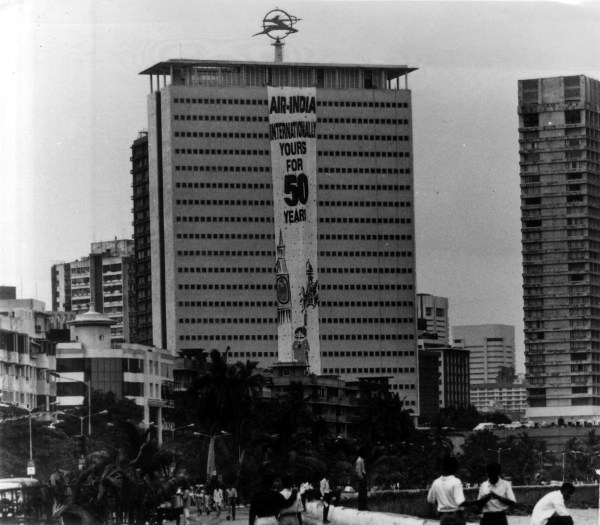 To give the structure a distinct look, John Burgee decided to clad the building with marble. (Express Archive)
The iconic location, for the Tatas, demanded an iconic structure.
Story continues below this ad
At a time when skyscrapers were alien to the Bombay skyline, JRD Tata’s vision of constructing a contemporary structure led his team around the world in search of an architect in 1965. The quest stopped with the commissioning of post modernist architect John Burgee of the Manhattan-based firm Johnson/Burgee Architects who were, at the time, among the biggest corporate architects in the world.
To give the structure a distinct look, John Burgee decided to clad the building with marble.
Dilnavaz Variava, chairperson of the century-old firm Bharat Flooring and Tiles whose services were enlisted to work on the flooring and the marble facade, told The Indian Express that special reconstituted marble tiles were created for the Air India building. “These special tiles in the main foyer used a pink terrazzo base with large marble pieces while for the other floors, our normal terrazzo with small chips were used,” Variava said.
“Externally, we clad the building facade in marble. The beauty of the structure lay in this marble cladding and the continuity of the marble vein lines on its beautiful lower frontage,” added Variava.
Story continues below this ad
“To achieve the continuity effect, there was a lot of wastage that had not been calculated and the company incurred losses on this as a result,” added Dilnavaz Variava.
“Even so, we are proud of our work on the building. Not a single marble slab has come off from the facade over nearly six decades, despite the sea winds and monsoon downpours,” she said.
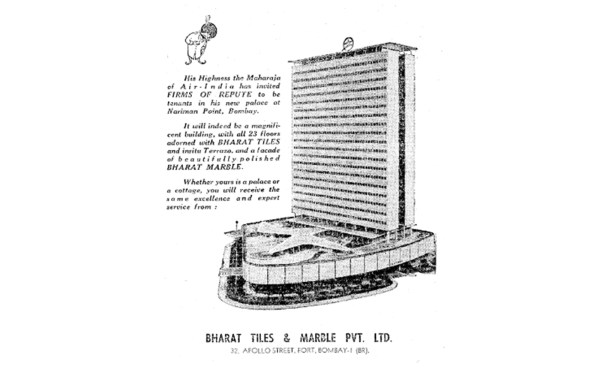 The services of Bharat Flooring and Tiles were enlisted to work on the flooring and the marble facade. (Bharat Floorings and Tiles (BFT) Archives)
Like the external facade, the insides of the building were carefully curated and equipped with modern amenities.
Dr Meera I Dass, art historian and urban planner who worked with the Air India archive artworks in 2016, told The Indian Express, “Our study of the historical archives showed that JRD Tata wanted to stand out as a small airline amid the large aircraft carriers operating at the time. He had the vision to combine the modern experience of flying with India’s traditions.”
Story continues below this ad
The answer, for JRD Tata along with Bobby Kokka who created the iconic Maharaja in 1946, lay in the purchase and display of India’s traditional paintings and murals.
Soon, the walls of the Air India building including its booking office came to be adorned with thousands of artworks ranging from Raza to Anjolie Ela Menon.
“The idea was to promote Indian traditional art while offering a modern experience,” said Dr Dass.
By the time Dass was roped in to catalogue and move the Air India art collection to the first floor of the Air India building in 2016, the building was stacked with 10,000 pieces of artworks spanning 700 artists.
Story continues below this ad
The building was believed to house the country’s first escalator — one that people queued up to go into. “The building had synchronised lifts, massive fire fighting equipment, well planned electrical units. They had the vision to create two levels of basement parking, which was very rare for its time,” Dass said, adding, “Manhattan-based Burgee-Phillips took lessons from the building. After the Air India structure, they later went on to design the iconic AT&T building in the United States.”
When it opened for operations in the early 1970s, the Air India building soon became the town’s “IT place”.
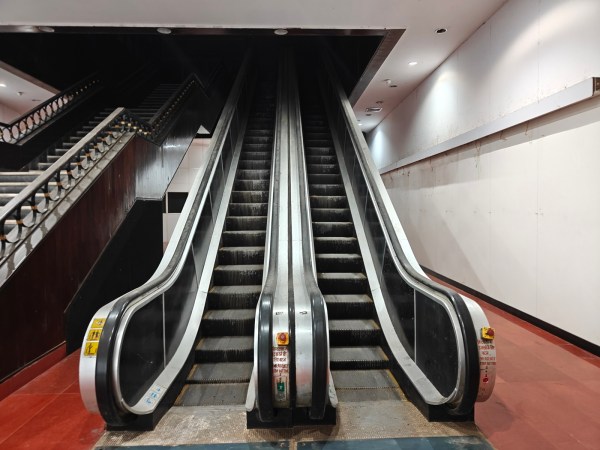 The building was believed to house the country’s first escalator — one that people queued up to go into. (Express Photo by Nayonika Bose)
How the building functioned
Sprawling a space of 3.88 lakh square feet, the building comprises two portions: a two-storey building with a terrace, linked through a driveway, that leads to the 23-storey Air India building.
Khaitan added that at the entrance of the building lay a cutaway model of the Boeing 747 Jumbo Jet.
Story continues below this ad
Upon entry, the building’s escalators — built in a unique, wooden finish — led to the first floor which was home to the airline’s Western India booking office.
The first floor entailed an auditorium, which has now been rendered shut, while the second floor operated as a canteen that opened into a massive terrace used for gatherings.
Even as the Nariman Point building served as a headquarters for the airlines, it only housed the administrative wing of the operations. From IT, engineering to finance — most operational departments instead functioned out of Air India’s vast campus in Kalina.
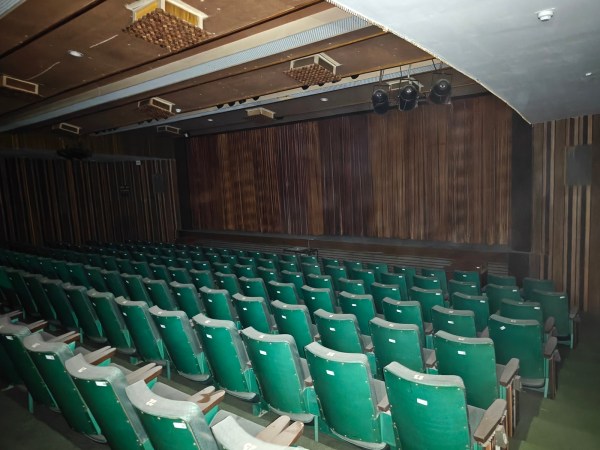 The first floor entailed an auditorium, which has now been rendered shut. (Express Photo by Nayonika Bose)
“Most of the floors of the Nariman Point building were rented out to other tenants while Air India retained a few floors of the building,” a former director of Air India who worked in the building for six years, said on the condition of anonymity. “The top bosses of Air India operated out of this building,” he added.
Story continues below this ad
Of the floors it retained, the 22nd and the 23rd floors operated as crown jewels for the company. Offering uninterrupted views from its glass windows, the 22nd floor encompassed a massive board room meeting, conference rooms, as well as the CMD’s cabin. The top floor, meanwhile, housed the executive board room meeting.
Meanwhile, JRD Tata’s cabin was situated on the 21st floor. “However, it was very rare to have him visit the office,” the former director added.
Lower, the eleventh floor of the building, served as a vast office for the TCS workforce.
Light shows, deluge and a bomb blast
The good, bad and ugly — the building saw it all. In its early days, a fire broke out on the ninth floor in November 1975. Thanks to the building’s strong internal fire systems, the blaze was extinguished by the maintenance staff even before the Mumbai fire brigade could arrive.
Commanding a view of the Marine Drive, the building’s Air India and Indian Airlines offices would usher in hordes of visitors to book travel tickets.
“It was a time when there were no online booking systems. One had to come to the booking office personally. It was a process that took nearly half a day. But, the office was huge, covered in beautiful artefacts and paintings,” Aadil Desai, a retired employee who served in the Air India Engineering Department said.
One evening in February 1989, the building turned a show stopper and brought traffic at Marine Drive to a grinding halt when its flat marble facade paved the way for a laser light show, organised as a part of the Festival of France.
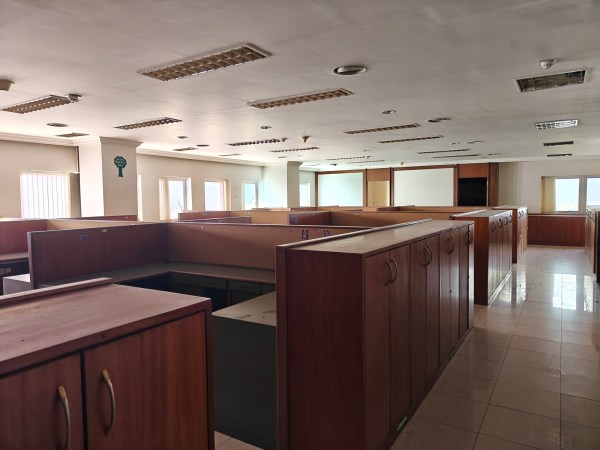 Of the floors it retained, the 22nd and the 23rd floors operated as crown jewels for the company. (Express Photo by Nayonika Bose)
However, this solid edifice experienced massive tremors and sustained damages after a bomb blast inside the Air India building’s driveway during the 1993 serial bombing that rocked Mumbai.
The blast created “a huge crater in the first and the second floor” of the building, recalled a former Air India employee.
She added, “Since the building was earthquake proof and was built with so much foresight, it did not collapse despite the damage.”
Following the blasts, the booking offices as well as other departments were temporarily relocated to the old New India Insurance office in Fort. After months of repair, the building kicked into action, with tighter security.
Over the decades that followed, the building witnessed it all, including the July 26, 2005 deluge when it turned a safe haven for its employees.
“Everyone knew how safe the building was. When the entire city was drowning on July 26, many employees who lived in the suburbs decided to stay back. The office allowed the employees and made logistical and food arrangements for all,” a senior TCS employee remembered.
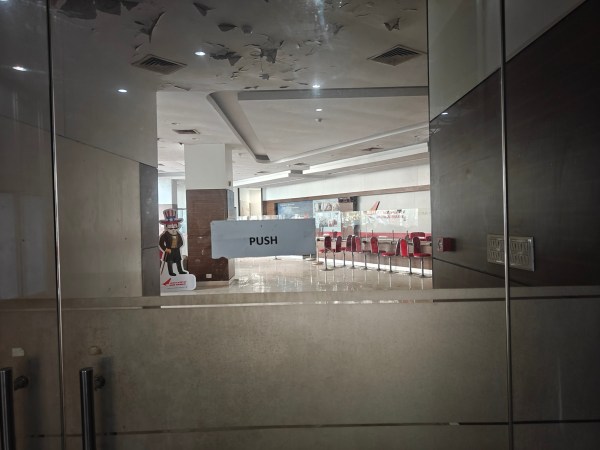 Lower, the eleventh floor of the building, served as a vast office for the TCS workforce. (Express Photo by Nayonika Bose)
Following the merger of Air India and Indian Airlines, the airlines started shifting its offices out of the building until the company finally shifted its headquarters to New Delhi in 2013. Even as Air India vacated the building, it continued to retain the lower floors as well as the 21st, 22nd and the 23rd floors of the building.
In 2018, Air India decided to sell the building as part of its asset monetisation plan, a process that finally concluded with the state government’s acquisition this month.
At the time of the sale, records accessed by The Indian Express showed that other tenants of buildings included India tourism which occupied the ground floor, Income tax department which occupied eight floors, State Bank of India on the two floors as well as Tata Consultancy Services and Service Tax Department.
The next chapter
While most of the building was rendered vacant by 2026, the GST department on 14th and 15th floor remained functional. However, the building was only left behind with a dozen Air Indian staffers from the security and maintenance departments.
By May end, this year, even the GST department shut its operations.
Following the building sale, the PWD staff extracted Air India signages from the building — save for the iconic logo atop the building.
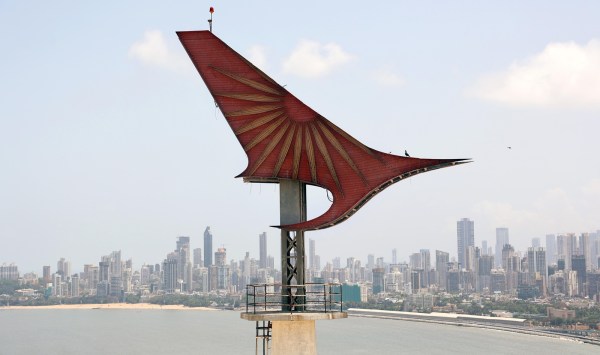 Following the building sale, the PWD staff extracted Air India signages from the building — save for the iconic logo atop the building. (Express Photo by Amit Chakravarty)
“We have sought permissions to safely extract the logo through contractors,” a senior official said, maintaining that no plans are charted to preserve the logo. “It is a fabricated structure and will be pulled down with safety precautions to avoid damage amid strong winds.”
Soon, the state government is slated to float a tender to launch repairs within the building. As per officials, an allocation of Rs. 181 crore has been sanctioned to execute repairs within the building.
“Our audits revealed that the building is safe and sound. We have no plans to change the external structure. Our only plan is to change the internal offices of the building,” a senior PWD official said.
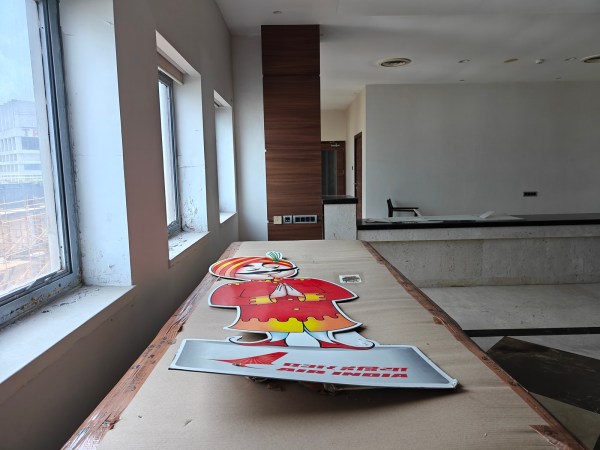 Bobby Kokka created the iconic Maharaja in 1946. (Express Photo by Nayonika Bose)
The priority, for officials, will remain to move departments that are currently operating out of rented spaces.
In tandem to designing new internal departments, the government is eyeing to restore the old elevators and escalators.
Similar to the Air India, the top floor may likely be retained for key portfolios or guests. “While discussions for several plans are underway, a decision is yet to be finalised on the allotment of the departments,” said a source.