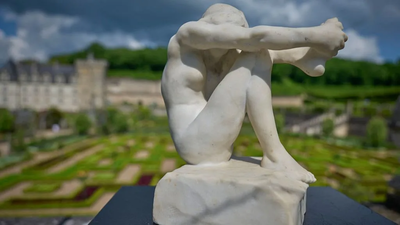
A small marble sculpture a family had kept on their piano for years, believing it to be a copy, has been confirmed as an authentic work by the French sculptor Auguste Rodin. The piece, called “Despair”, sold at auction in France on Monday for €860,000 (£725,000; $982,000). The 28.5cm (11 inches) figure dates from 1892 and had disappeared after a sale in 1906. The Comité Rodin confirmed its authenticity following a six-week probe. Auctioneer Aymeric Rouillac described it as an “extremely rare” find and told the AFP news agency: “We have rediscovered it.”
Why did the family think the sculpture was a copy
According to BBC News, the family approached the French auctioneer Aymeric Rouillac, and he and his team then spent months investigating the origins of the piece. In March, Mr Rouillac brought the sculpture to the Comité Rodin, a research group dedicated to studying the works of Rodin. The Comité Rodin confirmed the sculpture’s authenticity after a six-week probe. Mr Rouillac described the piece as an “extremely rare” find. The work was then put up for auction and sold on Monday. BBC News reports that “Despair” is a work by Rodin from 1892.
Why had Rodin’s sculpture disappeared after the 1906 auction
The Comité Rodin found that the sculpture had disappeared after being sold at an auction in 1906. Mr Rouillac spoke about the discovery to the AFP news agency. He said: “We have rediscovered it.” The family’s sculpture was an original piece. “Despair” was originally modelled by Rodin as part of his series of figures for The Gates of Hell. The Musée Rodin says that the figure is a depiction of sorrow. The Musée Rodin also states, as reported by the BBC, that the sculptor created other versions of the figure after it was positively received. The family’s marble piece is one of the works confirmed by the Comité Rodin following its investigation.