On the walls of the International Museum of Children’s Art in Oslo are drawings made by Afghan girls at a clandestine school, by Ukrainian children at an art center that was destroyed by war, and by kids around the world during the Covid pandemic.
Some of the many sketches, paintings and sculptures on display are by teenagers, others by toddlers. Some wouldn’t be out of place on a parent’s refrigerator. For 40 years, the museum has used them, and others like them, to make time capsules of recent world history, as seen through the eyes of the young.
“It is a place of exploration and discovery for all children,” said Ashild Breie Nyhus, a classical musician who performed at a recent benefit concert there. “Perhaps the most honest works of art to be found in Oslo and in the country more broadly.”
All of it may soon disappear from view. Norway’s government has cut off the funding that the museum relied on for decades. Its director, Angela Goldin, has been looking for ways to preserve the museum and its vast collection of children’s art — more than 100,000 pieces.
“It’s so surreal that it has no value,” Ms. Goldin said during a break from clearing out a rental space where some of the collection was stored. “That’s what we’re being told.”
The museum, which opened in 1986, is a family project. It began with a film made by Ms. Goldin’s stepfather, Rafael Goldin, an émigré from the Soviet Union, in which children were interviewed about how they saw the world.
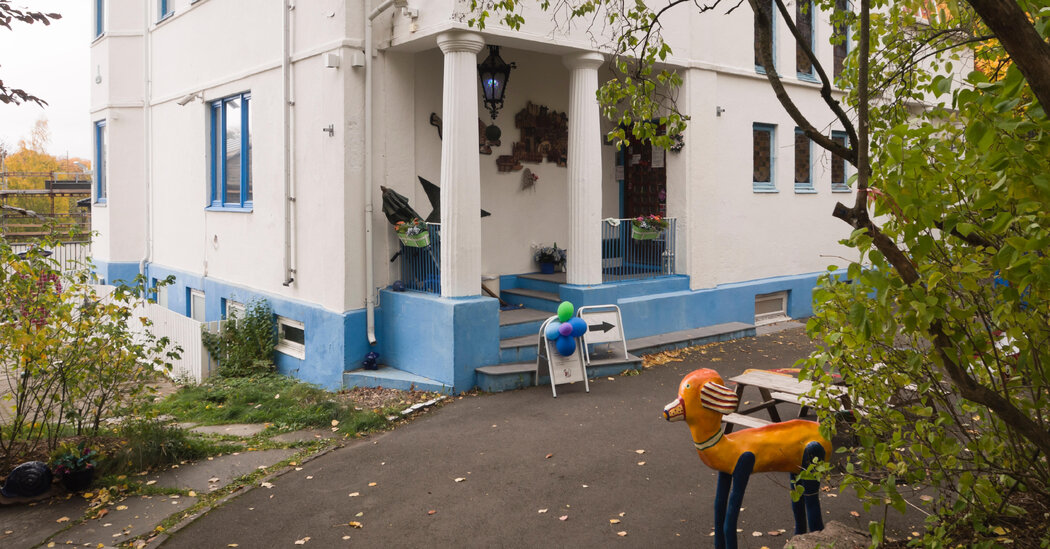
Mr. Goldin began amassing children’s drawings for that project. Eventually, he gave the growing collection a permanent home in an Oslo villa.
The villa’s rooms are plastered with drawings and paintings, each displayed with the artist’s name and country of origin, against walls painted in bright primary colors. Carpets invite children to sit and draw whenever inspiration strikes.
It feels like “a world of wonder where children’s own expressions are valued, taken care of, where adults have spent time and resources on it,” said Trond Günther, a grandfather and retired parish priest who joined a campaign to save the museum.
The art comes from around the world, often in response to online invitations asking for submissions on a particular theme. Much of it deals with sadness, terrible adversity or violence.
There is a tinfoil sculpture of the World Trade Center by Oslo high-school students. There are drawings by youths who lost parents to AIDS. One anguished piece, by a Mozambican child, depicts orphaned children clinging to their mother’s body.
Jaishankar Ganapathy, a Norwegian police trainer, said he brought aspiring officers to the museum to help them understand how children in distress could use art to communicate. “Drawings that speak of a father who drinks, domestic violence, illness, floods, war and death leave a lasting impression,” he said.
Last October, Norway’s culture ministry told Ms. Goldin that the museum’s annual request for funding had been denied. (For 2025, it had received 5.25 million Norwegian kroner, about $550,000.)
Norway has been changing how its state-supported museums function, encouraging them to join a network. The children’s museum has not done so, and Trude Storheim, the state secretary of culture, said it had not met new criteria focusing on research and collaboration with other museums.
“Politics is about prioritization, and we have also had to make such priorities in the cultural budget for 2026,” Ms. Storheim said in a statement.
Ms. Goldin said the decision came with no warning. She said she had never been told that the museum would have to join the network to keep its funding. She also said the museum had repeatedly asked for more funds for research and digitizing its collection, and she listed more than a dozen Norwegian institutions with which it has collaborated, including the Nobel Peace Center and the Ekeberg Sculpture Park.
The independent Norwegian Museums Association criticized the ministry’s decision, saying it would mean “total liquidation” for the museum.
Hermann Gmeiner, an Austrian philanthropist whose financial support in the 1980s enabled Rafael Goldin to buy the villa to display the art, was posthumously denounced last October by a charity he founded, SOS Children’s Villages, over accusations of abuse. A spokesman for the culture ministry, John Olav Kroken, said that had had no bearing on the ministry’s decision.
Ms. Goldin has been seeking other means of support and trying to keep the museum in the public eye. For a while, she kept the museum open by appointment, and a private foundation sponsored visits by kindergartners.
Now it is closed entirely. The small staff has been laid off, and Ms. Goldin has been drawing on the museum’s limited savings to cover basic costs, like storing its art collection.
She still has a glimmer of hope that it can be saved. But “things are looking very gloomy right now,” she said.
And if it all comes to an end, she will have to decide what to do with the works of art. Except for pieces damaged beyond repair, she said, none have ever been thrown away.