4 min readPuneJul 9, 2026 07:08 PM IST
Also written by Saniya Sinha

Among theatre practitioners and artists, Mahesh Elkunchwar is a formidable name. His writings, such as the Wada trilogy, Party, Holi, and Atmakatha capture truths that hide in plain sight and in the crevices of society. Twenty years ago, Elkunchwar wrote his last play, Eka Nataacha Mrutyu (An Actor Exits), after which he began to spend more time on essays.
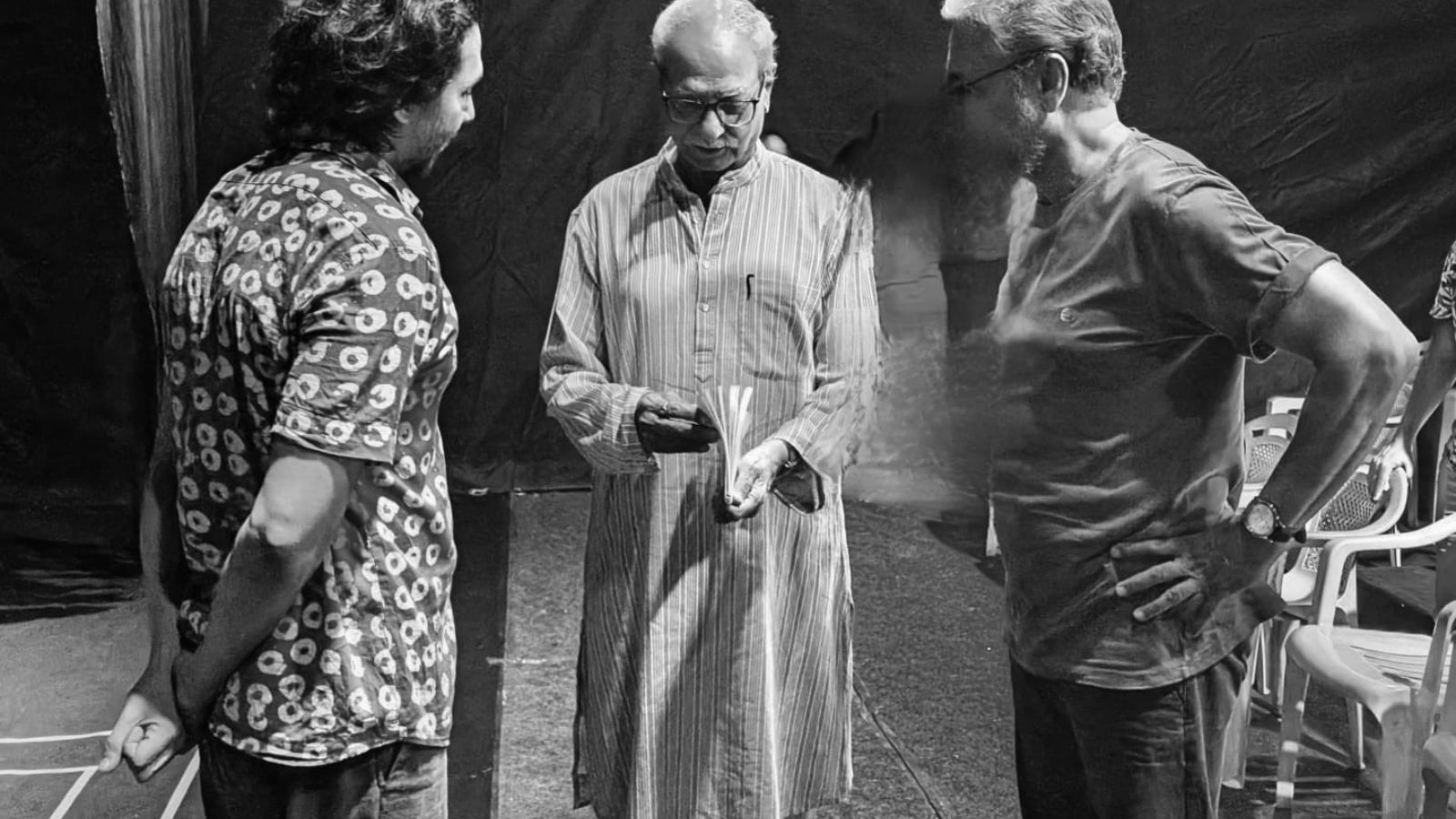
Eka Nataacha Mrutyu, published in 2005 and translated in English and French, was widely read and acclaimed – but never staged. Now, for the first time, the play has arrived on stage. Eminent Pune director Atul Pethe has directed the solo that is performed by Abhay Mahajan.
Structured as a poetic monologue, Eka Nataacha Mrutyu plumbs philosophical depths of human existence, life, and death. Even when it was presented as a dramatic reading in Paris, audiences were gripped by Eklunchwar’s writing that asks the fundamental question,
“Who am I?”
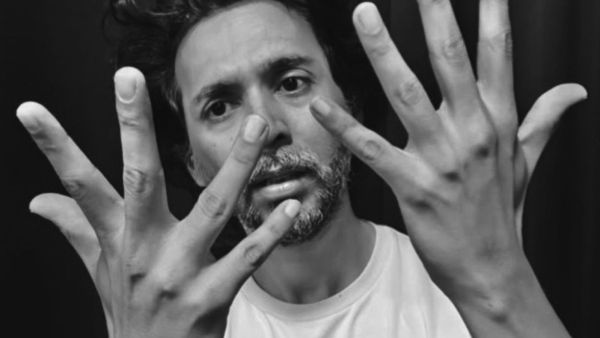 Eka Nataacha Mrutyu, Mahesh Elkunchwar’s acclaimed 2005 play, will be staged for the first time under the direction of Atul Pethe in Pune. (Express Photo)
“Working in theatre for 60 years, I am always intrigued by actors. Theatre is possible without a writer, a director, lights and makeup, but not without an actor and, at least, one spectator. I have known many actors personally and been impressed by their way of approaching their roles. I realised that the actor has many relationships – his mortal body, his director, his lover and others. One of the things that made me write Eka Nataacha Mrutyu was to try to explore how an actor relates to his body, which is perishable, and his relationships with other people who are also influencing or shaping him,” says Elkunchwar.
Eka Nataacha Mrutyu examines the existential quest, “the multiple selves hidden inside an individual manifest in various forms, weaving together moments that are tender, poignant, and deeply moving”. Among the reasons the play has stayed on the shelf rather than appear on stage is that an actor must spend several months, even the better part of a year, to understand the biblical and many Upanishadic references, among a multitude of other layers, in Elkunchwar’s text.
For Pethe, the decision to direct the play stemmed from both admiration for the playwright and a desire to engage with a work he believes continues to speak to contemporary audiences.
Story continues below this ad
“Elkunchwar’s contribution is not only to Marathi theatre but to Indian theatre. Directing one of his plays had long been a personal aspiration. Every director has a dream of doing a play by Vijay Tendulkar, Satish Alekar, Elkunchwar or Karnad and I wanted to engage with the text and reinterpret it in today’s times,” says Pethe.
Mahajan, an astute actor who has worked with national-level directors and on international projects and is trained in body movements, is fitting for the role. Pethe says that staging the work demanded an approach that went beyond interpreting the script and required months of exploration into its rhythm, movement and theatrical language.
“We spent nearly two-and-a-half months trying to understand not only the text but also the subtext. Movement, music, narration, pronunciation- finding the right language to translate into the performance was a great challenge,” says Pethe.
The production also features set design by Kushal Mahant and Shyam Bhutkar, sound design by Amar Deogaonkar, lighting design by Pradeep Vaidya, and voice performances by Anita Date and Nandu Madhav. Pethe described Vaidya’s contribution as integral to the production, calling it “an essential collaboration”. “He’s playing a significant role through the lighting,” he said.
Story continues below this ad
Pethe believes Pune’s long standing experimental theatre culture makes it an ideal place for the play’s debut. “Pune has a tradition of fantastic experimental theatre. People want to see something different. They want to experience something new and I have great trust in the audience,” he says.
Eka Nataacha Mrutyu will be staged at The Box from July 9 to 11 at 7 pm, with two performances on July 12 at 11.30 am and 7 pm.