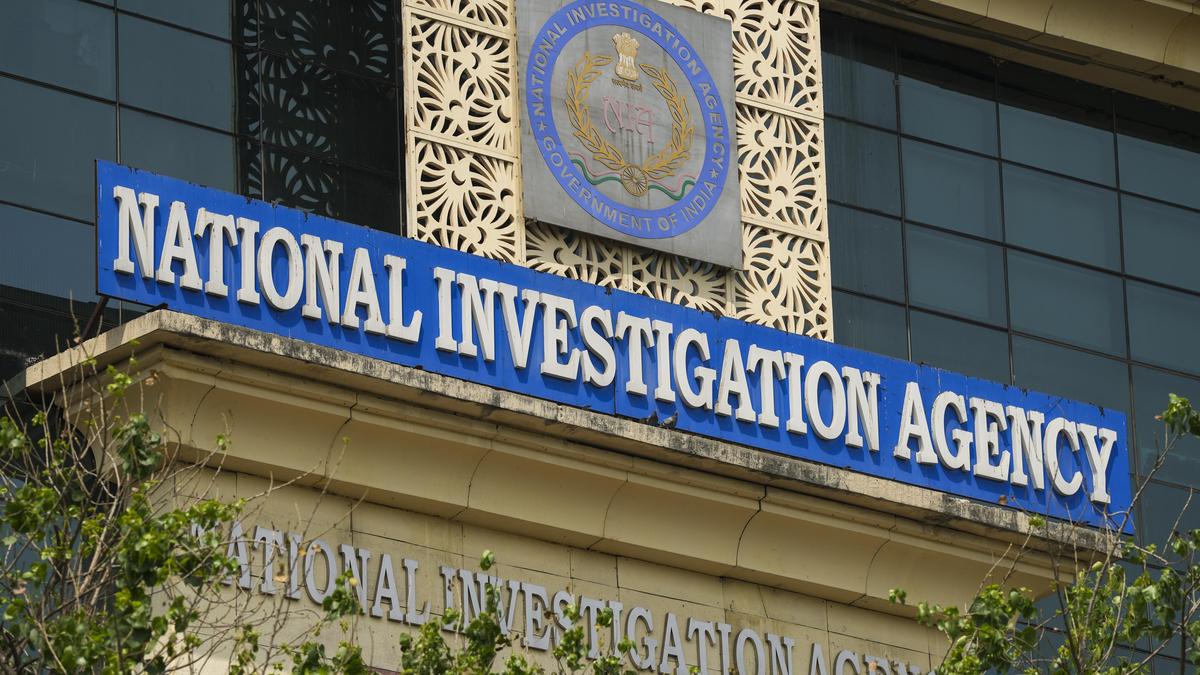
A sustained and coordinated crackdown by various agencies, including the National Investigation Agency (NIA) and the Enforcement Directorate (ED), has disrupted the financial networks of banned Maoist outfits in recent years.
The NIA has a dedicated anti-Naxal vertical that is investigating over 100 cases and has filed chargesheets in almost 90 cases. It has also seized assets worth more than ₹40 crore.
Among the major cases is the 2019 Tiriya encounter (Chhattisgarh), in which it has charged five senior Maoist operatives, besides others. In the Magadh (Bihar) revival case, 10 weapons and ₹4.03 crore in cash were seized. The accused included the outfit’s politbureau member Pramod Mishra.
A 2024 case is related to a coordinated attack on three Central Reserve Police Force camps in Chhattisgarh (Dharmavaram, Chintawagu, Pamed). The chargesheeted accused include an absconding special zonal committee member of CPI (Maoist).
In the 2019 Purnea arms and ammunition interception case, the agency has filed a chargesheet against several accused, including Bhikhan Ganju, the zonal commander of Tritiya Prastuti Committee. The NIA is prosecuting many accused in the 2025 Odisha case for looting 4,000 kg explosives.
Under the Prevention of Money Laundering Act (PMLA), the ED has attached assets worth more than ₹12 crore and filed prosecution complaints against the Maoists who targeted businessmen, contractors, workers, and even truck drivers for “protection money”.
One case pertained to The People’s Liberation Front of India, a splinter group with influence mostly in Jharkhand. Led by Dinesh Gope, who was involved in multiple cases in Bihar and Odisha, the group extorted money for allowing a free way to coal-loaded trucks. The ED assessed the total proceeds of alleged crime to be about ₹20 crore.
In May 2023, the NIA arrested Gope when he faced 102 criminal cases of murders, abductions, threats, and extortion, and carried a reward of ₹30 lakh. He had been absconding for almost two decades. The ED has attached assets worth ₹3.36 crore connected to him. Both the agencies have filed chargesheets.
In Chhattisgarh’s Rajnandgaon, the agency investigated two brothers, Ashvini Varma and Tamesh Verma, who, after demonetisation, had collected scrapped ₹500 and ₹1,000 notes from Maoists. As alleged, Ashvini used the cash to buy produce from local farmers, sold it and invested the proceeds in a farmland. The brothers had split assets among themselves to evade detection. In February 2022, the ED issued a freeze order under PMLA.
A major case involved Rambabu Ram, who was the self-styled secretary of CPI (Maoist)’s western zonal committee in north Bihar. Active for the past two decades, he allegedly committed murders, robbery, and extortion. The ED zeroed in on seven land parcels.
The Maoists had been targeting businessmen associated with the coal mines in Jharkhand’s Chatra and Hazaribag. In the Magadh Amrapali coal block, trucks and contractors faced regular stops for cash collection by Tritiya Prastuti Committee members. While the NIA took over the police cases and filed chargesheets, the ED attached movable assets and submitted a prosecution complaint.
Two alleged area commanders for the CPI (Maoist)’s special committee, Musafir Sahni and Anil Ram, operated along the Bihar-Jharkhand border. The ED unearthed the financial trail revealing that funds were linked to the immovable assets registered in their relatives’ names.
In the case of Pradyumn Sharma, the ED attached assets worth ₹68 lakh in 2018 and assessed that the total proceeds of crime was about ₹2 crore. He was allegedly the in-charge of Magadh zone of Bihar-Jharkhand special area committee of CPI (Maoist).
As alleged, Pradyumn and brother extorted money from businessmen through private contractors and used the funds to buy land in Bihar’s Jehanabad. Between April and June 2016, he had got six sale deed agreements signed for over 300 decimals of land. The agency attached eight parcels of land and one house, besides some movable assets.
The ED found that about ₹25 lakh had been spent on the medical education of Pradyumn’s niece, who frequently travelled by air and was enrolled in a Chennai-based medical college. A large part of college fees was sent via two iron and steel companies in Chennai, it was alleged.
Published – March 31, 2026 10:32 pm IST