4 min readMar 31, 2026 03:27 PM IST
First published on: Mar 31, 2026 at 03:27 PM IST
There is so much being discussed on the grand arrival of artificial intelligence. There are both celebrations and questions. Celebrations foresee opportunities. Questions raise fundamental concerns. Will the AI also do poetry? Will Gemini now follow commands to create humour? There is something more fundamental at stake.
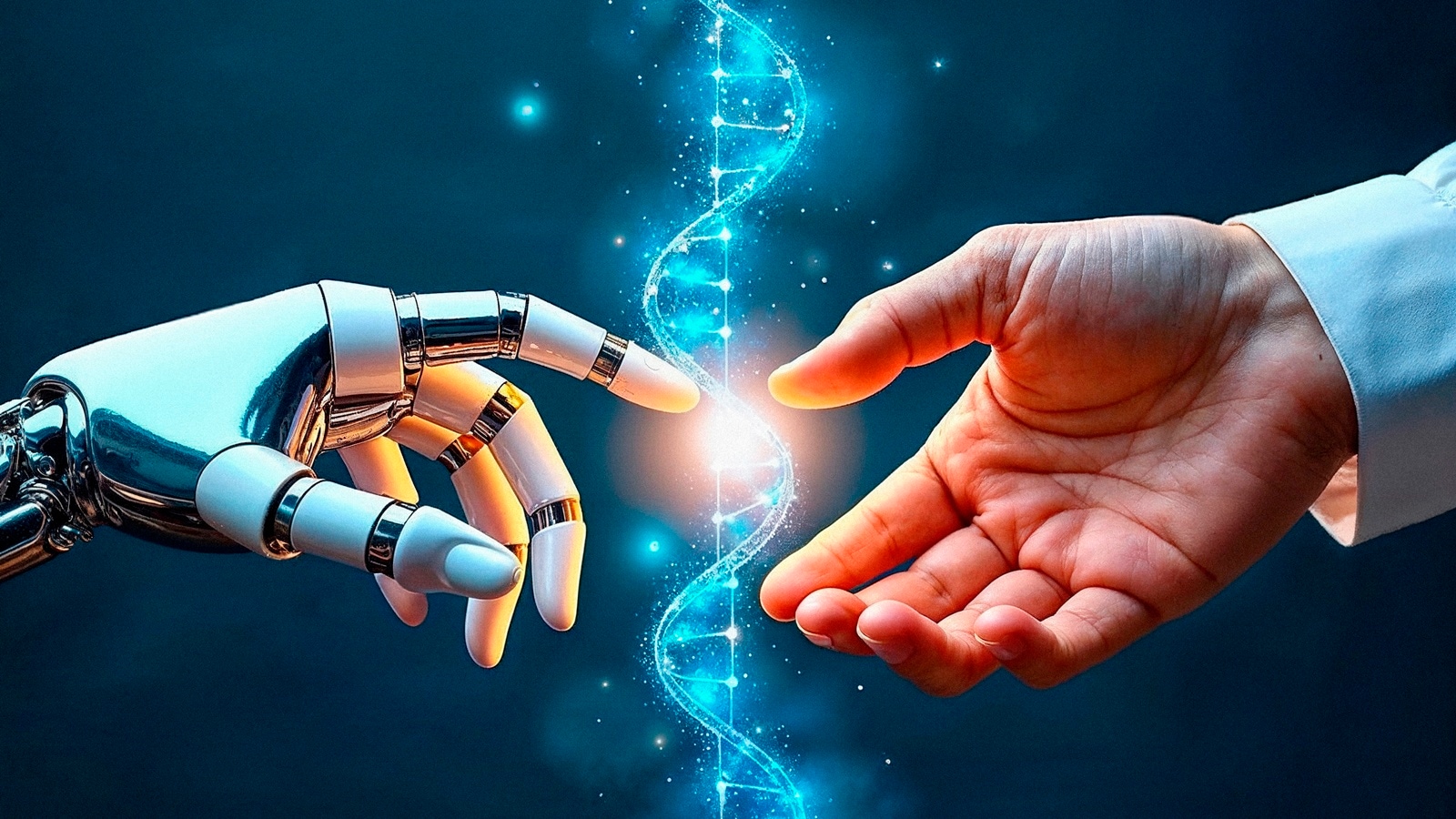
The machine is the morphological manifestation of man’s ego. As long as the machine remained subservient, the relationship worked well. This time, though, there seems to be a genuine threat of role reversal. The possibility of human beings reduced to slaves — or even worse — of machines is very real. More fundamentally, there is a potential threat to the idea of society as a web of social relationships, which, as Slovenian philosopher Slavoj Zizek worries, is being turned into a web of machines. Creativity and imagination, humans’ core instincts, are increasingly being mediated through technologies.


One of the early signs of this impending threat seems to be our increasing propensity to mediate through machines, even in matters of basic mutual interactions. In my previous workplace, there was a colleague whom I treated as my younger brother. It was just a bond of mutual respect built over years of working together. But things changed dramatically because of something banal. I used the word “Babua” — meaning younger brother in the Hindi heartland — in one of my messages to him on WhatsApp chat. His curiosity about matters, from profound to pedestrian, always relied on his mobile screen. Apparently, this time too, he checked the meaning of the word on his mobile, and his search gave him the impression that I had tried to infantilise him. The search engine that translated the word “Babua” clearly failed to convey the love and affection associated with the word in its real-world setting. Machines cannot convey the underlying meaning of a cultural text, its subtlety and nuances.
This misinterpretation happened because of overdependence on the machine. Earlier, we trusted each other not just based on years of experience and shared events, but also through tactile, sensory human gestures of compassion and empathy. A gentle hug from a stranger outside a hospital when things looked irrevocably bad, and an old relative appearing as a messiah when everything looked hopeless, built trust. Trust was not under constant machine-mediated scrutiny. They had a formidable social base.
In AI-related debates, the primary concern seems to be possible mass unemployment. The crisis, however, is far more serious. It threatens the very constitutive logic of human society. Increasingly, we are being isolated from the organic networks of sociality. Physicality of the human presence — one’s money, needs, buying and selling, procuring, store hopping — is being transacted through online portals. Now, words like “thinking” and “cerebral” face the danger of outsourcing.
The social web of relationships created a network of emotions — humour, melancholy, pain, suffering, separation. This reservoir of emotions, for instance, gave classics like Guru Dutt’s Pyaasa and Salil Chowdhury’s timeless renditions. But to appreciate these emotional outpourings and expressions, one would need to be a part of the social world. In an age where relationships collapse for not liking a message on a family WhatsApp chat, it’s time to invest in humans. Alas, all that we learnt from the pandemic was nothing but social and physical distancing.
It is time to deal with AI cautiously and rehumanise our existence. Go and get your fish and groceries from the mandi, where you will meet your friends in real time. Such ordinary acts spawn new relationships, and that, in turn, recharges the networks of humans.
The writer is a Chandigarh-based author and sociologist