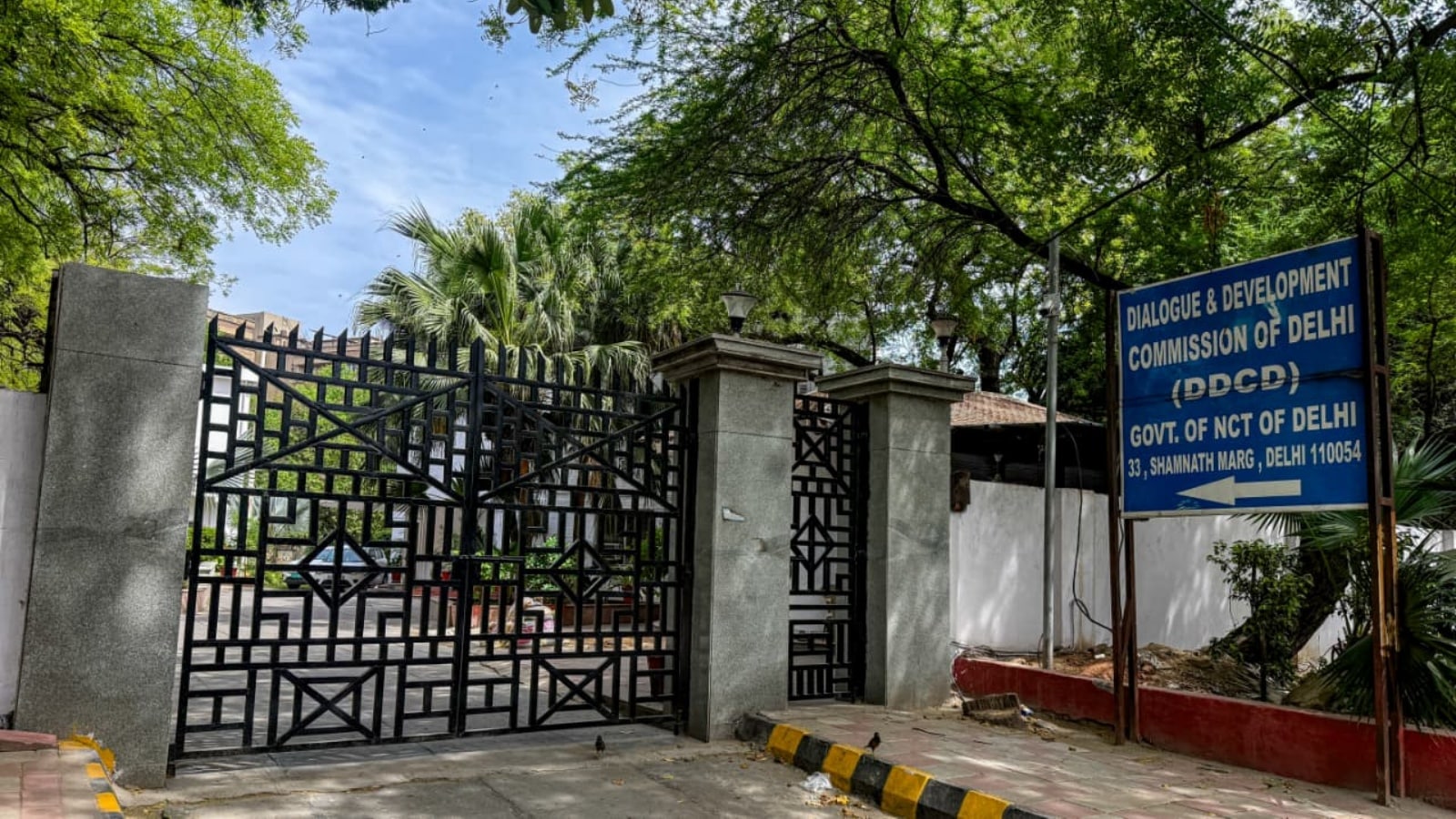
For over two decades, Bungalow No. 33 on Shamnath Marg near Delhi’s Civil Lines, which once served as the Chief Minister’s residence, has had no takers. Politicians and bureaucrats alike have avoided it reportedly over rumours of “bad luck”, and it being “jinxed” and even “haunted”.
To utilise the abandoned property, the Delhi government is planning to demolish the bungalow and develop a government office building, officials told The Indian Express. “Due to the rumours surrounding the house over the years, no senior politician, minister or even top bureaucrat is willing to take it up… the perception that it is jinxed or haunted have made many consider it bad luck. As no one is willing to move in, the government is now planning to redevelop the property into an official building for governance purposes,” said a senior official.


Officials said the government is also considering constructing a state office for the Delhi Disaster Management Authority (DDMA) at the site. “Delhi does not have a dedicated building for this office. The government may consider developing a state DDMA office on this property,” another senior official said.
Officials added that last year, a team from Social Welfare Minister Ravinder Indraj Singh’s office visited the bungalow, but the minister did not opt for it.
Century-old history
The two-storey bungalow sits on a large plot and includes four bedrooms, multiple halls and drawing rooms, fountains, a large living area, a front lawn, and seven staff quarters.
Unlike most government bungalows, 33 Shamnath Marg has a long history dating back to the pre-Partition era. According to officials, it was built in the 1920s, when the British developed Civil Lines to house senior officials.
After Independence, the bungalow was considered an ideal choice for the Chief Minister’s residence due to its proximity to the Delhi Legislative Assembly, officials said.
Story continues below this ad
The bungalow has housed Chief Ministers, including Chaudhary Brahm Prakash, Delhi’s first Chief Minister in 1952, and Madan Lal Khurana in 1993. However, over time, the house came to be labelled as “inauspicious”. Officials said at least five allottees vacated the bungalow before completing their tenures, often after facing political or career setbacks.
Brahm Prakash stepped down in 1955 following the alleged “jaggery scam”.
In 1993, Madan Lal Khurana, who became Chief Minister under the newly created National Capital Territory framework, was allotted the same bungalow, but his term was cut short in 1996 amid allegations linked to a
hawala scandal.
“Since then, rumours began that the house is cursed. Many in political circles started believing that staying here could impact their careers,” an official said. Later, when Sahib Singh Verma and Sheila Dikshit were allotted the bungalow, they declined to move in, though Verma used it as a camp office. Verma himself was later replaced by Sushma Swaraj before completing his term.
Story continues below this ad
“There are several rumours about the house. Jo bhi aata hai yahan, woh tikta nahi hai (whoever comes here does not last long),” said an official.
When the AAP government came to power, the bungalow was used as the office of the Delhi Dialogue and Development Commission (DDC), a policy think tank. Its first vice-chairperson served for three years before resigning from the party.
In 2018, AAP leader Jasmine Shah was appointed as vice-chairperson and operated from the bungalow. However, the DDC became defunct after his office was shut and sealed following allegations of “misuse of public office”.
In November 2022, former Lieutenant Governor V K Saxena had ordered that Shah be “restricted from discharging functions as V-C” and barred from using “any privileges and facilities connected with the
office
Story continues below this ad
“Neither politicians nor senior bureaucrats have shown interest in the house. Many have visited but opted for other accommodation,” a senior official said.