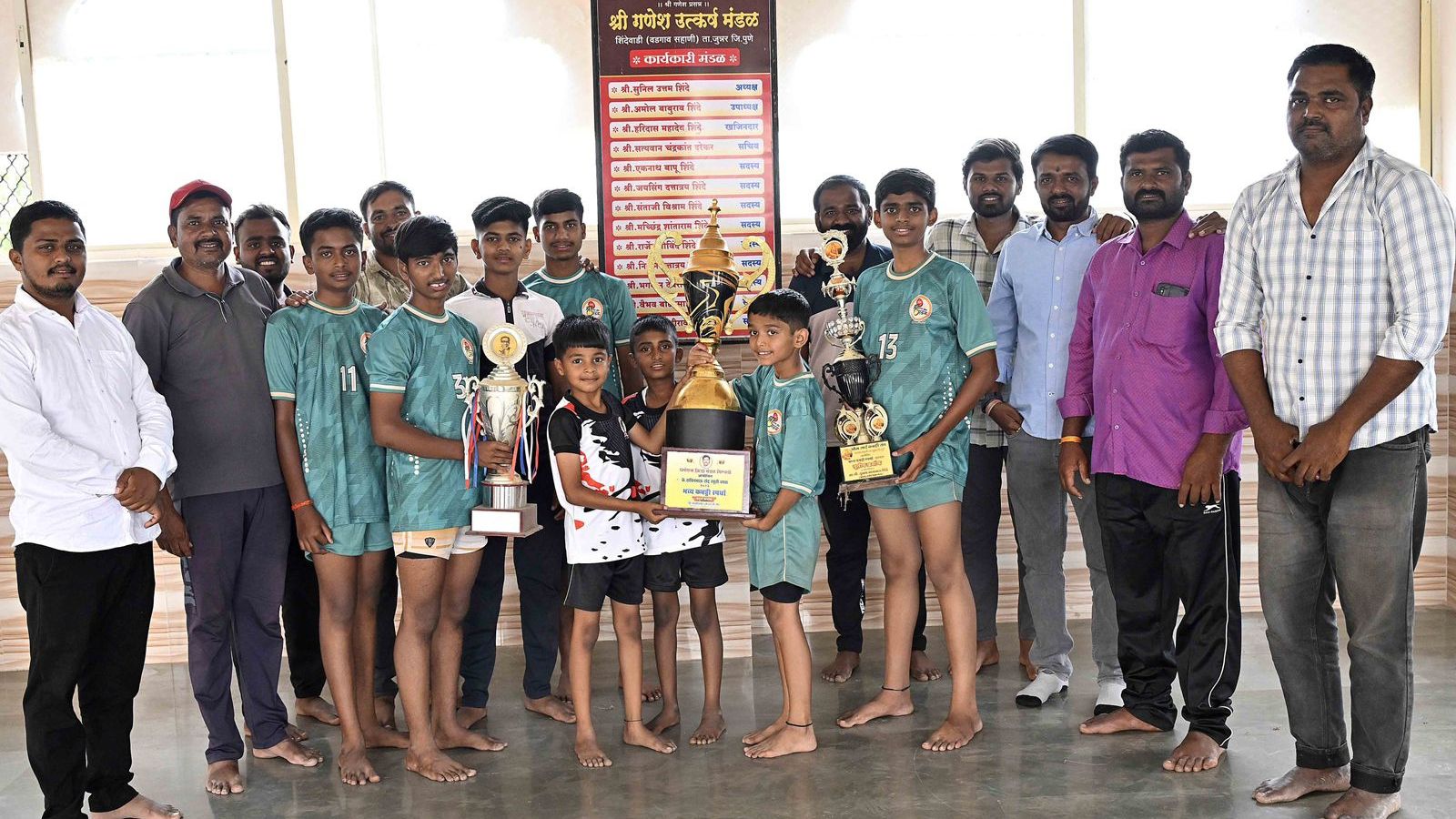
The road from Narayangaon to Vadgaon Sahani turns from tar to a dusty earthen stretch, lined with onion storage sheds and open farmlands. Farmers quietly work in the fields, and the village appears like any other in rural Maharashtra. But beneath this ordinary landscape lies an extraordinary identity – Vadgaon Sahani, a village in Pune’s Junnar taluka, fondly known as ‘Kabaddi chi Pandhari’ (The Hub of Kabaddi).
With a population of around 1,840 residents across nearly 590 houses, the village has built a reputation over decades for producing kabaddi players and nurturing a culture where the sport was once a way of life.
Where it all began
Chintamani Wable(68), still remembers the day kabaddi in the village took its first organised step. “We started this kabaddi movement in 1971, when I was just in the 6th standard. And I am the founder member and ex-president of Vayukumar Vikas Mandal, having our own team,” he says.
What began as inspiration soon turned into action. “During school competitions, some elders from our village used to go to different cities and play. Slowly, they brought that culture back here,” Wable recalls.
Another resident, Anand Namdev Wable, says, “There was no time for any other sport. Kabaddi was everything for us. Almost every house had at least one player.”
The golden era
Between the 1990s and early 2000s, Vadgaon Sahani witnessed what locals call its golden era. The village had eight to ten active teams, each representing different hamlets. Matches were not limited to competitions – they were community gatherings, often organised during festivals such as Hanuman Jayanti, Ram Navami, Ganesh Utsav, and village yatras.
Story continues below this ad
Practice sessions were rigorous and consistent. “There wasn’t a single day when players stayed away from the ground,” recalls Prasad Wable, a former player and trained referee. “Some players would perform 2,000 to 3,000 squats daily. That was the level of dedication.”
Despite lacking formal coaching or infrastructure, the village’s teams were known to challenge and defeat well-trained city teams. “Urban teams had coaches and diet plans, but if anyone could defeat them, it was us,” says former player Subhash Shinde (42).
Players like Sagar Tamboli, Mayur Tamboli, and Kiran Wable went on to represent at higher levels. Through the sports quota, Sagar and Mayur secured jobs in the police service.
“Many boys from this village entered the police and armed forces because of kabaddi,” says coach Rajan Namdev Wable, one of the referees at the Pune District Kabaddi Association.
Story continues below this ad
When opportunity slipped away
The dominance gradually declined due to a lack of exposure and guidance. Many players were unaware of selection trials or pathways to district, state, and national levels. “We didn’t even know such systems existed,” says Rajan Namdev Wable. “By the time we understood, many opportunities had already passed.”
Economic challenges compounded the problem. Professional training, including academy fees and diet, that can cost between Rs 30,000 and Rs 40,000 per month, made it unaffordable for most families in the village.
“There are players here who have the skillset to play at the professional level, but without proper diet, training, and financial support, they cannot progress,” says Rajan Wable.
Revival efforts
Today, the landscape of kabaddi in the village is evolving again, with a smaller but dedicated group of players continuing the tradition. A few active teams still train regularly, carrying forward the legacy built over decades.
Story continues below this ad
Every evening, around 50 children gather at a local indoor stadium, where former players and volunteers conduct training sessions free of cost. “This is our way of keeping kabaddi alive,” says a local trainer.
Village-level tournaments are still organised during festivals, funded through community contributions. Former players who have moved out of the village often return to participate and support the events.
“From children to elders, everyone is still emotionally connected to kabaddi,” says Prasad. “Even those who have settled elsewhere come back and contribute.”
The determination among the younger generation remains strong. “I want to play kabaddi… I want to become a star player,” says 16-year-old Vedant Shinde after practice.
Story continues below this ad
Road ahead
Over the years, infrastructure has improved. The village now has kabaddi mats, which are carefully preserved and even shared with nearby villages during tournaments. “Earlier we played only on mud. Today we have mats at one hamlet – that itself is a big change,” says Wable.
Local organisers also see potential for expanding participation beyond boys. “Girls can definitely play kabaddi here,” says a community member. “But parents need to be more supportive and they hesitate to send because they fear injuries.”
“If we get proper support – funding, facilities, and guidance – our players can go much further,” says Wable. “Talent is not the problem. Opportunity is.”