Even as some experts have said that Delhi’s new policy on electric vehicles — which the Cabinet approved on Monday — is a “game changer”, others have expressed concerns over the infrastructural gaps and timelines related to the transition. Ban on registration of two wheelers and dropping the proposed incentives on strong hybrid vehicles — these are among the aspects that seem to have divided the policy experts.
Vikas Nimesh, Assistant Professor at School of Public Policy, IIT Delhi, called the mandate to switch to electric two-wheelers, three-wheelers and school buses in the coming years a “game changer”. “Such a transition is a good move because bikes running on fuel are responsible for 70 to 80% of vehicular emissions in the Capital. A couple of years ago, there were no major choices for people looking to buy e-bikes but now there are models to choose from. Similarly, the government has given a time of two years… the makers will also come up with more EV models,” he opined.

On the current state of charging infrastructure, he said, there is a “huge gap” and it will take about six-seven years for complete transition to take place. “The government has to expedite the installation of charging infrastructures near the residential areas where people live and come up with models by 2027-28…otherwise, the transition will be difficult to achieve,” he said.
Amit Bhatt, Managing Director, International Council on Clean Transportation (ICCT), a nonprofit, said, “The proposed phase-out of two- and three-wheelers could be a game changer in Delhi’s fight against air pollution.”
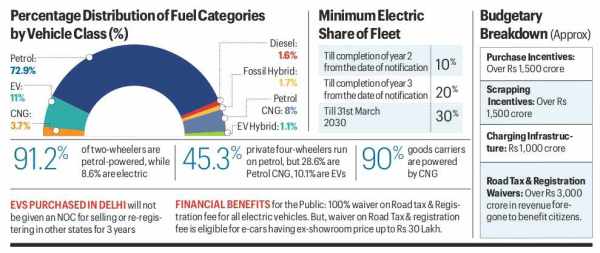 The EV policy will come into effect from July 1.
Bhatt also pointed out that these segments account for a large share of the city’s vehicle fleet, and accelerating their transition to zero-emission vehicles can significantly “reduce vehicular emissions, improve public health, and pave the way for a broader transition to zero-emission transport across all vehicle segments.”
Meanwhile, another specialist, Anil Chikkara, a former Transport official, criticised the policy saying, “The government should give some time and go for a gradual transition of petrol two-wheelers to e-two wheelers. Because they do not have enough charging points and stations, why would people switch to EVs…One cannot travel every time to a charging station and there are no facilities in resettlement colonies and narrow colonies…this just seems to benefit EV manufacturers,” he said.
On the government’s decision to withdraw proposed road waiver on the strong hybrid vehicles, Nimesh said the government should have given a transition ‘bridge’ to the public. “I too ride an EV, so I know the difficulties I face. A complete transition to EVs is the ultimate goal but till we have solid number charging stations, the government should have given incentives on strong hybrids, so that there could have been at least a gradual transition towards EVs,” he said.
Story continues below this ad
But Bhatt said that dropping purchase incentives for strong hybrids would be a positive step, as it would help direct policy support and investments toward a faster transition to zero-emission transport technologies.
Devender Sharma, Auto Manufacturer, Micro Auto Tech Private Limited, giving his opinion as an industry player said, “There is no clarity on subsidies… a similar issue in the previous policy also. For instance, how will the subsidy be disbursed, will the owners have to apply directly or the manufacturers will get it first and then it will go into the customers account like in the previous policy…EV portal government is saying but it should be defined properly.”
The EV policy will come into effect from July 1.
“Every EV delivers a double dividend—it gives our children cleaner air while reducing India’s dependence on imported fossil fuels. It’s not just an environmental choice; it’s an economic and strategic investment in an Atma Nirbhar Bharat. It’s good for the planet,” underlined Delhi Transport Minister Ashish Sood, who heads the panel formalising the EV policy.
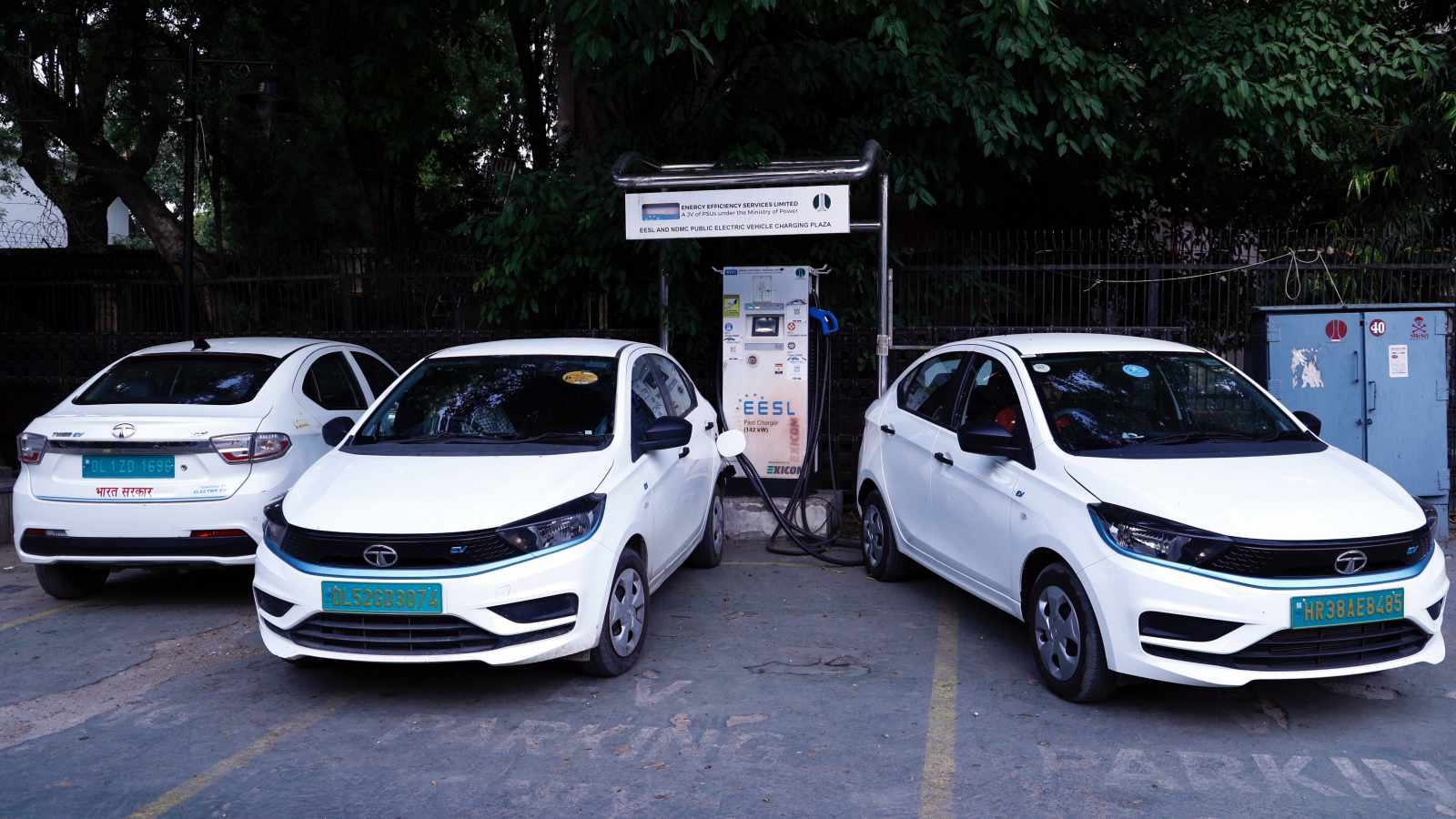
Under the new policy, Delhi’s 5.8 million two-wheelers are being primarily targeted through subsidies and scrappage incentives. At present, there are around 5,884 EV charging stations and 8,912 charging points. There are 893 battery swapping stations.
CM Rekha Gupta said that her government will develop a robust charging network with installation of more than 30,000 EV charging points across Delhi during the policy period.
The required land has already been identified and charging infrastructure will be developed across the city on a large scale in the coming months,” she said.