

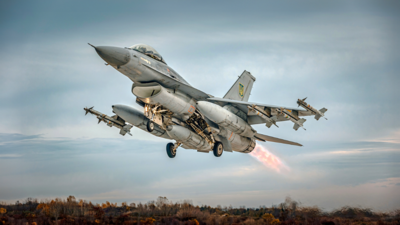
Ukraine’s F-16 fleet is running into mounting sustainment troubles, with aircraft availability hit by maintenance bottlenecks and a shortage of air-to-air missiles. The Wall Street Journal reported that more than half of Ukraine’s F-16s are currently stuck in what it called maintenance limbo, while a Western source warned the current pace of operations and upkeep could exhaust the fleet entirely by the end of the year. Ukraine is believed to have received around 40 to 50 F-16s so far, though some remain abroad for training and five losses have already been confirmed. A further 110 aircraft have been pledged by Belgium, Denmark, the Netherlands and Norway.Compounding the problem is a shortage of AIM-9 Sidewinder and AIM-120 AMRAAM missiles, which have been used heavily against Russian cruise missiles and drones. Ukrainian pilots have reportedly had to ration missile shots and lean increasingly on the F-16’s 20mm cannon when suitable missiles run out, with Kyiv said to be seeking additional cannon ammunition as well. Laser-guided 70mm APKWS II rockets could offer a cheaper alternative against drones and subsonic cruise missiles, though it remains unclear how widely Ukrainian F-16s are actually using them. The issues feed into each other, high operational tempo burns through missile stocks while adding flight hours to already ageing airframes, which in turn demands more inspections and maintenance, placing further strain on a wartime support network already stretched thin. The episode is a reminder that having modern fighters is only part of the equation, keeping them flying and armed over a prolonged conflict is just as critical.This is precisely the argument that strengthens India’s case for leaning on an indigenous air-to-air missile like Astra. Designed and developed by DRDO and integrated with the Su-30MKI, Astra Mk-I has been procured for the Indian Air Force and Navy under a Rs 2,971-crore contract signed in 2022 with Bharat Dynamics Limited, following a technology transfer from DRDO. The Defence Ministry has said the missile has a range exceeding 100 km. India has also been steadily cutting its reliance on foreign components, with DRDO and the IAF successfully testing an Astra variant fitted with an indigenous radio-frequency seeker on a Su-30MKI in July 2025, destroying two unmanned aerial targets in the trial. More than 50 public and private industries are reported to have contributed to the programme so far.The value of this goes well beyond a single missile. An air force’s real combat capability depends not just on how many fighters it has, but on its ability to keep those jets supplied with weapons through a sustained conflict, something Ukraine’s experience illustrates starkly. Indigenous production gives India far greater control over replenishment, stockpiling and future upgrades, while reducing exposure to foreign export restrictions or competing global demand during a crisis. In building out Astra’s ecosystem, from seekers and propulsion to guidance and manufacturing, India is quietly securing one of the more critical pieces of its fighter fleet’s long-term combat readiness.