He looked like one of the many digital nomads appearing in Vietnam these days as he plopped his bag on a table near the back of a stylish cafe and ordered a coffee.
Then he ripped off his shirt and ordered everyone to leave.
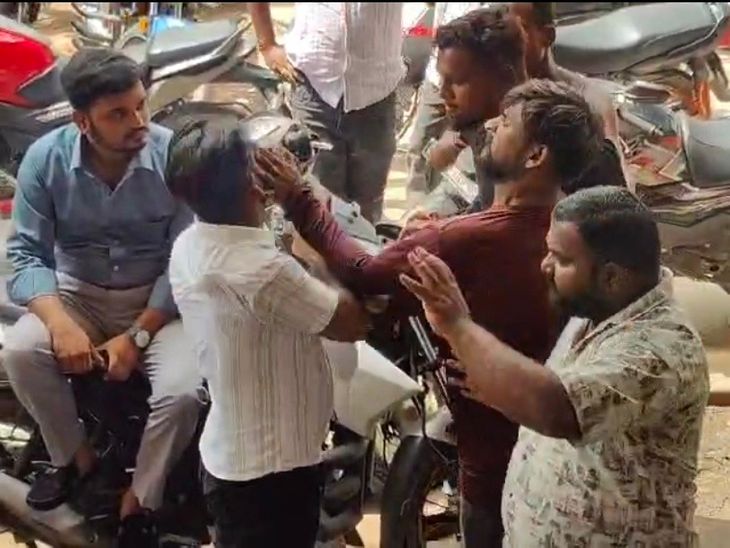
Security footage captured the man, Shaymus Lilly, 34, an Australian brand strategist, clearing counters and shattering windows at Gé Cafe in the coastal city of Da Nang. He smashed a stranger’s phone and choked a young Vietnamese man before police officers hauled him away.
Witnesses wondered if he was mentally ill and followed him to the station. The only person who could translate was the man Mr. Lilly had attacked. Worried about mistreatment, said Nguyen Hang, 31, the cafe’s manager, he volunteered to interpret for his assailant.
It was a striking illustration of the paradox of today’s Vietnam, which has eagerly welcomed foreigners with promises of natural beauty, fun, friendliness and affordability — but remains a Communist state that prioritizes social order and control. When things go wrong for visitors, open-minded warmth often gives way to a legal system built for a colder, less global era.
A record 22.8 million international visitors came to Vietnam in 2025, and this year the country is on track to receive around 15 percent more. Though most are well-behaved, foreigners accused of offenses from gun violence, drunken driving and drugs to illegal businesses have been packed into detention centers, fueling a fierce debate over what kind of country Vietnam really is — and wants to be — as it tries to supercharge its economy with international integration.
Vietnamese officials are facing intense diplomatic pressure to enforce international norms, and upgrade a criminal justice system that is ill-equipped for the country’s rising popularity.
Official translators are scarce. Gaining access to lawyers or consular officers can take weeks or months. Penalties for even minor infractions — such as overstaying visas, bar scuffles or using small amounts of marijuana — can be severe, including hefty fines and jail time, according to interviews with former detainees, relatives of people recently arrested, lawyers and diplomats from nearly a dozen countries.
“It’s a whole different world, a different paradigm,” said a person close to a foreigner detained in Vietnam, who, like others interviewed for this story, insisted on anonymity to avoid antagonizing Vietnamese authorities. “Over there, you’re presumed guilty.”
Vietnam’s Ministry of Public Security acknowledged in a recent public statement that “foreign nationals’ exploitation of relaxed visa policies to enter and reside in Vietnam and engage in unlawful activities has become increasingly complex.”
A legislative proposal presented this year to local lawmakers in Hanoi, the capital, reported that the city’s detention facility where foreigners are held was under enormous strain, and called for more funding, a rare admission of systemic struggle.
Foreign diplomats raised the issue with the highest levels of Vietnam’s government earlier this year, according to five international officials with knowledge of the meeting. Ambassadors’ frustrations have grown as more of their citizens have languished in crowded cells, sometimes for months, lacking regular contact with relatives, consular officials or lawyers.
Mr. Lilly’s case has been public enough that Australian officials in Vietnam were notified, and they confirmed they are trying to help. But his fate remains uncertain. Da Nang police announced on June 9 that he would be detained for at least three months while the authorities investigate public disorder charges against him, which could lead to several years in prison.
His family in Australia could not be reached for comment. A relative there told a local news outlet that he had bipolar disorder and appeared to be experiencing an episode when he damaged the cafe. At the police station, Ms. Hang recalled, Mr. Lilly said that he had been depressed and not taken his medication.
At some point that night, he posted on Facebook: “I need help.”
Not Thailand 2.0
Vietnam has made clear with state-run media heavily covering foreigners’ crimes that it does not want to be another Thailand — where visitors have long flocked for cheap long-term stays, seeking not just the beaches and food but also red light districts and legal marijuana.
Part of Vietnam’s challenge is that Thailand also wants to shed that image. The Thai government announced in May that it was cutting most tourist visas to 30 days from 60.
Steven Foukal, 28, a digital wellness entrepreneur from Chicago who I met outside the Lighthouse Cafe in Da Nang, where foreigners with laptops occupied nearly every seat, told me he was one of many who recently left Thailand for Vietnam.
“More and more people want an escape,” he said.
Crackdowns on scam centers in neighboring Cambodia, along with Vietnam’s looser visa rules for several countries, including Russia, may also be drawing in nomads and ne’er-do-wells.
A few weeks before Mr. Lilly’s rampage on the night of May 29, the police in another beach town arrested a Russian man who hit and killed a 70-year-old Vietnamese woman with his motorbike while driving drunk. In June, 83 Chinese nationals were detained after taking over a Ho Chi Minh City hotel for what the police described as “transnational fraud.”
Many Vietnamese are not jumping straight to cynicism. Near Da Nang’s My Khe beach on a recent night, Ho Sy Hoang, 76, and his wife, Nguyen Thi Tuyet, 72, sat in front of the building where they live, down the block from a bar full of foreigners pounding shots and playing pool.
It was quiet until four years ago, the couple said, when the city rezoned the area for tourist nightlife. On the plus side, Mr. Hoang said, his property value has risen. The biggest negative: all-night partying.
“In the morning when I open my door, so many times, I see people drunk, aimless or asleep on the street,” he said.
He and his wife insisted nonetheless that choosing fear over friendliness was not very Vietnamese.
“They’re just part of the neighborhood,” Mr. Hoang said, pointing to foreigners nearby. “It’s good because before Vietnam was at war and closed to the world. Now we welcome everyone.”
Crime and Punishment
The police in Da Nang have chosen a more confrontational response, inspecting visas at hotels and showing up at foreigners’ apartments at 3 a.m. to make them take drug tests.
Nationally, the tension between hospitality and suspicion has deep roots. Ho Chi Minh, Vietnam’s revolutionary leader, often accused French colonial rulers of spreading drugs and gambling to keep the Vietnamese people from standing on their own.
After the Vietnam War ended in 1975, the country codified a lot of that thinking in law. Drug trafficking, even for small amounts, carries the death penalty. Anyone caught “organizing the use of drugs” — a broad charge that can include making plans to share a joint — faces up to 20 years in prison.
Legal scholars say justice, for citizens and visitors alike, remains shaped by Communist Party politics and a bias toward guilt.
The party sets targets — officials recently declared that Ho Chi Minh City, the country’s largest, will be drug-free by 2030 — and members of the police compete for promotions with prosecutions. Officers send judges “dossiers” about alleged offenders, including a description of the crime and the recommended sentence, and “the assumption is that it’s correct,” said John Gillespie, an expert in Vietnamese law at Monash University in Australia.
Human rights groups have long criticized the Vietnamese authorities for staging show trials and depriving their own citizens of due process. International laws designed to protect foreign detainees — requiring regular consular access and swift notification to their governments — are routinely violated in Vietnam, according to foreign officials from 10 countries. Lawyers and relatives also have little to no access to defendants, especially during pretrial detention, which can last for more than a year.
“The old Soviet system has remained somewhat intact,” Mr. Gillespie said.
Vietnam’s Ministry of Public Security and the Ministry of Foreign Affairs did not respond to written requests for interviews about the country’s approach.
In July, the security ministry posted a video of its chief spokesman, Maj. Gen. Nguyen Quoc Toan, emphasizing its commitment to simplifying procedures so foreigners “who come to Vietnam for legitimate purposes” experience “a welcoming, efficient and well-governed country.”
There are hints that some officials think the detention system needs updating. The document presented to Hanoi’s lawmaking body noted that the average meal allowance of about $1 a day for detainees, in place since 2000, “is no longer suitable given inflation and the physical needs of foreign nationals.”
The man that Mr. Lilly had put in a chokehold went to the police station because of concerns for the Australian’s welfare, according to Ms. Hang, the cafe manager.
“We were all just trying to get out of it safely — and the customer didn’t want the guy to be harmed,” she said.
Gé Cafe reopened a few days later, after paying for repairs. At the entrance when I visited in June, near new windows, customers were greeted with a poster displaying the flags of Australia and Vietnam side by side.
But in early August, Ms. Hang said she and the cafe’s owner were disappointed because they still had not heard from Mr. Lilly’s family. Instead of a lengthy prison sentence, they would like an apology and compensation.
Tung Ngo contributed research.