

4 min readNew DelhiMar 21, 2026 05:00 PM IST
When people notice unusual health symptoms, many turn to the internet for answers. One such concern recently surfaced on Quora, where a user asked: “I found blood in my stool and I am over 50 years old, am I getting colon cancer?”
Since the symptom can sound alarming, especially for older adults, panic is inevitable. To understand what blood in stool could indicate, we reached out to Dr Waseem Ramzan Dar, Attending Consultant in Gastroenterology at ShardaCare Healthcity.

DISCLAIMER: This article is based on information from the public domain and/or the experts we spoke to. Always consult your health practitioner before starting any routine.

Does blood in stool always signal cancer?
According to Dr Dar, noticing blood in the stool can understandably cause anxiety, particularly for individuals above the age of 50. However, it does not automatically mean a person has cancer.
“Although colorectal cancer is among the conditions that physicians attempt to eliminate, one should recognise that blood in the stool does not necessarily imply the presence of cancer,” he explains.
In many cases, the cause may be relatively common and treatable digestive conditions rather than a serious disease.
Still, doctors advise that people above 50 should not ignore this symptom. Medical evaluation helps identify the cause and rule out serious conditions such as colorectal cancer.
Story continues below this ad
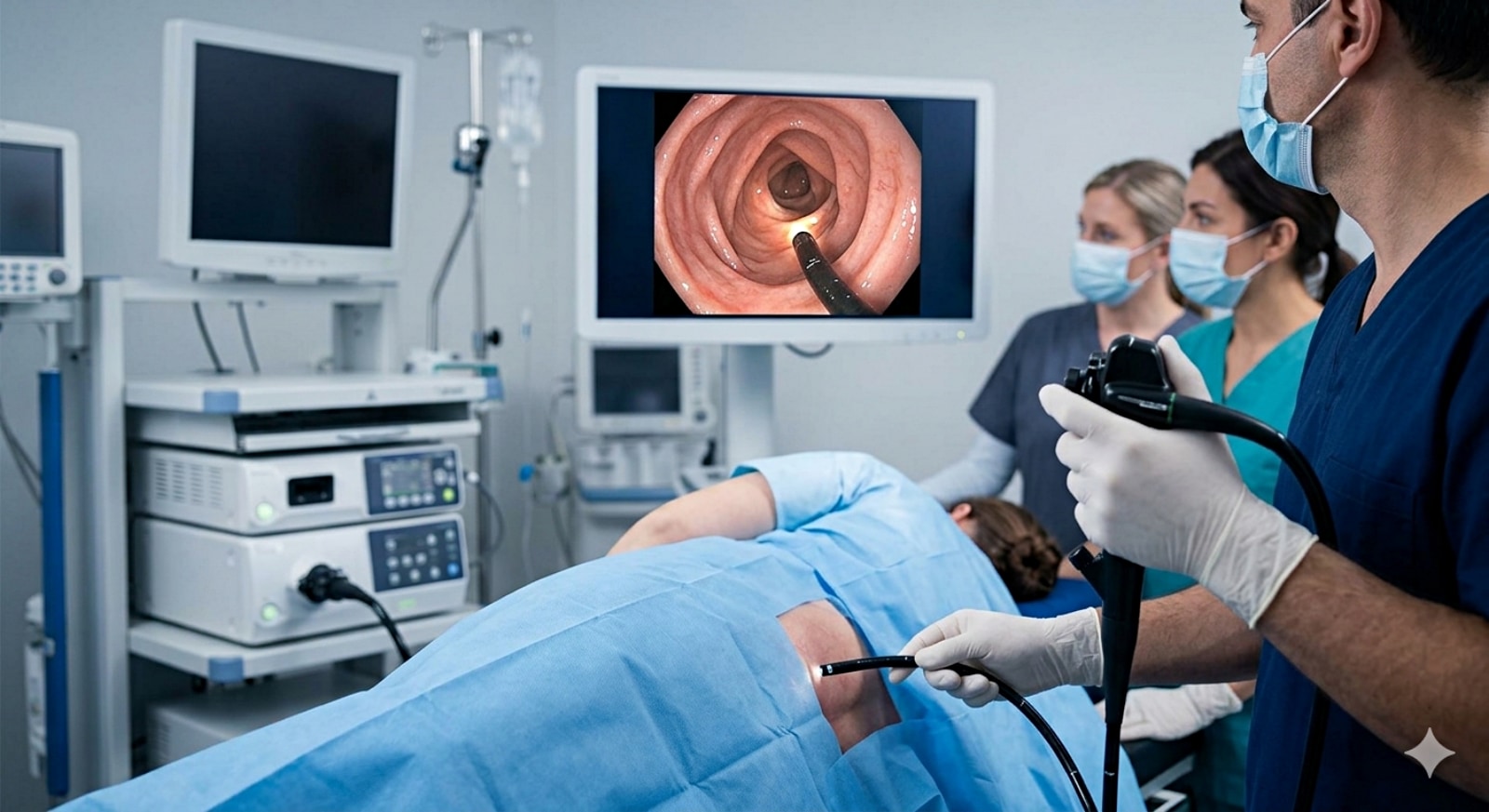 One of the most common tests to find out the reason for bleeding is a colonoscopy, which allows doctors to examine the inside of the large intestine (Image: Gemini)
Other common causes of blood in stool
Apart from cancer, several digestive conditions can lead to bleeding during bowel movements. These are often linked to irritation, inflammation or minor injury in the digestive tract.
Some common causes include:
- Haemorrhoids (piles): Swollen blood vessels in the rectum or anus that may bleed during bowel movements.
- Anal fissures: Small tears in the lining of the anus, often caused by passing hard stools.
- Digestive tract inflammation or infections: Certain infections or inflammatory conditions can irritate the gut lining and cause bleeding.
Many of these conditions are relatively common and can usually be managed with appropriate treatment.
Warning signs you should not ignore
Even though blood in stool does not always indicate a serious disease, it should still be checked by a doctor—especially for people over 50.
Dr Dar says medical attention becomes more important if bleeding occurs along with symptoms such as:
Story continues below this ad
- Persistent or repeated rectal bleeding
- Unexplained weight loss
- Fatigue or weakness without a clear reason
- Changes in bowel habits, such as constipation or diarrhoea
- Narrow or unusually thin stools
If these symptoms appear alongside bleeding, it is important to seek medical advice promptly.
Tests doctors may recommend
To identify the cause of bleeding, doctors may suggest certain diagnostic tests. One of the most common is a colonoscopy, which allows doctors to examine the inside of the large intestine and detect conditions such as polyps, inflammation or cancer. Other tests may include stool tests, blood tests or imaging if required. Dr Dar emphasises that early diagnosis and regular screening are important for detecting digestive conditions and ensuring effective treatment.
DISCLAIMER: This article is based on information from the public domain and/or the experts we spoke to. Always consult your health practitioner before starting any routine.