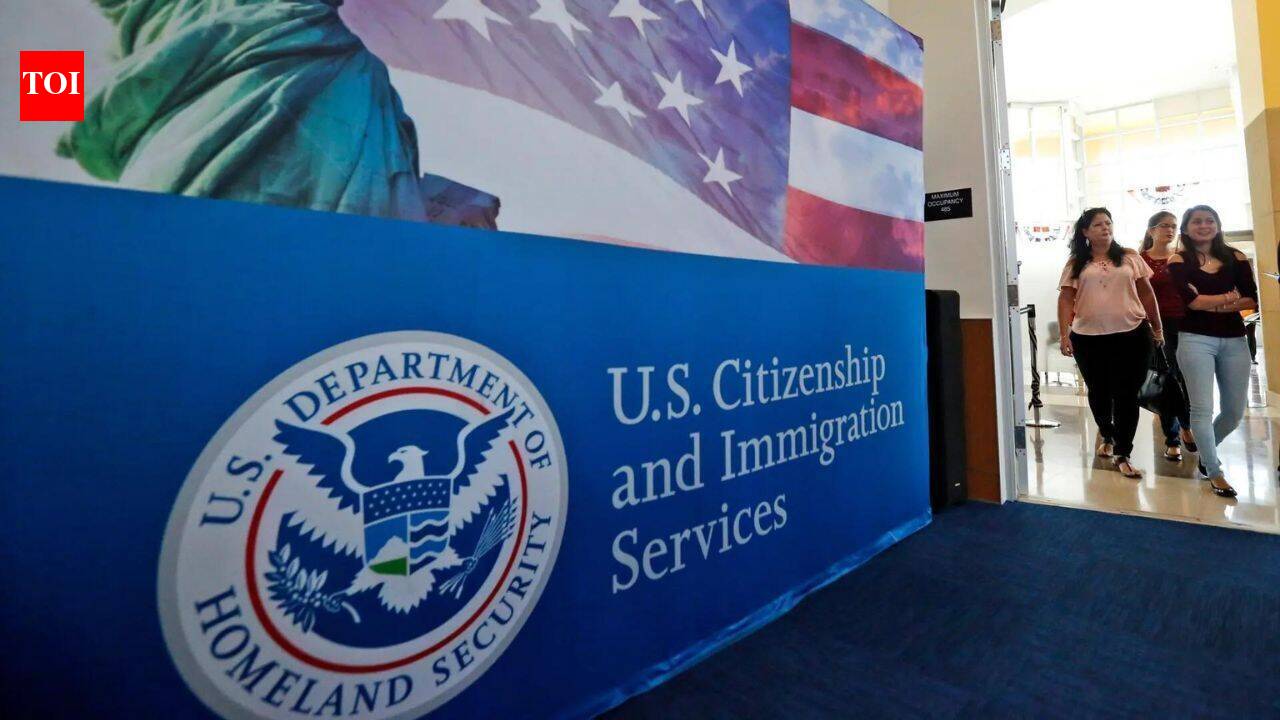
TOI correspondent from Washington: For highly skilled foreign workers in America, a majority of whom are from India, the Trump administration has apparently decided that losing a job isn’t stressful enough. Why not add an immigration cliff?The department of homeland security is advancing a proposal to eliminate the 60-day grace period that allows H-1B workers and certain other legal nonimmigrants to remain in the US after their employment ends while they find another sponsor, change status, or prepare to leave.The proposed rule, RIN 1615-AD22, went to the White House office of information and regulatory affairs for review Thursday. It is not yet law. Under current regulations, an H-1B worker whose employment ends can generally remain in the US for up to 60 days — or until the authorized stay expires, whichever comes first. The grace period was created by a DHS regulation that took effect in 2017, recognizing a rather obvious fact about modern employment: companies sometimes fire people.Without it, the immigration consequences of a Friday layoff could begin with remarkable speed. An H-1B worker could fall out of status when qualifying employment ends and would have to quickly find another lawful immigration solution or prepare to leave. A new employer could file a petition, but the worker could no longer count on a two-month cushion to make that happen.That is an especially formidable deadline for someone who must not merely find a job, but find an employer willing and able to sponsor an H-1B, complete the paperwork and get the immigration process moving. For an American worker, eight weeks can disappear between interviews, negotiations, background checks and the inevitable corporate email saying, “We’re moving in a different direction.”For an H-1B professional from India or elsewhere, those same eight weeks are an immigration lifeline. And these workers are not necessarily recent arrivals with a suitcase beside the front door. Many have lived in America for years, bought homes, obtained mortgages, paid taxes, put children through American schools and built careers and communities. A layoff can threaten not merely a paycheck but an entire household’s established life.There is another, less obvious consequence: employer leverage. The existing grace period gives an H-1B worker breathing room to negotiate a move to another company. Remove it, and workers may become reluctant to tell their employers they are leaving until a new H-1B filing is safely underway. That could give existing employers less notice and make job transitions less orderly.The proposal is being welcomed by immigration restrictionist allies such as US tech workers, which campaigns against what it considers excessive use of foreign labor by corporate America. It argues that H-1B is a temporary program and questions why a worker should remain after the job that justified the visa disappears. The argument is straightforward: temporary worker, temporary job, temporary stay. The counterargument is equally straightforward: people are not disposable light bulbs.The proposal fits a broader Trump approach that has made legal immigration itself more precarious through higher fees, intensified scrutiny, tighter visa policies, and measures that increase the dependence of temporary foreign workers on their sponsoring employers.While all that may please immigration restrictionists, it creates an awkward contradiction for corporate America. The US admits H-1B workers because employers say they need specialized talent, yet the administration would make those same workers less secure when an employer decides it no longer needs them.America has long benefited from attracting engineers, scientists, physicians, entrepreneurs and technology specialists from around the world. The implicit bargain was simple: come here, work hard, pay taxes and build a life. The emerging bargain increasingly sounds different: come here, work hard, pay taxes — and remember that your entire American existence may depend on your employer’s quarterly earnings report.The irony is that the 60-day grace period was hardly an immigration giveaway. It does not authorize indefinite residence or employment; it simply gives workers a limited window to find another lawful status, obtain a new sponsor or organize their departure. DHS itself has acknowledged the vulnerability created when workers unexpectedly lose employment. In a 2024 rulemaking concerning H-2 workers, it said grace periods can give workers time to respond to sudden employment changes, seek new employment or organize their departure.The proposed H-1B rollback therefore represents more than the disappearance of 60 calendar days. It would tell highly skilled foreign professionals contemplating America that their jobs may be temporary; increasingly, so may be their place in the country.For an administration determined to make America harder to enter and harder to remain in, that may be precisely the point. For an economy competing globally for talent, however, it could prove an unusually expensive way of saying: “Please don’t get too comfortable.”