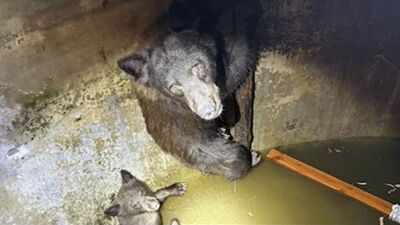
On a late-August afternoon in the San Gabriel Mountains, a group of hikers near La Verne, California, heard an unsettling sound: what they described as “howling” coming from a large water tank along a trail. When they investigated, they discovered a mother black bear and her two cubs trapped inside the cistern, unable to climb out. Wildlife officials and fire crews responded, spending hours delicately extracting the bears and reuniting them before releasing the family back into the wild. The dramatic rescue, reported by local news outlets, underscores the dangers that human infrastructure can pose to wildlife in Southern California’s bear country.A strange sound on the trailThe incident began on August 28, 2026, in the hills above La Verne, a city at the base of the San Gabriel Mountains about 35 miles east of downtown Los Angeles. Hikers on a popular trail near a water cistern reported hearing unusual vocalisations, described in some accounts as howling or crying—coming from the structure.Curious and concerned, they approached the tank and peered inside. What they saw was a mother black bear and two small cubs, pacing and calling from within the steep-sided container. The bears had apparently climbed in to reach water but found the smooth, vertical walls impossible to scale on the way out.Wildlife officials and fire crews respondThe hikers alerted authorities, and a multi-agency response quickly formed. That’s when the California Department of Fish and Wildlife (CDFW), local fire departments and wildlife experts showed up to evaluate the situation and devise a rescue plan. Water cisterns like this are common in remote hiking areas, where they act as water reservoirs for firefighting or trail maintenance. But for wildlife, these cisterns can become deadly traps. Animals can climb in but often struggle to climb out, especially if the walls are slick and without footholds. Bears, with their strong climbing ability and curious nature, are particularly vulnerable. Rescuers knew they had to be careful. A stressed mother bear with cubs is dangerous and a wrong move could injure the animals or put people in danger.Hours of careful work to free the bearsThe rescue operation took several hours. Crews first had to secure the area and keep onlookers at a safe distance. Then, with the help of specialised equipment and techniques, they worked to get the bears out one by one. Reports describe rescuers lowering harnesses or ropes into the cistern and gently fastening the cubs before pulling them out. The mother bear required more time and care. Wildlife officials sedated the animal in some versions to take care of her safely, while others describe a more “hands-on” extraction with minimal drugs to avoid unnecessary risk. The goal was the same either way: get all three bears out alive and in good condition. Once the cubs had been removed, they were kept nearby so the family could be reunited as soon as the mother was freed. Reunited and released Once the mother bear was finally extracted, rescuers checked the family for injuries and allowed them to recover briefly. Fortunately, all three appeared to be in decent condition despite the ordeal.CDFW and partner agencies then transported the bears to a suitable location within their home range and released them back into the wild. The exact release site was not disclosed, as is standard practice to avoid drawing people to the animals or encouraging habituation.In statements after the rescue, officials emphasised that the outcome could have been very different without the hikers’ quick reporting and the coordinated response.Why water tanks are a hidden dangerIncidents like this are more common than many people realise. Across California and other Western states, open or poorly secured water tanks, cisterns and stock ponds have trapped and killed bears, deer, mountain lions and other wildlife. Animals are drawn to these sources, especially during hot, dry months when natural water can be scarce.Once inside, smooth concrete or metal walls offer no grip, and the depth can be too great for animals to jump or climb out. Over time, many animals die from exhaustion, injury or dehydration.Wildlife agencies and land managers have been working to reduce these risks by installing wildlife escape ramps or ladders in tanks and ponds; fencing off or covering cisterns in high-use areas; and retrofitting older structures with bear-proof designs. But thousands of tanks remain, especially on remote public and private lands, making them an ongoing hazard.What hikers and residents can doThe La Verne rescue underscores the role that the public plays in wildlife safety. Hikers, runners and residents who spend time in bear country can help by:Reporting trapped or injured wildlife immediately to CDFW, local sheriff’s departments or fire agencies; keeping a safe distance and not attempting to feed or handle wild animals; noting landmarks or GPS coordinates to help responders find the location quickly.In this case, the hikers’ decision to investigate the “howling” and then call for help made the difference between a tragic story and a successful rescue.Bears in the San Gabriel MountainsBlack bears are native to the San Gabriel Mountains and have become increasingly visible as human development expands into their habitat. They play an important ecological role, dispersing seeds, scavenging carrion and helping regulate populations of smaller animals.At the same time, bears that become habituated to human food or garbage can end up in conflict with people, sometimes with fatal results for the bears. That’s why agencies emphasise secure trash, proper food storage and avoiding intentional feeding.Rescues like the La Verne cistern incident show another side of the human–bear relationship: when infrastructure unintentionally endangers wildlife, and people step in to correct the problem.A reminder to secure our footprintFor wildlife managers, the incident is a reminder to keep auditing and retrofitting water infrastructure in bear country. For residents and visitors, it’s a reminder that even well-meaning structures, like a water tank meant to support trails or firefighting, can have unintended consequences for the animals that share the landscape.The mother bear and her cubs are now back in the forest, free to forage, den and raise their young without the threat of a concrete trap. And the hikers who heard their calls will have a story to tell for years: the day they followed a strange sound and helped bring a bear family home.