The first thing I noticed in Vietnam wasn’t the food, the heat, or the beauty of the streets at golden hour. It was something far quieter and far more disorienting: I noticed I wasn’t being as constantly vigilant as I had been earlier, when I travelled to Kerala.
No one was staring. No one was filming. And no one was tracking my movements across a street or a beach. And somewhere in the middle of a ten-day trip across Da Nang, Ba Na Hills, Hoi An, Hanoi, Ninh Binh and Ha Long Bay, I realised that my guard had dropped completely, and I couldn’t remember the last time that had happened.

But I’m getting ahead of myself. Let me start at the beginning.
Part one: Vietnam
The flight from India landed in Hanoi before connecting to Da Nang, where my family and I stepped out of the airport into a wall of June heat. What struck me first was the stillness of it. The streets were spotless. There was traffic, but no one was constantly honking. Locals glided past on scooters in colourful, adorable helmets. After Delhi, it felt almost surreal.
By the time we checked into our Airbnb, the evening had softened the heat. We showered and headed out, drawn into streets alive with the smell of grilled seafood. Food stalls, cafes and massage parlours spilt onto the pavement. We had burgers and mocktails for dinner at Bikini Bottom before walking along the beach, the sea dark and warm, the night air easy. It was a perfect first evening, and I felt safe.
The next morning was given entirely to Ba Na Hills, and our cab driver had warned us we’d need the full day. He was right. We rode one of the world’s longest cable cars to the top, where the air cooled noticeably. The crowds were thick, but the scenery made it irrelevant. We went on the famous Alpine Coaster twice, drank Highlands Coffee, and wandered through the French Village as evening rolled in and the shops began closing.
Then, after it began pouring suddenly, we joined the long queue for the cable car back, returning to Da Nang around 8 pm. We freshened up and headed to Michelin-recognised Hải sản Mộc quán Đà Nẵng for dinner. The seafood was remarkably fresh, though I quickly learned that Vietnamese cuisine leaned sweeter than my palate was used to.
Story continues below this ad
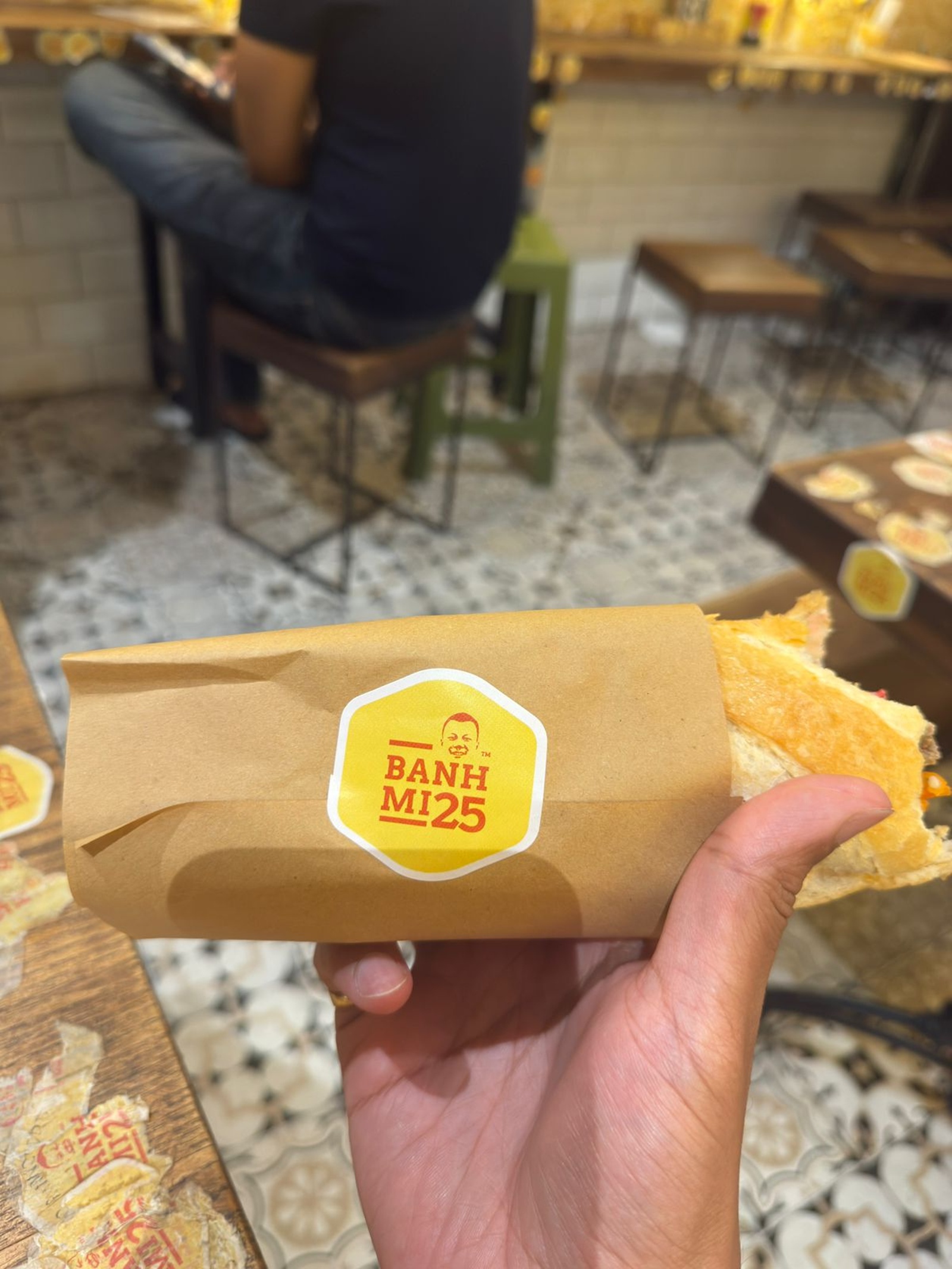 Banh Mi (Source: Swarupa Tripathy)
On the third day, we drove to Hoi An. After checking in, our first stop was Madam Khanh — the famous Bánh Mì Queen — where the sandwich was a little dry, but hunger made it disappear quickly. We spent the afternoon wandering the Old Town’s lantern-lined streets and tailor shops. As evening approached, we took one of the iconic lantern boats along the river, then watched the Memories Show — a sweeping performance narrating Hoi An’s history through music, elaborate costumes and dance that left me genuinely moved. We wrapped up with dinner at a nearby bar before heading back.
We returned to Da Nang the next day for its internationally renowned fireworks festival, and I am not exaggerating when I say it was one of the most breathtaking things I have ever seen. That evening featured Vietnam and France in competition, and standing among thousands of people watching the sky erupt into light and colour, there are no adequate words for it. Just: magic.
The following morning, I swam at My Khe Beach before we visited the Marble Mountains, climbing to the top through shrines and caves to panoramic views of the coastline, before boarding an overnight sleeper bus to Hanoi.
We arrived the next morning in a different kind of city. Hanoi had a more layered, lived-in energy than Da Nang. We spent the day in the Old Quarter, exploring pagodas, winding through narrow streets, visiting the famous Train Street and Beer Street. The city felt ancient and restless at once.
Story continues below this ad
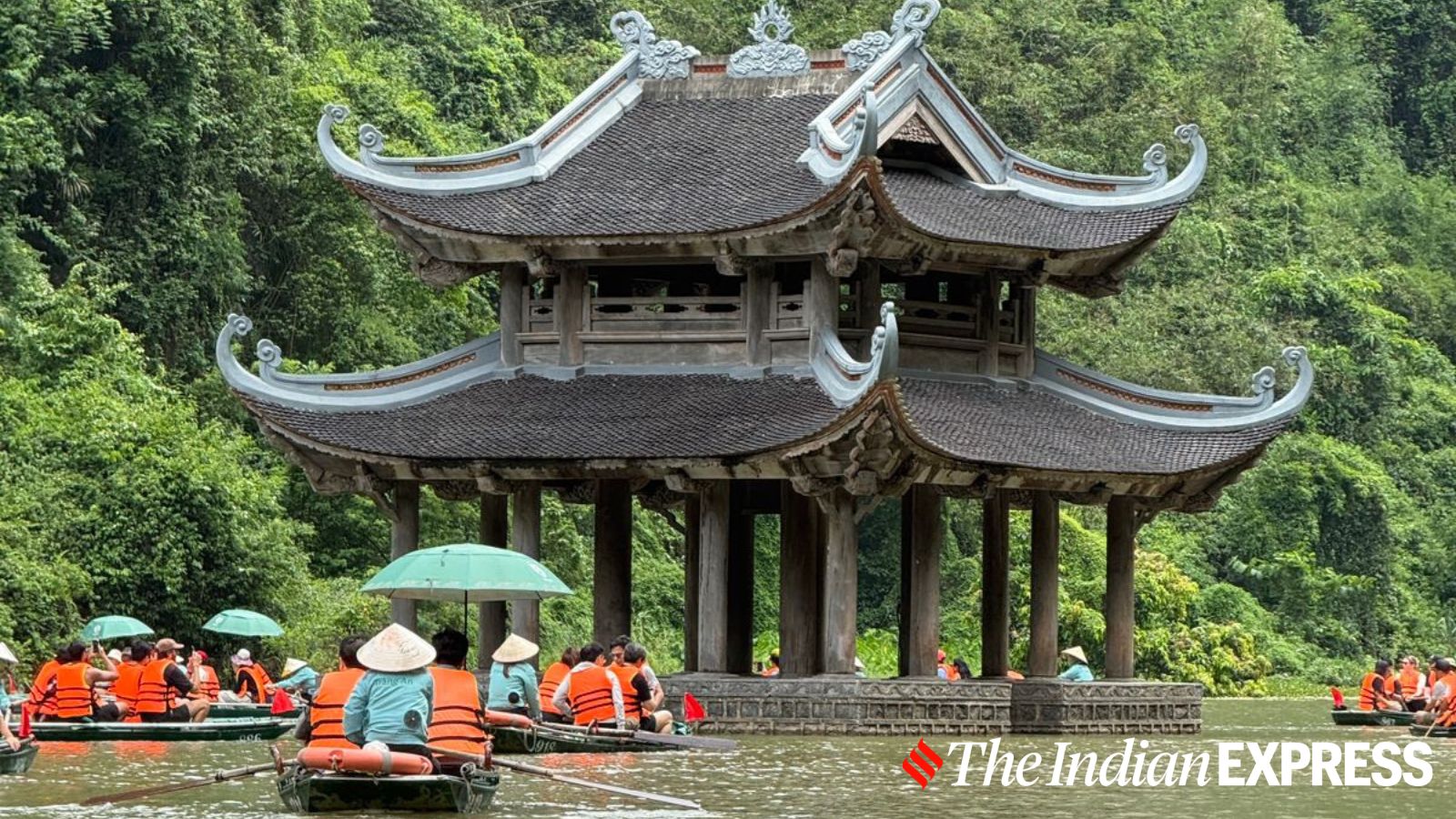
The day after was reserved for Ninh Binh on a guided tour. We visited a pagoda, cycled through the countryside of startling green and limestone cliffs, and then took a boat through the region’s famous caves — gliding through dim, dripping chambers while the landscape rose vertically around us. One of those days that stays with you.
The trip’s centrepiece was Ha Long Bay: a one-night stay on a five-star cruise, my first time on a cruise of any kind. A smaller boat ferried us to the ship, where we were welcomed with a seafood tasting menu before heading to Sung Sot — Surprise Cave — whose vast chambers and formations left us standing in silence. We stopped at Titop Island to swim, then returned to the ship for an evening on deck: dinner, conversation, and squid fishing in the dark.
Our final day brought us back to Hanoi by bus from the port. We spent the last hours revisiting the Old Quarter, shopping at local markets, eating one last round of Vietnamese food, and gathering souvenirs before flying home the next morning.
Part two: What I actually brought home
Somewhere around the third or fourth day in Vietnam, I noticed something was missing.
Story continues below this ad
I was walking back to the hotel alone after dinner, later than I’d usually allow myself to wander in India. It was past ten. The streets were still humming — families outside, food stalls lit up, a couple of other tourists heading the same direction. I was wearing a sleeveless dress I’d have thought twice about in certain parts of Delhi or Varkala. And as I walked, I realised I wasn’t running any calculations about the people, surroundings or the clothes that I was wearing. I was just walking.
It took a moment to understand what I was feeling. And then I understood: I felt invisible.
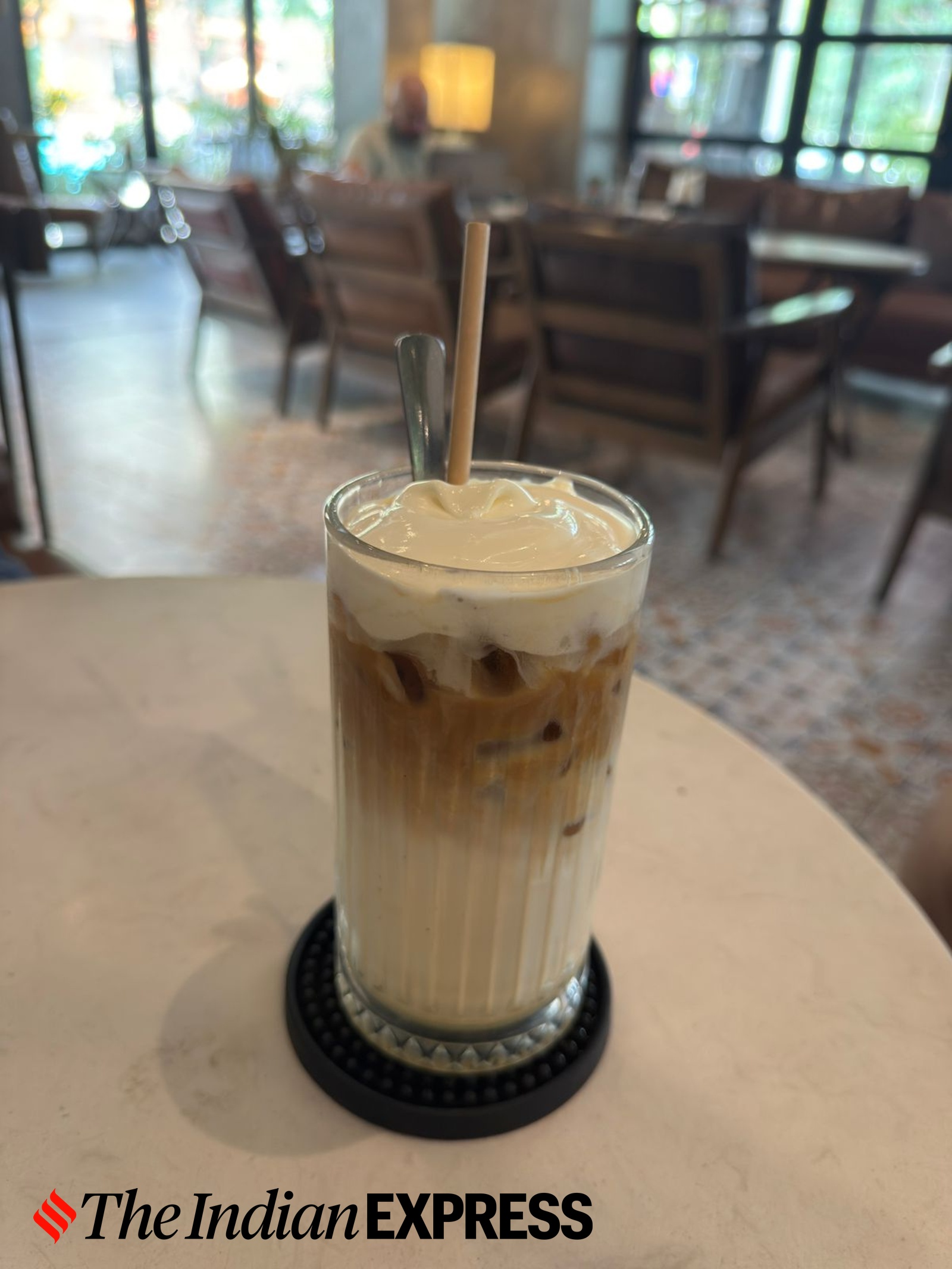 Banana latte (Source: Swarupa Tripathy)
In Vietnam, women occupied public spaces as a matter of fact. They worked at stalls and drove scooters and sat alone in cafes at midnight without anyone registering it as notable. The streets were full and active well into the evening. Not in the chaotic, surveilling way I know from home, but in a way that felt safe precisely because no one seemed to be watching. I moved through market crowds and beach promenades and busy restaurant strips without a single moment of someone staring too long. And the absence of that scrutiny felt extraordinary.
Walking at night
At home, walking alone at night involves a low-level arithmetic that operates almost below conscious thought. Which route is better lit? Which has more people? If something happened here, who would notice? What time is late enough that I should take a cab instead? I run these numbers without thinking.
Story continues below this ad
In Vietnam, I walked at night from restaurants to hotels without performing any of this. I got back to the hotel and thought, ‘I didn’t plan a single exit strategy. I didn’t even notice that I hadn’t noticed.’
DK Ghatani, travel consultant and CEO of Sikkim Expeditions, describes this well. He told indianexpress.com that in places like Vietnam, the predictability of public spaces plays a crucial role. “Streets remain active late into the evening with families, local businesses, and community life continuing well beyond sunset,” he said. “Women frequently report experiencing fewer intrusive interactions, less unsolicited attention, and a stronger sense of anonymity. The social culture tends to normalise women occupying public spaces independently, which allows travellers to move around without constantly feeling observed or evaluated.”
Wearing what I wanted
In my Kerala piece, I wrote about the clothes I left folded in my bag — vacation outfits that stayed unworn because wearing them felt like a negotiation I didn’t have the energy to have. Cut-out tops and a bikini, clothes I’d packed with the weather in mind, were replaced by things that would draw less attention.
In Vietnam, I wore what I’d packed. Sleeveless tops, shorts, and a dress that hit above the knee. On the beach, a swimsuit. I wore these things, and nothing happened. No one filmed me. No one stared. No one made me feel like my clothing was an announcement or an invitation. The heat was the only thing that determined what I put on each morning.
Story continues below this ad
Practical dressing decisions, Ghatani says, should always be about situational awareness, not moral responsibility. Women are not dressing to prevent harm but to reduce friction in unfamiliar environments.
The moment my guard dropped
I don’t know exactly when it happened, but I can identify the neighbourhood. It was somewhere between Hoi An and Ninh Binh. I had started making decisions without running them through the usual filter first. Taking a solo walk while the others napped. Sitting at a cafe outside, alone, for an hour. Wearing that dress without a second thought.
I didn’t notice any of this while it was happening. That’s the point. I only recognised the shift retrospectively, which means my nervous system had decided it was safe to stop bracing.
Health psychologist Puja Roy describes this. “The difficulty is that this constant awareness takes energy, even when it feels automatic,” she told me. “A part of the mind is always occupied with assessing situations and considering potential risks. What I often find is that many women don’t realise how much effort goes into these safety calculations until they find themselves in an environment where they no longer feel the need to make them.”
Story continues below this ad
She also described what the reverse of that feels like — the gradual release into safety: “When attention is no longer focused on monitoring potential dangers, there is often more room to simply enjoy the environment, notice what is happening around them, and be present in the moment. The body can respond as well—people often describe feeling less tense, sleeping better, and finding it easier to relax.”
Richa Mohta, clinical psychologist and founder of the mental health platform Self Pivot, adds, “When someone has lived in chronic threat, the nervous system can actually misread safety as danger. It keeps scanning, even when the environment is objectively safe. The threat detection system has been recalibrated by prolonged exposure, so the absence of threat itself can trigger anxiety rather than relief.”
 Da Nang Fireworks Show (Source: Swarupa Tripathy)
What we have been taught to accept as normal
The hypervigilance women carry through Indian cities and public spaces is something we were taught through years of learning what it costs to be careless in public. It is so deeply ingrained that I had stopped experiencing it as effort. It had become the texture of ordinary life.
It took Vietnam to show me the shape of what I’d been carrying.
Story continues below this ad
Mohta describes this, mentioning, “Imagine somebody being tied for a long time and suddenly the ropes have been loosened; it is exactly that. It is you being able to breathe, being able to rest, because there is no danger to be scanned. After all, you are okay in your own skin.”
She also names something rarely discussed alongside relief: “Alongside relief comes grief. Grief for how long you lived otherwise, or how you think you could have lived.”
I wasn’t expecting grief. But I felt it, briefly, somewhere on the flight home — a strange, passing sorrow for all the trips where I’d accepted that some version of myself had to stay packed away, the same way some clothes had to stay folded in the bag.
Roy explains why women often only discover what they’ve been carrying once it’s temporarily lifted: “When something becomes part of everyday life, it often fades into the background, even though it continues to affect them. It is a bit like carrying a heavy bag for a long time and only noticing how heavy it was once you put it down.”
Mohta goes further, stating, “What happens over time is that the world becomes physically smaller. You change your routes, you avoid certain places, you alter when you leave and when you return. That is not a choice; that is a forced adaptation. And it is not just personal; it is civic. When women cannot move freely through public space, their participation in public life is curtailed. That is a systemic issue, not an individual one.”
What India could learn
Ghatani, when I asked him what Indian cities could take from places where women feel genuinely safer, didn’t begin with policing or policy. He began with something simpler: norms.
“The biggest lesson is that women’s safety extends beyond policing and infrastructure,” he said. “It involves creating public spaces where women can move without being monitored, questioned, or made uncomfortable. Active streets, reliable public transport, good lighting, visible community presence, and stronger social norms against harassment all contribute to this environment.”
In Vietnam, I wasn’t safe because of any specific law or policy. I was safe because the social assumption seemed to be that women simply exist in public, and that this is fine, and that no one needs to comment on it, document it, or surveil it. That assumption was the entire difference.
I came home from Vietnam the way I came home from Kerala. But the two trips left me with different things. Kerala gave me questions. Vietnam gave me a measure for what the answers might look like.