3 min readJul 7, 2026 03:21 PM IST
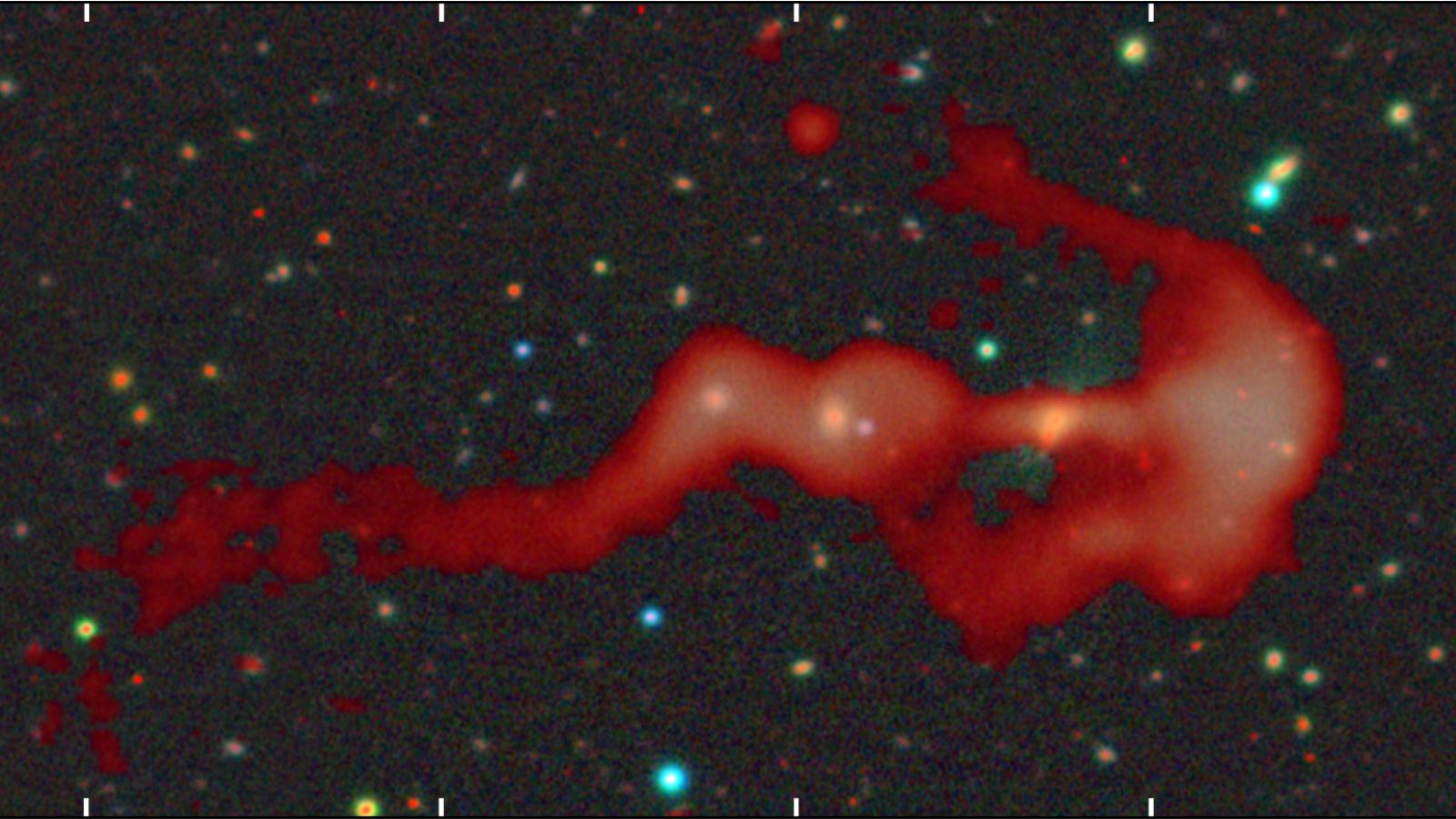
A team of Indian astronomers along with citizen scientists and researchers working abroad have discovered a supersonic radio galaxy (RAD-BAARG Bow and Arrow Radio Galaxy) showing a giant shock wave nearly 20 times bigger than Milky Way Galaxy.
The discovery happened when citizen scientist Pranim Limbo, hailing from a remote village in Sikkim, identified the first clue through the RAD@home Collaboratory, India’s first citizen science astronomy research platform founded by Mumbai-based Dr. Ananda Hota in 2013.

Hota who is the founder director and principal investigator of RAD@home Astronomy Collaboratory, told The Indian Express that this discovery was a remarkable success for citizen science research in astronomy.
The discovery has been published in the Letters of the Monthly Notices of the Royal Astronomical Society by the Oxford University Press. Researchers explained that the remarkable bow-and-arrow-shaped radio galaxy was discovered using ultra-sensitive observations from the LOFAR radio telescope.
The newly identified system features a vast arc-like structure spanning nearly 1.8 million light-years and may represent one of the clearest known radio signatures of a giant bow shock produced as a galaxy plunges supersonically into the dense environment of a galaxy cluster.
Simply put, as a galaxy falls towards a massive cluster of galaxies, its velocity increases as it gets closer to the cluster. Hota explained that when the velocity is higher than the speed of sound in its hot surrounding medium, it creates a huge shock wave.
“The supermassive black hole at the centre of the galaxy has coincidentally become active and launches two linear jets containing relativistic magnetized plasma. The plasma jet moving towards the cluster bounces back from the shock where the density, temperature, pressure, magnetic field are very high. The jet on the other site moves straight with some irregularity. Hence the shape of the whole structure resembles a Bow and Arrow and earned the name RAD-BAARG,” Dr Hota, who is also the lead author of the research publication, said.
Story continues below this ad
According to Dr Pratik Dabhade, another author, BAARG is exciting not just because of its striking bow-and-arrow shape but also because it sits in a complex multi-halo environment where gas flows, infall and possible shocks can reshape radio plasma.
Since 2013, RAD@home has been training participants to analyse astronomical data from world-class telescopes and contribute to scientific discoveries irrespective of their geographic or institutional backgrounds. This discovery also has led to exciting future possibilities for next generation radio astronomy facilities.
Hota said that the collaboratory is now leading the planning on how citizen science can be integrated with the Square Kilometre Array (SKA). The centre has accorded approval for India’s participation in the international mega science project SKA at an estimated cost of Rs 1,250 crore.