Roshan Abeysinghe didn’t need much. Just a short video on a phone. In it, a 20-year-old bowled to three sticks on dry land. Lean figure. Rhythmic run-up. No pitch, no opposition, no gallery. And no shoes worth the name — what covered his feet was broken in ways shoes shouldn’t be. The city was Ratnapura. The land of rubies and sapphires. The boy’s name was Eshan Malinga.
Chamila Gamage, a renowned fast bowling coach in Sri Lanka, had stumbled on him by chance. There was no club. No team. Just the boy and the stumps and that run-up. Gamage sent the video to Abeysinghe with a simple request: give him a game at Ragama Cricket Club.

“He was bowling with a broken pair of shoes,” Abeysinghe says. He is the president of Ragama CC and a respected voice in Sri Lanka cricket. He had watched the video once. That was enough.
Eshan had, by then, already announced himself in a small way. A private initiative had gone looking for the fastest bowler on the island, throwing open the contest to all comers. Thousands turned up. Eshan won it without discussion as he was the quickest of the lot. But competitive cricket had no place for him.
Twin strikes from #SRH‘s man-in-form 🧡
Nitish Rana and David Miller fall to Eshan Malinga on 🔙 to 🔙 deliveries! ☝️☝️
Updates ▶️ https://t.co/VgUjXDlrDh#TATAIPL | #KhelBindaas | #SRHvDC | @SunRisers pic.twitter.com/kgmP8W7jTs
— IndianPremierLeague (@IPL) April 21, 2026
“He came from a humble background,” Abeysinghe says. “When Chamila sent him to us, we didn’t have second thoughts. He clearly had potential. And even by then, he had a reputation for being the fastest. When he came, we could see how quick he was. He had a good rhythmic action and the ingredients that make a fast bowler.”
Abeysinghe put him in the Under-23 side. The career had barely started before it stopped due to a back injury. Then a year of absence — Eshan, being from the countryside, sought native treatment first, ayurveda over hospitals, which Abeysinghe understood without judgment. He came back. One delivery in the nets. The same injury again.
Ragama sent him to Sri Lanka’s High Performance Centre to understand what they were dealing with. Then came prolonged treatment and rehabilitation at a private facility, with the club covering the expenses. Eshan had no central contract. There was no system to catch him. Ragama became his system.
“Since he wasn’t a central contracted player, the SLC couldn’t help much,” Abeysinghe says. “But we kept the national selectors in the loop about Eshan. His talent was obvious to see.”
Story continues below this ad
When he recovered, they put him back in the Under-23 side. A First-Class debut followed. Then the national cap.
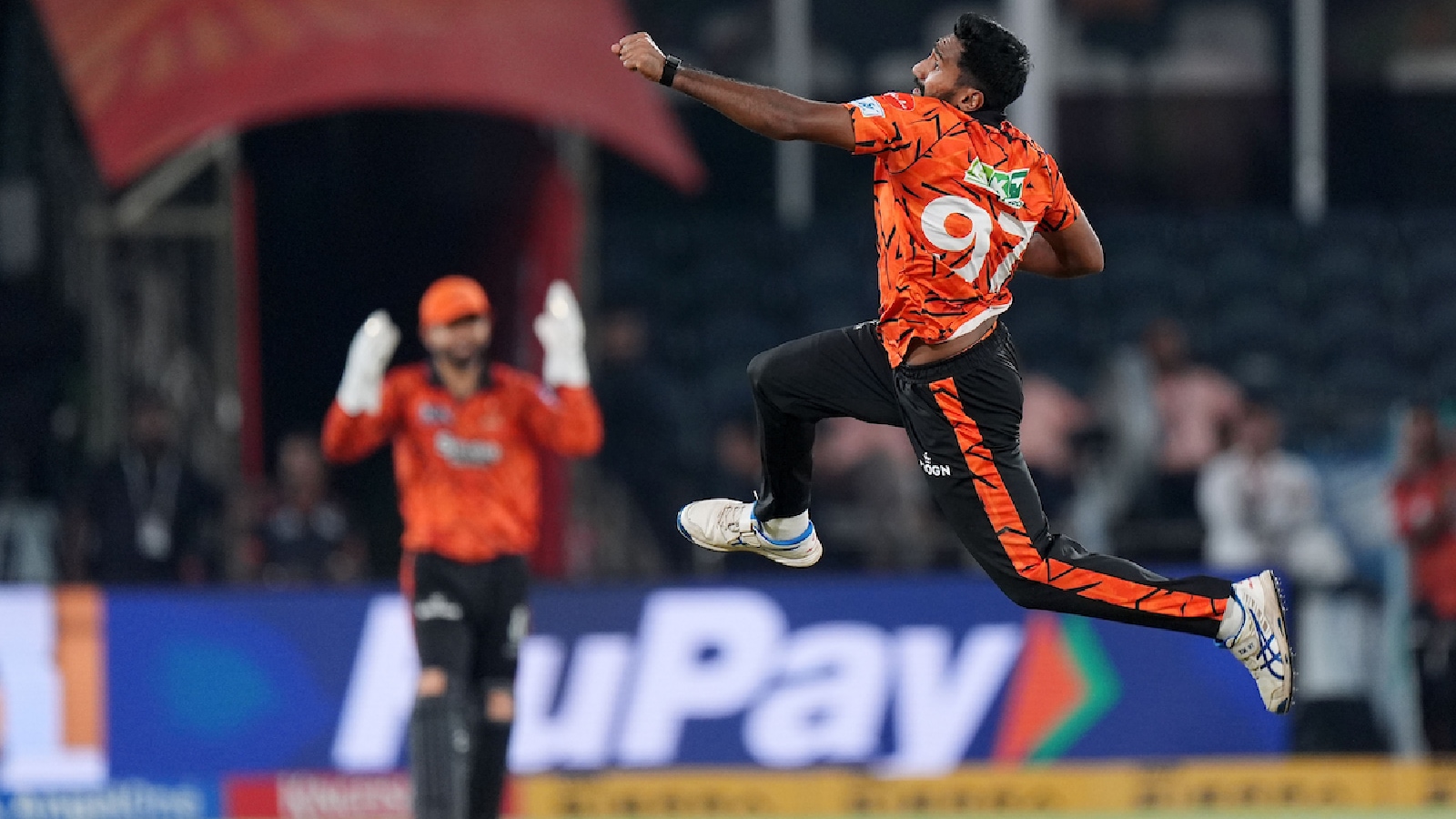 Eshan Malinga of Sunrisers Hyderabad celebrates after taking the wicket of David Miller of Delhi Capitals during Match 31 of the TATA Indian Premier League 2026 between Sunrisers Hyderabad and Delhi Capitals at Rajiv Gandhi International Stadium, Hyderabad, India, on April 21, 2026. (CREIMAS)
***
Before the call-up, Sri Lanka Cricket sent him to the MRF Pace Foundation in Chennai. Glenn McGrath ran the camp. Among those present were Sakib Hussain, who would later announce himself in the SRH ranks, and Varun Aaron — who had moved into coaching at MRF before joining the franchise as a support staff member.
What Aaron saw there, he carried back to Hyderabad.
This is a time when Sri Lanka fast bowling has travelled a particular route. Nuwan Tushara, Matheesha Pathirana — the slinger action, the Lasith Malinga tribute act, the round-arm that catches batsmen by surprise. They’ve all blown hot and cold. Eshan is not from that school.
Story continues below this ad
His action sits slightly round-arm, but it is not that. His weapon is different. Where those bowlers offer deception of trajectory, Eshan offers pace and something more particular: reverse-swing, generated not despite his action but because of it.
Watch it closely. When Eshan senses the ball is ready, his action drops a fraction lower. The seam angles toward fine leg. What follows is not orthodox, not slinger, but something in between — a delivery the batsman has rarely prepared his mind for because the coaching manual doesn’t name it.
***
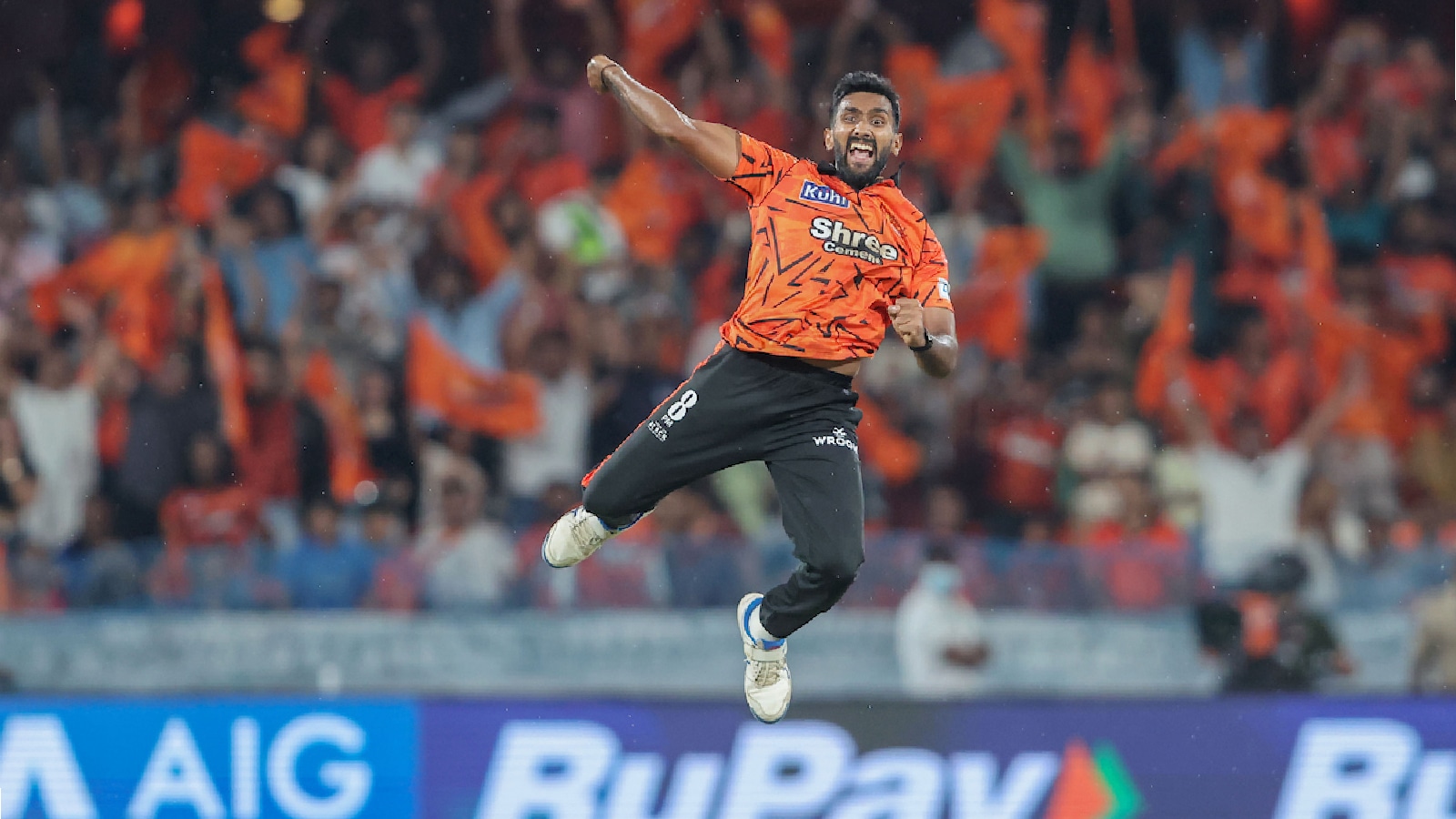
SunRisers Hyderabad bought him for Rs 1.2 crore ahead of the 2025 season. He took 13 wickets in 7 matches. They brought him back. This season, with Pat Cummins unavailable and Mohammed Shami gone, Eshan has been the solitary overseas seamer. No sharing of the load. The new ball and the death both fall to him. In seven matches he has 12 wickets — joint-second in the Purple Cap standings.
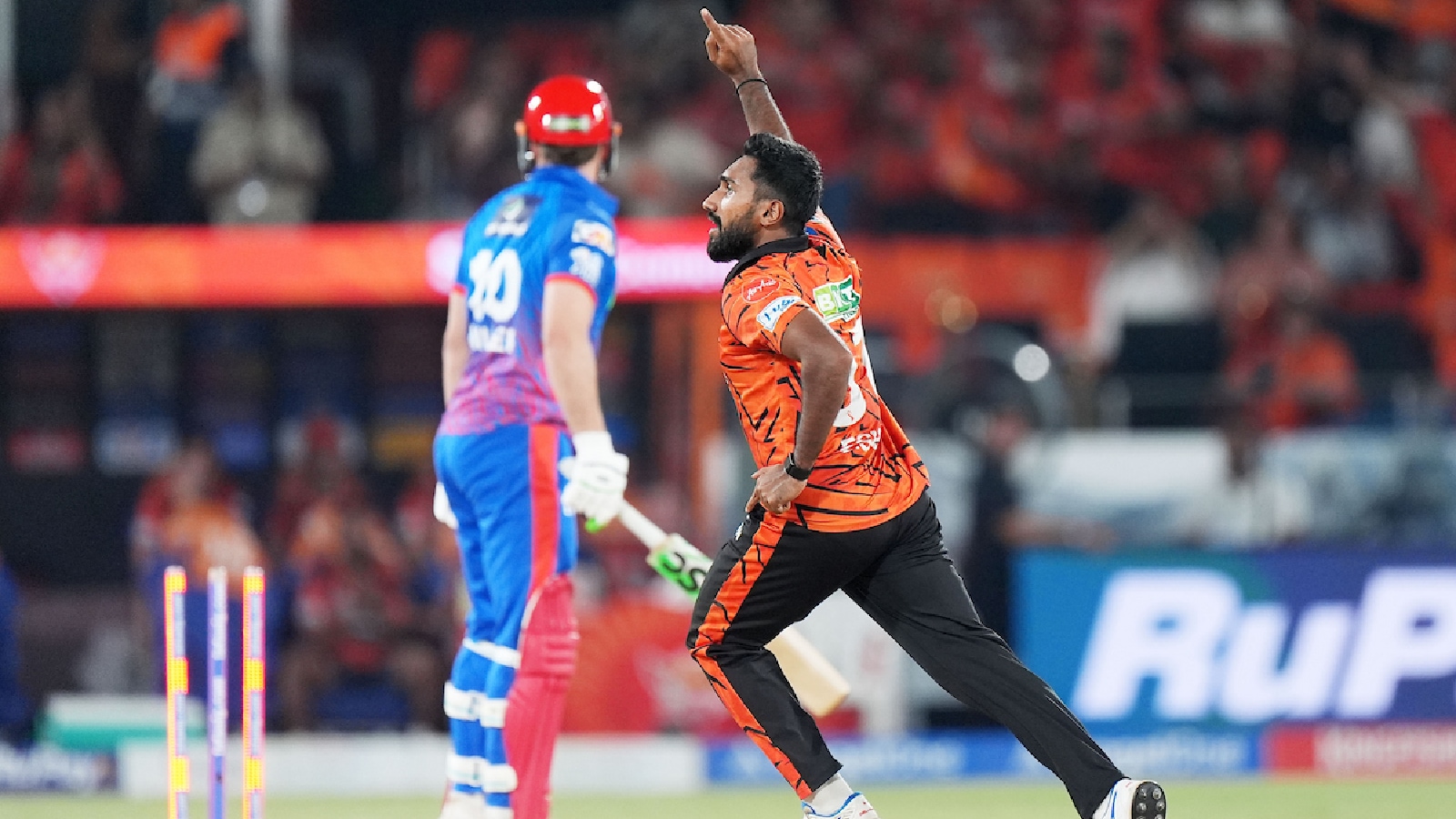 Eshan Malinga of Sunrisers Hyderabad celebrates after taking the wicket of David Miller of Delhi Capitals during Match 31 of the TATA Indian Premier League 2026 between Sunrisers Hyderabad and Delhi Capitals at Rajiv Gandhi International Stadium, Hyderabad, India, on April 21, 2026. (CREIMAS)
It was Eshan who unravelled Chennai Super Kings last Sunday, from a position they had made their own. On Tuesday, Delhi Capitals were mounting a chase that looked possible until the moment it didn’t. Three wickets from Eshan and the chase was over.
Story continues below this ad
The reverse-swing is the headliner. But there is a slower ball too, and it is a peculiar, wonderful thing. Released with an upright seam, it rotates like an off-break, the seam directed toward fine leg the way any off-spinner holds the ball. When it lands on the seam there is bounce. When it doesn’t, there is the skid. The batsman commits and the geometry shifts.
Deception built, over years, from dry land in Ratnapura.
“He has matured a lot,” Abeysinghe says. “He always had the street smart qualities in him, which is why he uses the slower ones so cleverly. I’m very pleased for the kid. Given how he started.”
He has 12 wickets in seven matches. Joint-second in the Purple Cap standings. The shoes are better now.