

The largest oil market shock on record triggered by the war in the Middle East is set to have a greater impact on products such as jet fuel and diesel than on crude, according to Goldman Sachs Group Inc.
“Prices have rallied much more for many refined products than for crude,” analysts Yulia Zhestkova Grigsby and Daan Struyven said in a note. The severe disruptions seen in supplies of so-called medium-heavy crude pose the risk of lower production of diesel, jet fuel and fuel oil, they said.
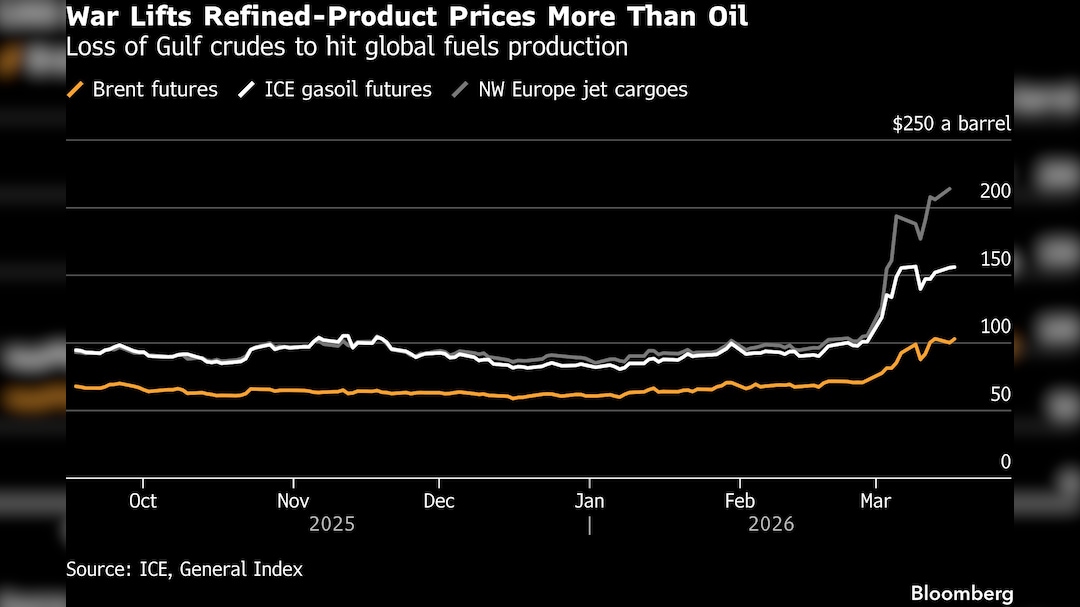
Global energy markets have been pitched into turmoil by the US-Israeli war against Iran, which erupted late last month. The conflict has triggered the near-complete halt of oil and product exports through the Strait of Hormuz, and seen attacks on energy infrastructure across the region. That’s forced crude producers to slash output and halt some refinery operations.
While crude prices have surged by more than 40% since the first attacks — with Brent topping $100 a barrel — some products have rallied far more. In parts of Asia, fuel costs have as much as doubled, with South Korea following China and Thailand in capping exports to protect local markets.
ALSO READ: ONGC Is The Lone Star In A Gloomy Sky, Says Kotak As It Upgrades Rating — Check Revised Target
“No products or regions are fully immune,” the Goldman analysts said. The war was hurting the ability of Persian Gulf producers to export refined products, spurring refinery outages, and slashing flows of the types of crude that are best suited to making fuels such diesel, they said.
“Nearly 60% of typical crude exports from the Persian Gulf are medium and heavy crude (typically used to produce jet fuel, diesel, and fuel oil), with much more limited alternative producers outside the Middle East,” they said.
ALSO READ: US-Iran War: Brent Crude Climbs Back Above $100 Amid Escalating Middle East Tensions
The global disruption stemming from the conflict will also affect naphtha — a refining byproduct used to make petrochemicals that’s a critical input for some manufacturers — as well as jet fuel, according to Goldman.
Asia imports nearly 50% of its naphtha from the Persian Gulf, while Europe depends on the region for 40% of its jet fuel, the bank said.
Essential Business Intelligence,
Continuous LIVE TV,
Sharp Market Insights,
Practical Personal Finance Advice and
Latest Stories — On NDTV Profit.