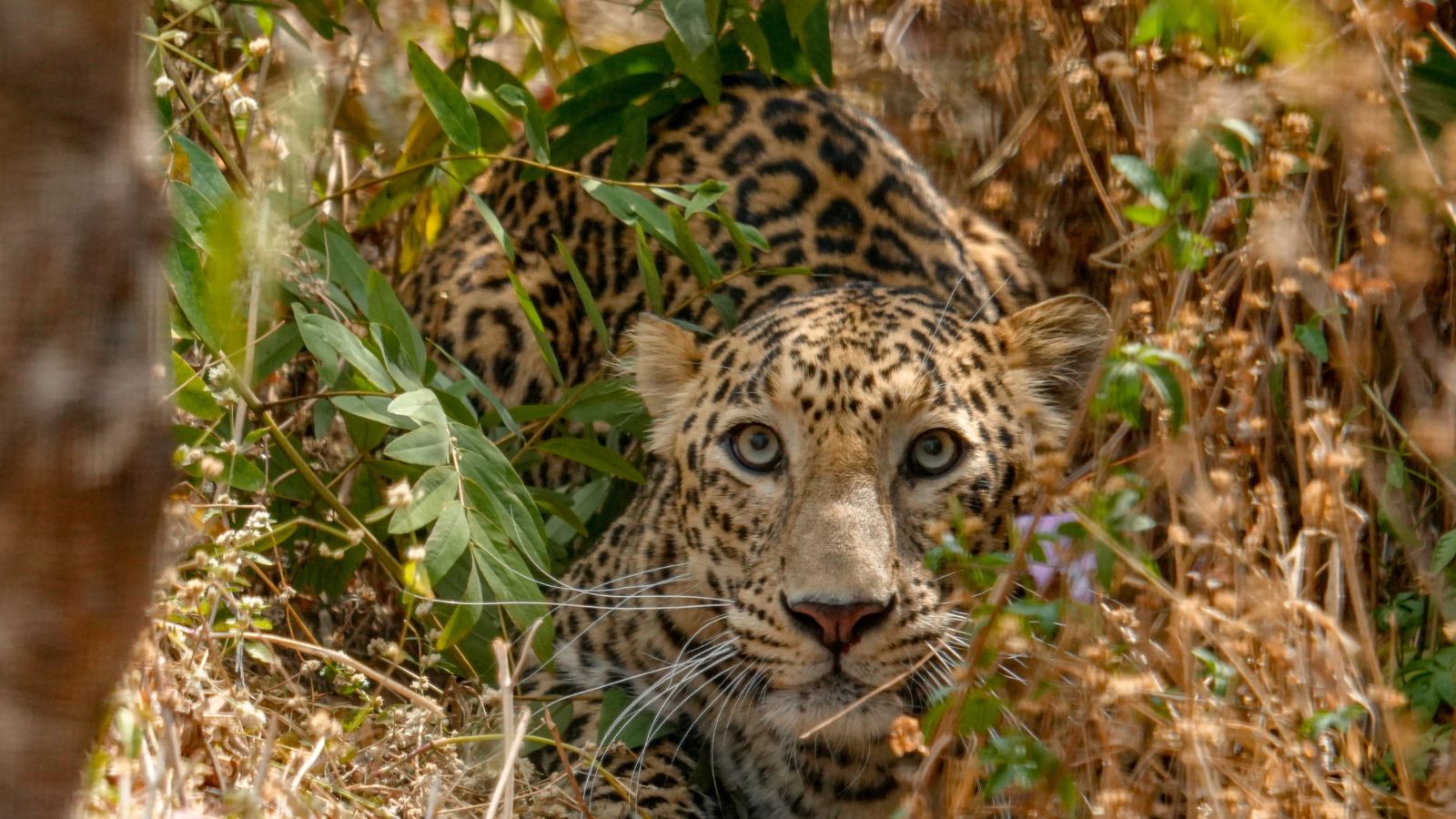
From specially designed enclosures and modified diets to continuous health check-ups and a regular dose of multivitamins, the Manikdoh Leopard Rescue Centre (MLRC) in Maharashtra has pulled out all the stops for its veteran residents—Vishnu and Guru, two male leopards who have completed a decade at the Junnar facility.
Rescued from human-wildlife conflict situations in 2016, the leopards have been under the long-term care of the Maharashtra Forest Department and rescue organisation Wildlife SOS.
“Vishnu and Guru’s lives at the centre highlight the importance of long-term rehabilitation for animals affected by conflict,” says Smita Rajhans, Assistant Conservator of Forests, Junnar Forest Division, adding that the forest department’s partnership with Wildlife SOS reflects a shared commitment to addressing human-wildlife conflict through science-based management, rescue, and long-term rehabilitation.
Vishnu arrived from Khamundi village, followed by Guru from Dingore village, both as adult leopards after repeated conflict incidents. Due to their history, returning them to the wild was not considered a viable option, highlighting the increasing pressure on leopard habitats across Maharashtra as forests continue to shrink and human settlements expand.
Now approximately 17 years old, Vishnu is known for his strict routines and shy personality. He spends his days running energetically through his enclosure and his nights resting atop his favourite wooden platform. Guru, approximately 16, is far bolder and commanding, often seen patrolling his enclosure, scent-marking and scratching logs, before indulging in his favourite post-meal ritual.
“Since their relocation, they have been maintained in a protected facility under continuous care and supervision. With advancing age, their physical condition has gradually declined, and management practices have been adapted accordingly,” Rajhans explains.
“Their enclosures are designed with environmental enrichment features such as natural vegetation and shaded areas, and cooling systems, including foggers, are used to mitigate heat stress. Due to age-related dental wear and reduced bite strength, their diet is modified to include softer, easily consumable food items. The animals are also subjected to regular veterinary examinations to monitor their overall health and well-being,” she adds.
Story continues below this ad
Kartick Satyanarayan, co-founder and CEO of Wildlife SOS, says that Vishnu’s and Guru’s journeys reflect the reality of increasing human-leopard conflict across India. “These are animals that could not be returned to the wild, and providing them with long-term care, safety and dignity remains our responsibility,” he adds.
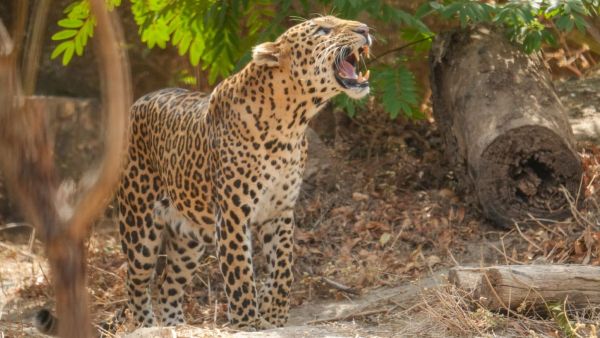 Guru, approximately 16 years old, is bold and commanding. He is often seen patrolling his enclosure, before indulging in his favourite post-meal ritual.
Geeta Seshamani, co-founder and secretary of Wildlife SOS, adds that what stands out most, watching Vishnu and Guru over the years, is how they have distinct personalities. “One is so devoted to his routine and the other fearless and confident. Over time, our team has learnt to understand their individual needs and ensure they receive the highest standard of care,” Seshamani observes.
As ageing big cats, both leopards now receive specialised geriatric care, including multivitamin supplements, regular veterinary monitoring and assessments for age-related conditions such as joint mobility and dental health.
Escalating conflict
The leopard crisis in the Junnar Forest Division has intensified over the years, with both rescue numbers and human fatalities rising across the Manchar, Otur, Shirur and Junnar ranges. Forest department data in the last six months show that at least 175 leopards were rescued in the division, with the highest concentration in Shirur (75).
Story continues below this ad
Meanwhile, there have been 56 fatalities since 2001. Of these, 21 people died in the last two years due to the human-leopard conflict.
The Manikdoh Leopard Rescue Centre, which was established by the Maharashtra Forest Department in collaboration with Wildlife SOS to provide long-term care and shelter to leopards orphaned, injured or displaced due to human-wildlife conflict, currently has the capacity to house 90 leopards.
According to Rajhans, efforts are underway to expand the facility to accommodate an additional 46 leopards. “Twenty leopards have already been transferred to the Vantara Wildlife Rescue and Conservation Centre in Jamnagar, and another 30 are scheduled to be moved there. We have also received requests from zoos across the country, including those in Bihar and Arunachal Pradesh, and plan to send at least 17 leopards to these facilities. Until these transfers take place, the leopards are being housed in cages at smaller locations,” explains Rajhans.