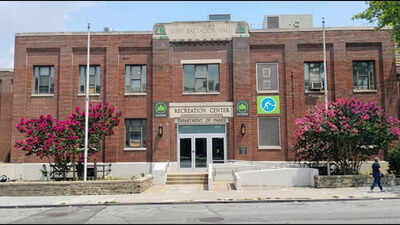
A recreation center that has served generations of Queens residents is welcoming people back after a $25.9 million overhaul. New York City reopened Lost Battalion Hall Recreation Center in Rego Park on October 9 following a top-to-bottom reconstruction. The project upgraded fitness areas, restrooms, entrances, safety systems and accessibility while preserving a building whose history stretches back to 1939. The reopening gives the neighborhood back an indoor recreation space with a long connection to New York’s sporting and military history.
A $25.9 million rebuild brings the center back
The reconstruction touched almost every part of Lost Battalion Hall. The weightlifting area, spin room and fitness room were refurbished and fitted with new equipment. Lockers and storage areas were upgraded, while the basketball court received a fresh coat of paint. The entrance and lobby were also redesigned, giving visitors a more modern way into the building while retaining its role as a community recreation center. The work was aimed at making the facility safer, easier to navigate and more comfortable throughout the year.
Accessibility was a major part of the project
One of the biggest changes is improved accessibility across the building. Lost Battalion Hall now has accessible restrooms on every floor and wider, safer routes through the facility. Doors were added at the front entrance, stairways near the entrance were relocated and enclosed, and existing staircases were rebuilt. A new staircase was also added on the east side. Restrooms on the first and second floors were redesigned with accessible stalls and fixtures. A former storage room was converted into additional accessible restrooms, while bathrooms that were too small for wheelchair access were turned into changing rooms. These changes are particularly significant for an older public building that was designed decades before modern accessibility standards.
New safety and building systems added
Much of the $25.9 million investment went beyond what visitors will immediately see. The center now has a new fire alarm and sprinkler system, a rooftop generator and a new water line. New water heaters were installed to improve energy efficiency, while an updated heating and cooling system will help keep the lobby comfortable throughout the year. Together, the changes modernize the infrastructure of a building that has been serving Queens for nearly nine decades.
The Knicks once practised here
Lost Battalion Hall has an unusual place in New York sports history. During the 1960s, the New York Knicks used the recreation center as an auxiliary practice facility. The building also became part of the basketball culture of Queens and helped nurture local players, including Queens native and former NBA player Kenny “The Jet” Smith.The hall is also home to one of the last surviving Works Progress Administration murals on New York City Parks property. The mural reflects the building’s original connection to military veterans.
Why it is called Lost Battalion Hall
The building was constructed in 1939 after the Works Progress Administration allocated $100,000 for a two-story, 36,000-square-foot facility.It was originally built for the Queens Veterans of Foreign Wars and American Legion and included a firing range and drill hall. New York City placed the property under the jurisdiction of the Parks Department in December 1960, after which it was transformed into a public recreation center with a gymnasium and basketball courts.Its name honours the “Lost Battalion” of World War I. More than 500 soldiers from the US Army’s 77th Division, many of them New Yorkers, were surrounded by German forces in France’s Argonne Forest in October 1918. They held their position for nearly a week before reinforcements reached them.Now, 87 years after Lost Battalion Hall was built, the reconstruction gives the historic Queens building another chapter, keeping its original identity while updating it for residents who use the center for basketball, fitness and community activities.