3 min readNew DelhiJul 13, 2026 04:58 PM IST
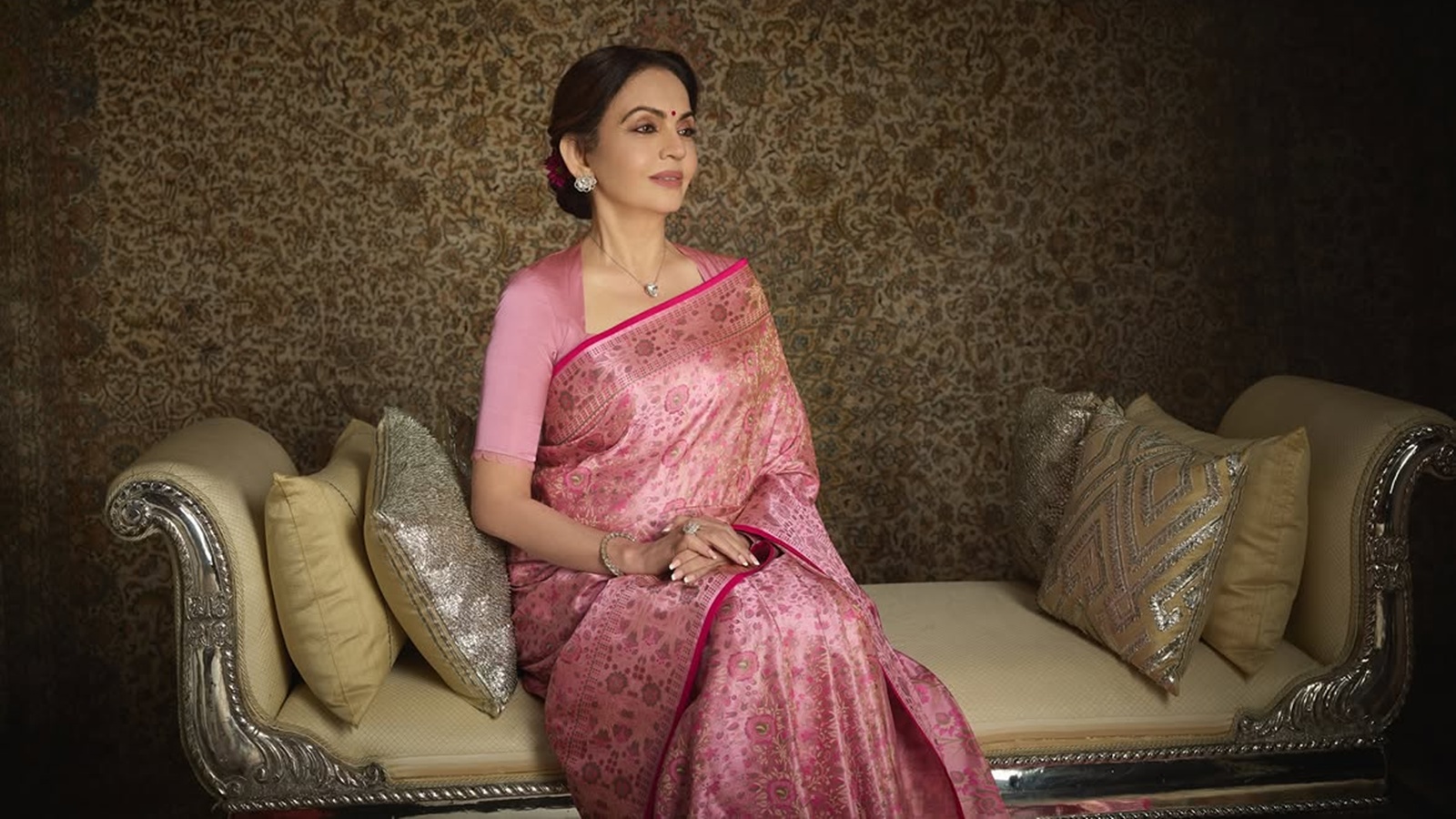
Nita Ambani, who ranked number one on the Fortune Most Powerful Women list, opted for an exquisite Tanchoi Banarasi silk sari from Swadesh to receive the special award. The Chairperson of Reliance Industries was honoured for her “visionary leadership, enduring commitment to institution-building and inclusive development”, and for the fact that, under her leadership, Reliance Foundation touched over a hundred million lives across India, including 29 million children.
The blush pink Tanchoi Banarasi was inspired by the Gulab Holi of Varanasi, the sacred city where fragrant rose petals fill the air in a celebration of devotion and joy. Taking to Instagram, the brand shared details of her look: “Intricate all-over floral jaal, accentuated with elegantly woven floral buttas in soft ivory and antique gold, creates a depth and luminous sheen that is characteristic of the celebrated Tanchoi weave, a near-reversible weaving technique renowned for its refined finish.”

Handwoven over two months by master artisans Arushi Lohia and Krishna Lohia, the sari was a graceful tribute to the cultural heritage and extraordinary craftsmanship of Banaras, carried forward with finesse and enduring dedication.
The Ambani matriarch paired the five yards with a matching blouse with a sweetheart neckline, accessorising the look with a diamond pendant, solitaire studs, a tennis bracelet and rings. A neatly pulled back bun with roses tucked in and a bright red bindi completed her chic elegance.
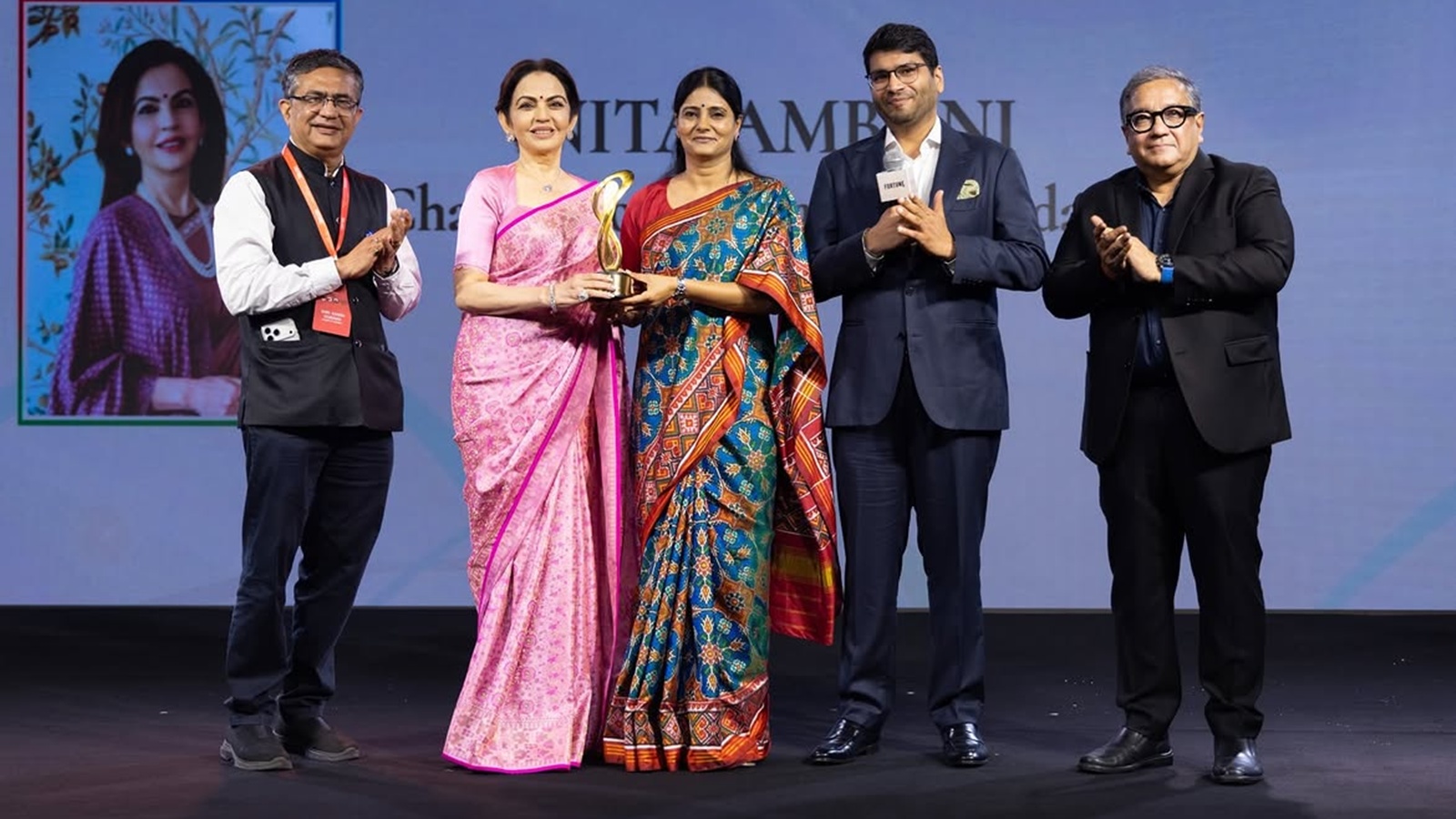 Nita Ambani tops Fortune’s Most Powerful Women list. (Source: Instagram/@swadesh_online)
More about banarasi
Roli Mehra, founder of Roliana-Home of Benarasi Sarees, told indianexpress.com that Varanasi’s pivotal position on the Silk Route facilitated the exchange of goods, ideas, and artistry, introducing Chinese silk and Persian designs to its looms. Weavers used specialised techniques like Jamdani, known for its labour-intensive detailing, and Kinkhab, famed for its lavish use of gold and silver threads. Mehra said that these fabrics were so luxurious, they were called the “cloth of the gods”.
Mehra said that the process of weaving a Banarasi sari begins with the careful selection and dyeing of silk yarns, which are set to dry and then loaded onto the handloom. Over there, skilled weavers use various techniques like Kadiyal, Meenakari, Tanchoi, and Kadhwa to intricately weave the silk threads.
According to her, Tanchoi silk saris are crafted using a meticulous technique that involves a single or double warp and multiple colored wefts and they are known for their soft texture and good drape, owing to the satin weave. One of the most significant qualities of Tanchoi silk is the complete absence of loose, long floats on the back of the fabric, as all the yarns are interlocked within the fabric itself.
Story continues below this ad
DISCLAIMER: This article is based on information from the public domain and/or the experts we spoke to.