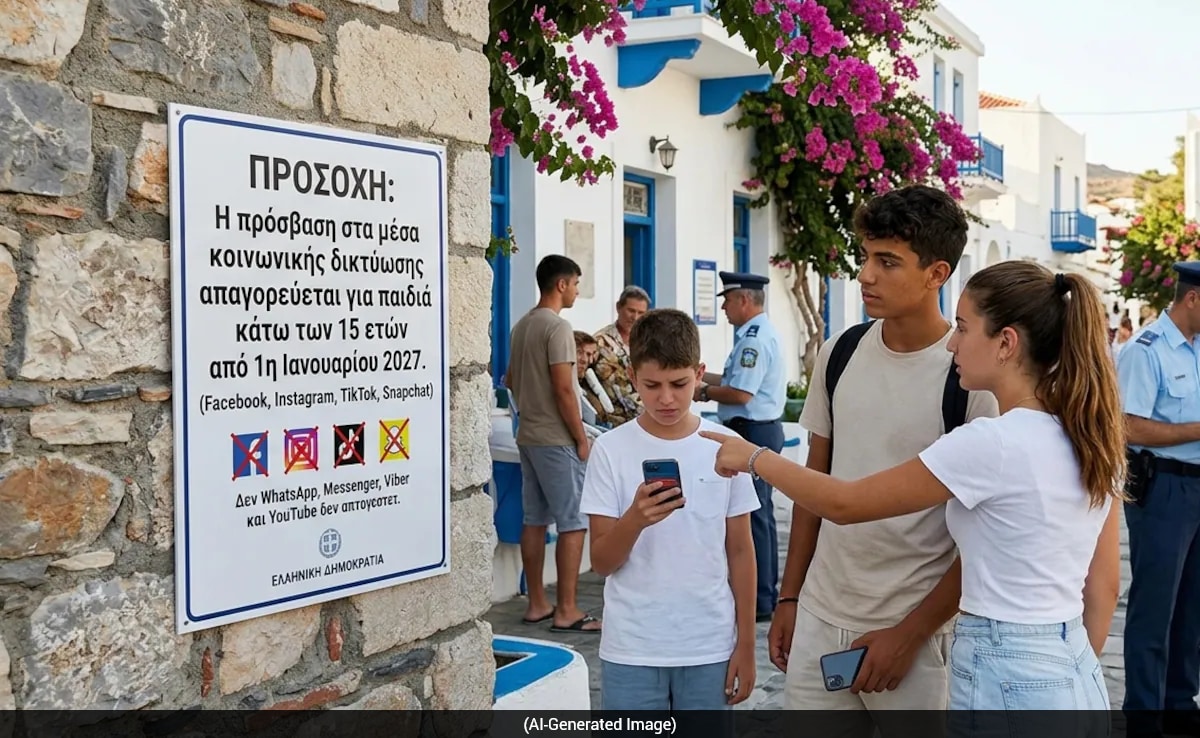
Greece has announced a sweeping ban on social media access for children under the age of 15, with Prime Minister Kyriakos Mitsotakis citing growing concerns about anxiety, sleep deprivation and the deliberately addictive design of online platforms. The legislation will be introduced during the summer of 2026 and will come into force on 1 January 2027.
The move makes Greece the latest European Union country to unveil plans for a total social media ban for children aged 15 and under.
What the Ban Covers
Government spokesman Pavlos Marinakis said children born from 2012 onwards will be barred from platforms that promote endless scrolling, specifically Facebook, Instagram, TikTok and Snapchat. Messaging and video platforms such as Messenger, WhatsApp, Viber and YouTube are not affected.
Marinakis added that the list of platforms is dynamic, meaning that if others with the same characteristics emerge, it will be updated accordingly.
Once the legislation is enacted, social media platforms will be responsible for reverifying the ages of all users in the country to exclude those who are 15 years or under. Authorities say the state’s role will be limited to ensuring that platforms comply with the new law and will take action in case of any reported violations.
The Prime Minister’s Case
In a video message addressed to young people, Mitsotakis said children spending long hours in front of screens do not allow their minds to rest and face growing pressure from constant comparison and online comments. He said he had spoken with many parents who reported that their children do not sleep well, become anxious easily and spend long hours on their phones.
In a notable gesture, Prime Minister Mitsotakis addressed the public directly through TikTok, acknowledging that many young people might consider the measure unfair but adding that the ban is necessary for their wellbeing. “I am certain that many of you who are younger will be angry with me. If I were your age, I might have felt the same,” he said.
Calling for EU-Wide Action
Greece is not content to act alone. Writing separately to European Commission President Ursula von der Leyen, Mitsotakis called for coordinated European Union action, arguing that national measures alone would not be sufficient to protect minors from internet addiction. He proposed establishing an EU-wide digital age of majority at 15, mandating age verification and regular re-verification for all platforms, and setting up a harmonised enforcement and penalty framework, urging the bloc to put a unified system in place by the end of 2026.
The Prime Minister stated plainly: “National action alone will not suffice.”
Public Support
An opinion poll by ALCO published in February showed about 80 per cent of those surveyed approved of the ban. However, nearly 60 per cent of respondents said they believe minors would find ways to bypass the restrictions.
Steps Already Taken
The Greek government has already outlawed mobile phones in schools and set up parental control platforms to limit teenagers’ screen time.
A Global Trend
Greece joins a growing number of countries tightening regulations around children’s access to social media. Australia became the world’s first country to ban social media for children under 16 in December, blocking access to platforms including TikTok and Meta’s Instagram and Facebook. The United Kingdom, Malaysia, France, Denmark and Poland are either considering a ban or are in the process of legislating one.