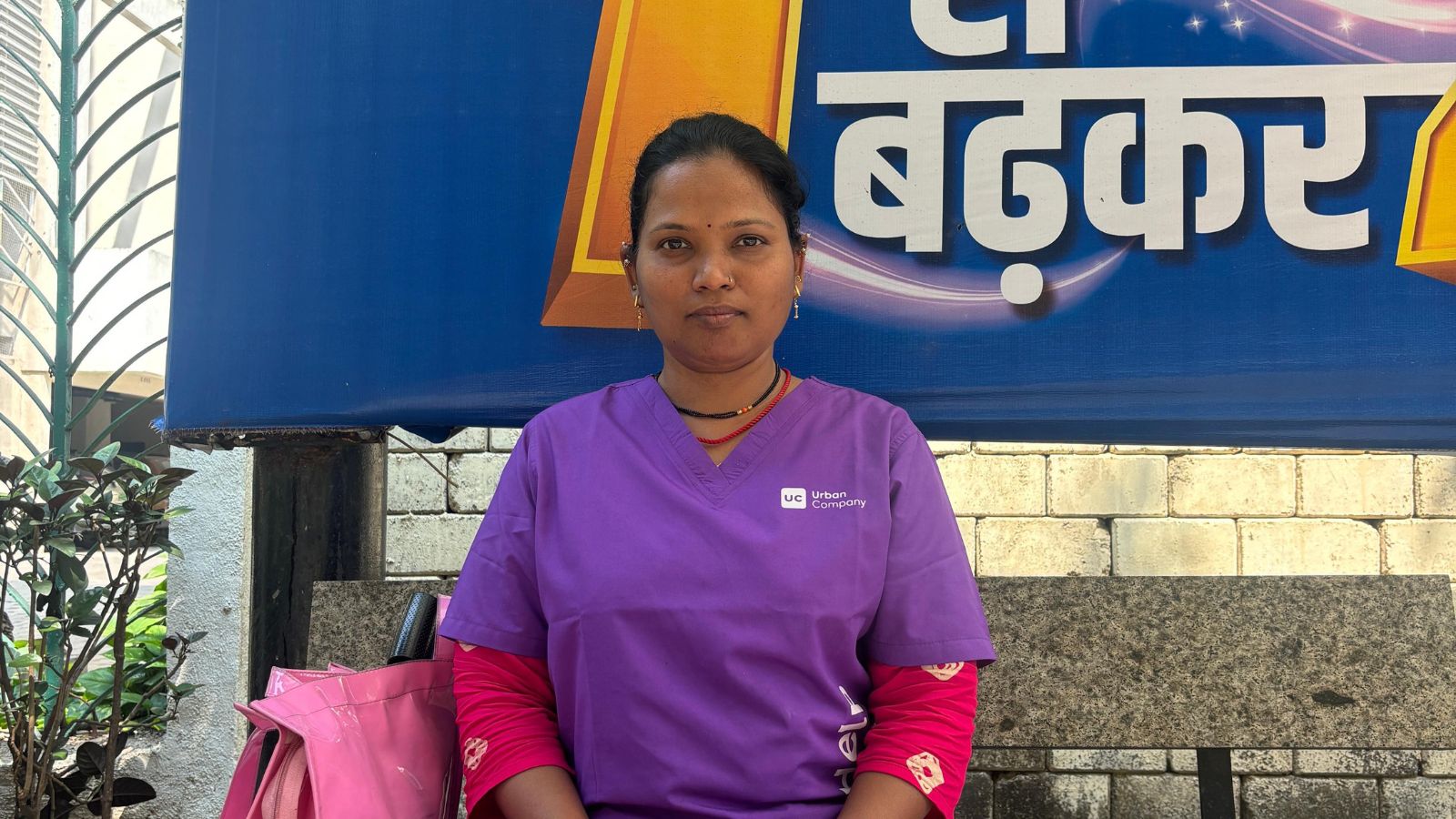
For Reshma Sartape (40), who works with Urban Company, this has translated into more consistent work. “The company says earning is in our hands, they just provide the work,” she says.
Earlier, she faced uncertainty in her income and often worked long hours for relatively low pay in traditional domestic jobs.
Now, she says, the situation has improved. “At least now I am sure about my income. It helps me manage my household expenses better,” she adds, noting that while cancellations can affect how much she earns, payments are received regularly. She also says she feels safer and more at ease working through the platform.
Daivashala Ohal (37), also with the same company, says the structured onboarding helped her adapt quickly to the system.
“I didn’t even know how to send my location before. They taught us everything, from using the app to managing time,” she says. She adds that receiving payments every 15 days has made a significant difference. “Now I don’t have to borrow money anymore,” she says.
Story continues below this ad
Ohal and Sartape say the increase in demand is also visible on the ground. “Earlier, there were only three of us working in this society. Now there are six,” they say, adding that several new women have joined the platform in recent weeks as bookings have increased.
For newer workers like Nirmala Vishwakarma (34), who joined Pronto in December 2025, the steady demand has helped stabilise her income early on.
“Earlier, my condition was very dismal. Now it is slowly improving,” she says, adding that payments are credited regularly.
She also highlights facilities such as rest hubs, access to drinking water, and pickup and drop services, which make the work more manageable.
Story continues below this ad
Income levels continue to depend on experience and workload, but workers say the increase in bookings has made work more readily available.
Manisha Dolare (40), who works with Pronto, describes her earnings as satisfactory and says payments are timely.
At the higher end, Devidas Rathore, who has been with Urban Company for four years, says he is able to take on more jobs in a day as demand rises. “The more work you do, the more you earn,” he says.
Work is assigned through apps, often with short notice, and demand fluctuates through the week, with weekends typically busier than weekdays. However, workers say that overall demand has grown, reducing idle time between bookings.
“I used domestic workers from the App when both my maids went on long leave simultaneously without giving any replacement,” said Dr Ritika Khurana who stays in Baner.
Story continues below this ad
“The service was good and very helpful. If you are able to book a day in advance you can get them for sure at your required time.”
For women workers, safety remains an important factor. Platforms have introduced features such as verifying households and enabling workers to flag concerns, though workers say they still have to be cautious while accepting bookings.
Nevertheless they agree unanimously that as for the first time this unorganised sector sees a semblance of structure, it finds new hope for the future.