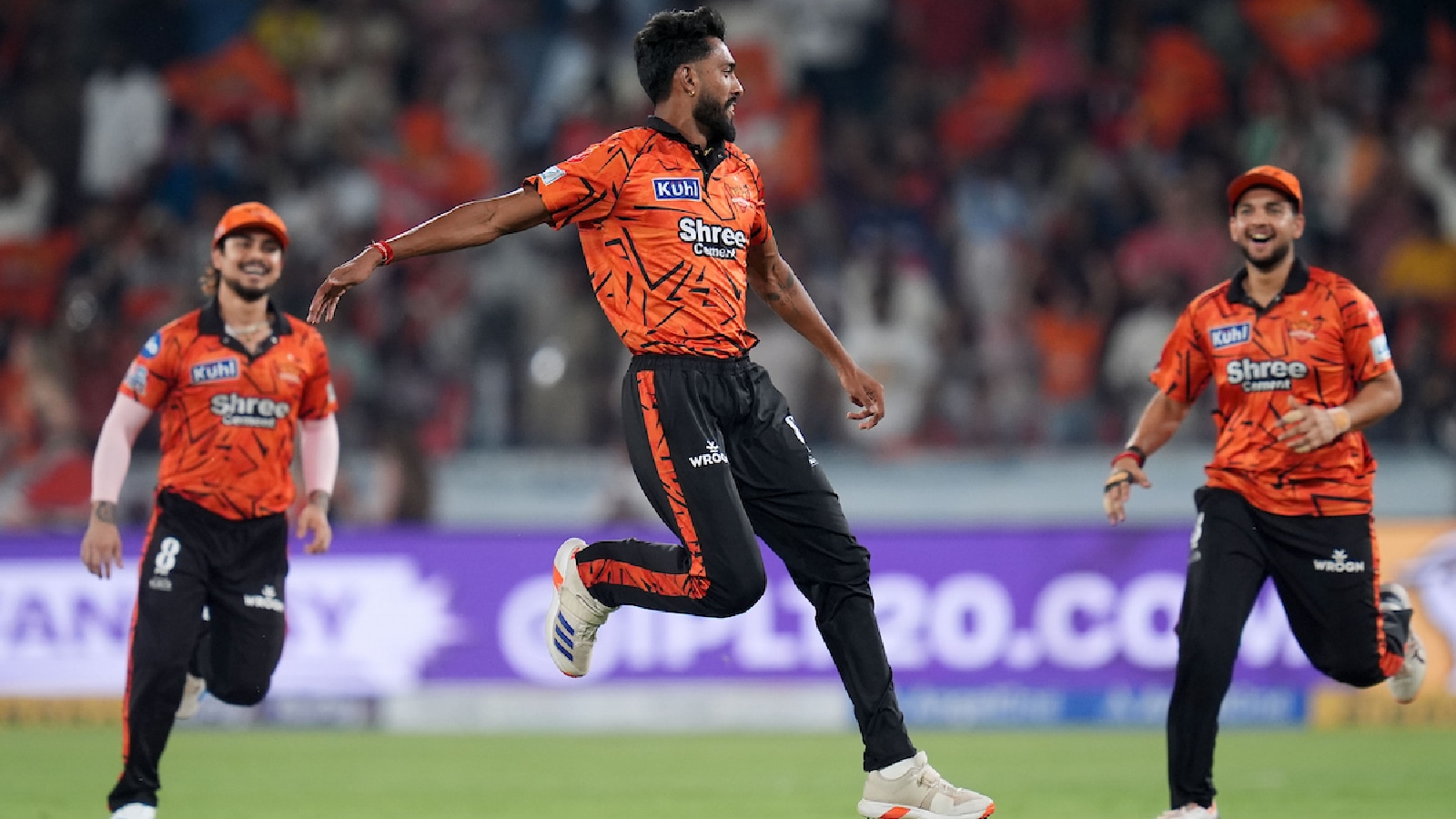
The ball came down. Wicketkeeper Salil Arora moved under it, took it, and the SRH dugout became a pile of people jumping on each other.
Sooryavanshi looked at the heavens and walked off for a golden duck. The 15-year-old who had been crunching boundaries off the likes of Jasprit Bumrah and Josh Hazlewood all tournament, dismissed by a debutant nobody had heard of.
Dhruv Jurel arrived. Second ball, gone. Lhuan-dre Pretorius arrived. Sixth ball of the over, caught at deep backward square leg. Three wickets in one over, the first time it had been done in IPL history. Rajasthan Royals 1/3 before the second over had started.
Vaibhav Sooryavanshi ✅
Praful Hinge ✅
Lhuan-dre Pretorius ✅A dream start for Praful Hinge on his #TATAIPL debut 🧡
Updates ▶️ https://t.co/xGTDdKbXpY#KhelBindaas | #SRHvRR | @SunRisers pic.twitter.com/RKGW3NxM5y
— IndianPremierLeague (@IPL) April 13, 2026
Meanwhile, in a middle-class home in Nagpur, a retired government servant and a woman who had spent years packing a tiffin before sunrise were watching it happen.
***
It almost didn’t happen at all.
Against Punjab Kings in the previous game, Hinge had been named in the playing eleven at the toss. His debut was announced. Then SRH scored 219, the pitch gripped, and the management changed their mind. Jaydev Unadkat came in and Hinge sat out. A debut deferred, for conditions and experience and the cold arithmetic of T20 cricket.
He waited one more game.
The night of the IPL auction, Hinge was in a temple.
He had gone home, freshened up, and walked to the small mandir near his house to watch his name come up — or not. Phone in hand, auction on screen, the deity in front. When SRH’s paddle went up, he put the phone down and lay flat on the floor. Just stayed there, thanking the Almighty.
Story continues below this ad
His mother cried. He called his sister, still on the local train from her Mumbai office. She didn’t pick up. He sent a message: “Hyderabad picked the paddle for me.”
By the time she got home and video-called him back, she was crying too.
***
In the Nagpur family, three people left at 7am every morning — the father to his government office, the sister to her CA job, and Praful to the ground.
His father was a fast bowler once. That was the inheritance — not runs, not trophies, just pace. He dropped his son at the club and said: “You’re on your own now, I have an office to get to.”
Story continues below this ad
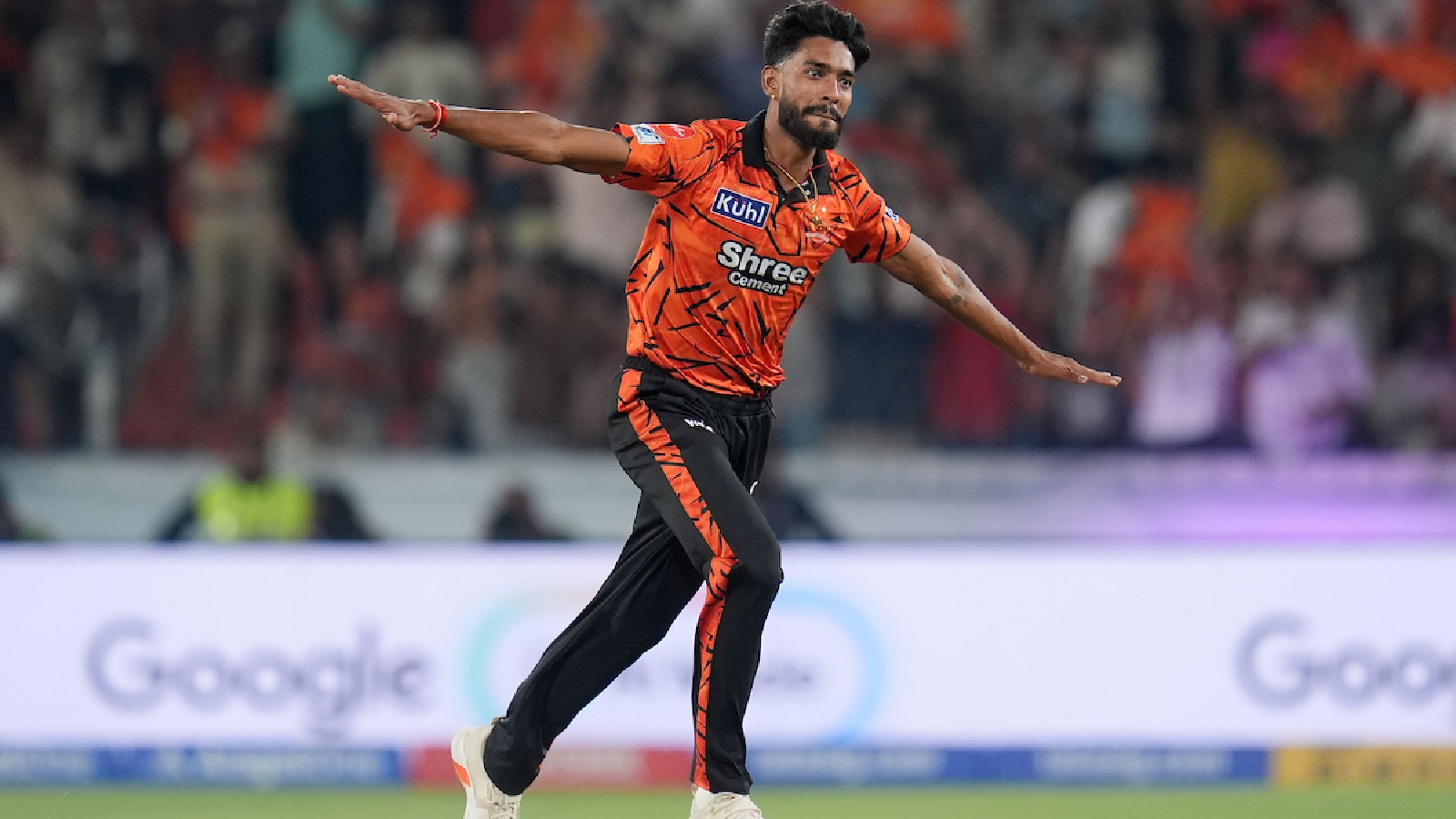 Praful Hinge of Sunrisers Hyderabad celebrates after taking the wicket of Riyan Parag of Rajasthan Royals during Match 21 of the TATA Indian Premier League 2026 between Sunrisers Hyderabad and Rajasthan Royals at Rajiv Gandhi International Stadium, Hyderabad, India, on April 13, 2026. (CREIMAS)
That was the arrangement. He attended almost no matches. Not because he didn’t care. Because caring looked like this: setting the boy in motion and stepping back.
The sister was the witness. She was studying to be a chartered accountant. She would go on to rank third in Maharashtra. In the same household, teachers were using Praful as a cautionary tale at parents’ meetings — the boy who chose cricket over studies, the example of what not to become.
The sister studied through the night. Praful would ask her to turn off the light so he could sleep; she would keep studying. He would wake at 4am for practice and she would still be with her books. The light stayed on. He went to the ground. This went on for years.
***
At 19, the wickets came. Thirty-six of them in under-19 cricket. Then Covid. Then the MRF Pace Foundation — six months unable to bowl, working with physios in a city not his own, finding what had gone wrong and fixing it.
Story continues below this ad
Then Brisbane, his first time overseas. A Ranji Trophy match against Tamil Nadu, live on television. Five wickets. Varun Aaron called shortly after for an SRH trial. He executed what was asked. Got the call.
Last season, Praful watched the Vidarbha Ranji final from home, injured, crying. This time, a full Ranji season. Vidarbha Premier League. Auction. Temple.
The first over at Uppal was not the product of talent alone — though there was talent. A death bowler who had trained his yorker until it was his most trusted delivery. A bowler at 140-145 kph who had spent six months unable to bowl and came back fitter than before.
The Sooryavanshi wicket: hard length, hurried the teenager, top edge ballooning. The Jurel wicket: length ball, inside edge onto the stumps. The Pretorius wicket: full on the pads, straight to the fielder.
Story continues below this ad
In the third over — a full, wide ball, shaping away — Riyan Parag drove at it with no feet and Abhishek Sharma took the catch at wide slip. Four wickets on debut. The aeroplane came out.
SRH skipper Ishan Kishan was smiling. Maran had been off her seat since the first over. And somewhere in Nagpur, the woman who packed a tiffin before sunrise — who knew nothing about cricket until she started checking her son’s scores on her phone — was watching too.
The light had stayed on long enough.